
Fudge Milk Calculator
Condensed milk contains about 40% sugar, while evaporated milk has no added sugar. This calculator shows how much extra sugar you'd need to add if you accidentally use evaporated milk instead of condensed milk in your fudge recipe.
Ever made fudge that turned out grainy, too soft, or just plain weird? Chances are, you grabbed the wrong kind of milk. Condensed milk and evaporated milk look similar - both are canned, both are thick, both come from cow’s milk - but they’re not interchangeable. Not even close. And when you’re making fudge, using the wrong one can ruin your whole batch.
What’s the difference between condensed milk and evaporated milk?
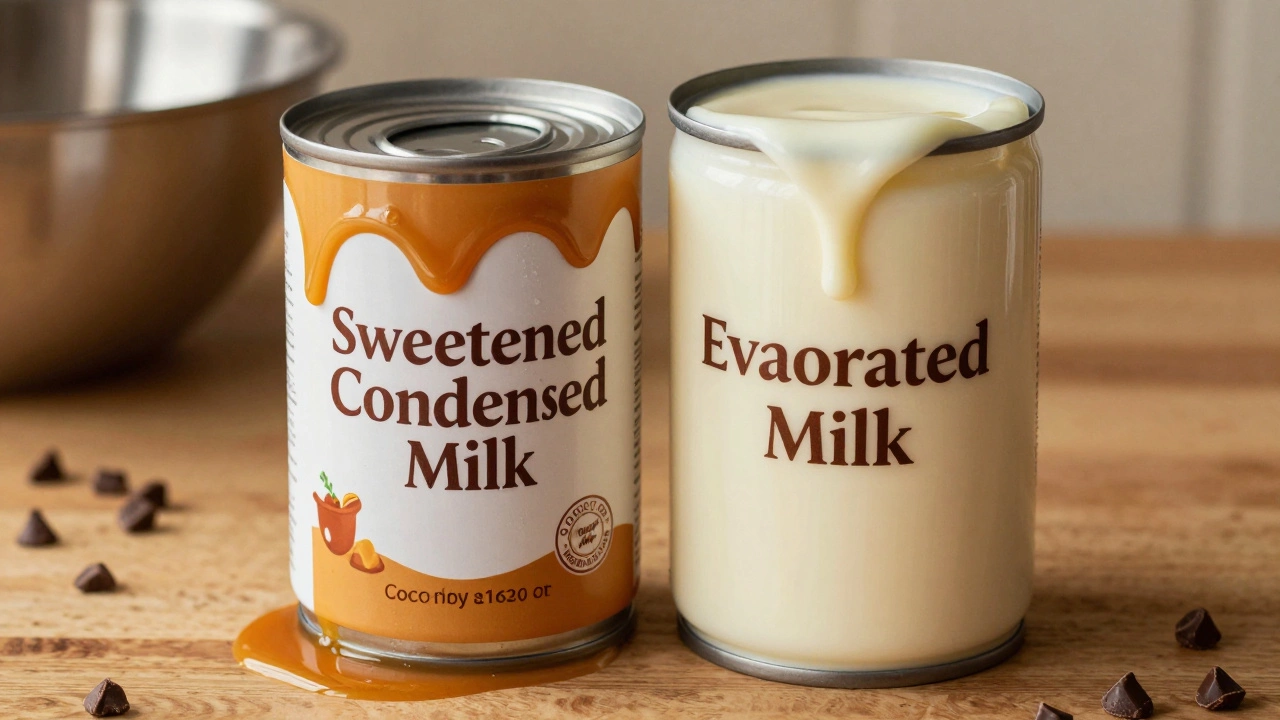
Condensed milk is sweetened. A lot. It’s made by removing about 60% of the water from milk, then adding around 40% sugar. That’s why it’s thick, sticky, and tastes like caramel candy. Evaporated milk is unsweetened. It’s just milk with about half the water removed. No sugar added. It’s creamy, but neutral in flavor - more like rich milk than dessert.
Think of it this way: condensed milk is dessert in a can. Evaporated milk is just milk with a longer shelf life. If you swap them in a fudge recipe, you’re either going to end up with candy that’s too sweet to eat, or a fudge that won’t set because it lacks the sugar needed to crystallize properly.
Why fudge needs sugar - and how condensed milk gives it to you
Fudge isn’t just melted chocolate. It’s a sugar syrup that cools into a smooth, dense mass. The sugar has to dissolve completely, then recrystallize into tiny crystals - that’s what gives fudge its melt-in-your-mouth texture. Too few crystals? It’s chewy. Too many? It’s gritty. The right amount? Perfect.
Traditional fudge recipes call for granulated sugar, butter, and cream. But condensed milk skips the whole sugar-dissolving step. It’s already loaded with sugar, fully dissolved, and ready to go. When you heat it with chocolate and butter, the sugar doesn’t need to melt - it’s already there. The mixture comes together fast, and the texture stays smooth because the sugar is evenly distributed.
Evaporated milk? It has zero sugar. If you use it in a recipe that calls for condensed milk, you’re missing the main ingredient that makes fudge fudge. You’d have to add sugar separately - and even then, you risk graininess if the sugar doesn’t fully dissolve before boiling. Most home bakers don’t have a candy thermometer, and without one, it’s easy to undercook or overcook the syrup. Condensed milk removes that risk.
What happens if you use evaporated milk in fudge?
You can make fudge with evaporated milk - but only if the recipe specifically calls for it. Most recipes that use evaporated milk are designed to add sugar, corn syrup, or other sweeteners separately. If you try to substitute evaporated milk for condensed milk in a standard fudge recipe, you’ll get something that looks like fudge but tastes like bland, greasy chocolate paste.
Here’s what actually happens:
- Without enough sugar, the mixture won’t reach the right temperature during cooking.
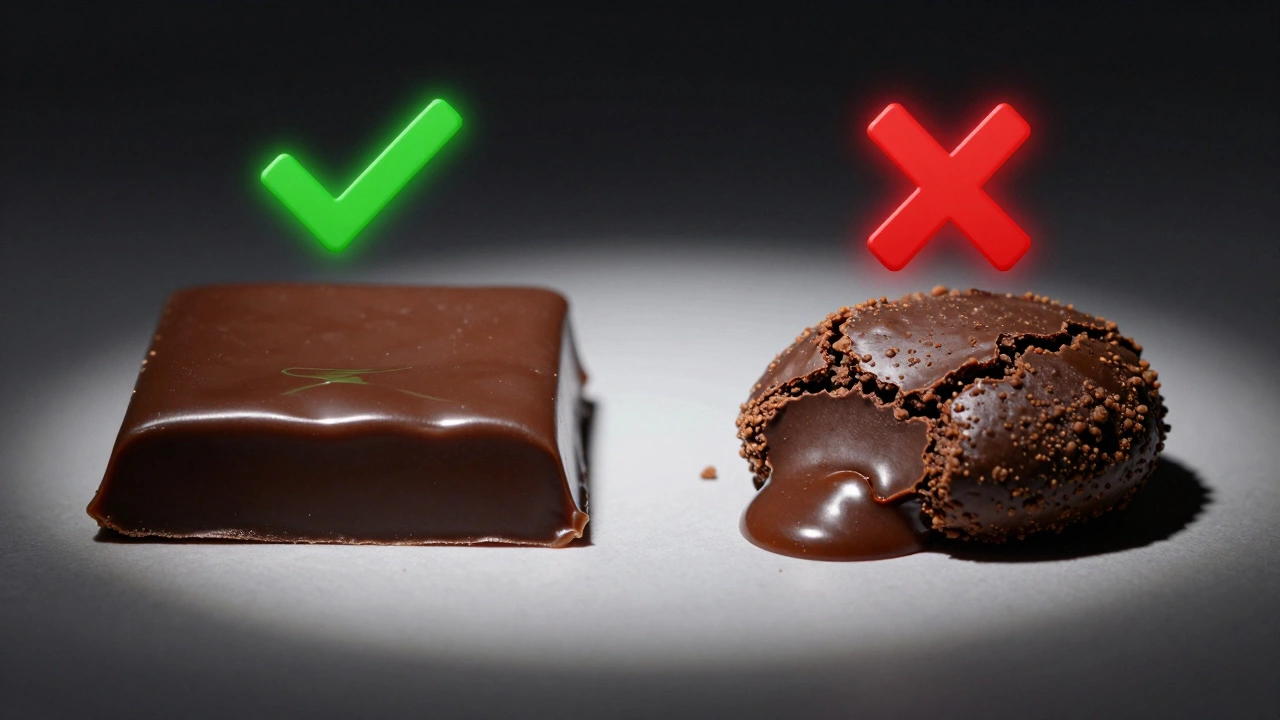
- The fudge won’t set properly - it stays soft, sticky, or even runny.
- Even if you add sugar, the texture often turns grainy because the sugar crystals form unevenly.
- You might need to cook it longer, which increases the chance of scorching.
There are a few old-fashioned recipes that use evaporated milk - usually ones that include marshmallow fluff or corn syrup as a stabilizer. But those are exceptions. They’re not the norm. And they’re not what most people mean when they say “fudge.”

Condensed milk fudge is the easiest, most reliable method
Here’s why condensed milk fudge is the go-to for beginners and busy bakers:
- No candy thermometer needed
- Only three ingredients: chocolate, butter, condensed milk
- Ready in under 15 minutes
- Almost impossible to mess up
Just melt 2 cups of chocolate chips with ½ cup butter and 1 can (14 oz) of sweetened condensed milk. Stir until smooth. Pour into a pan. Chill. Cut. Done.
It’s the same method used by bakeries in Brighton, London, and even in small-town American kitchens. It’s reliable. It’s fast. And it doesn’t require special equipment. You don’t need to watch the pot, test the water drop, or time the boil. Just melt, stir, chill.
Try it with dark chocolate, sea salt, or crushed peppermint. Or swirl in peanut butter. Condensed milk fudge is a blank canvas - and it never fails.
When evaporated milk actually works in fudge
There are a few legitimate uses for evaporated milk in fudge-style recipes. One common one is in “old-fashioned” fudge that includes marshmallow creme. The marshmallow adds the sugar and structure, while evaporated milk adds creaminess without extra sweetness.
Another is in vegan or low-sugar versions where sugar substitutes like erythritol or stevia are used. In those cases, evaporated milk is chosen because it’s unsweetened - letting the sweetener do the work. But these are niche recipes. They’re not the classic fudge people remember from childhood.
If you’re following a recipe that calls for evaporated milk, make sure it also includes a significant amount of sugar - at least 2 cups - and a binding agent like marshmallow fluff or corn syrup. Otherwise, it won’t set.
What to buy and what to avoid
When you’re at the grocery store, check the label. Sweetened condensed milk will say “sweetened condensed milk” right on the can. It’s usually in a smaller, taller can. Evaporated milk is labeled “evaporated milk” and comes in a larger, rounder can. They’re rarely next to each other - but if they are, look at the ingredient list.
Condensed milk: milk, sugar.
Evaporated milk: milk.
If you see “evaporated milk” and the recipe says “condensed milk,” don’t guess. Don’t substitute. Buy the right one. It’s not worth ruining a batch of fudge.
Pro tip: Use full-fat condensed milk
Some people try to cut calories by using “low-fat” or “reduced-sugar” condensed milk. Don’t. The fat and sugar are what give fudge its body and shine. Low-fat versions often contain thickeners that make the fudge rubbery. Reduced-sugar versions use sugar alcohols that don’t crystallize the same way - and your fudge will stay soft or turn grainy.
Stick with full-fat, full-sugar sweetened condensed milk. It’s cheap. It’s shelf-stable. And it’s the secret behind the best fudge you’ll ever make.
Final verdict: Use condensed milk
For 99% of fudge recipes - especially the ones you find online, in cookbooks, or passed down from your grandma - condensed milk is the only choice. It’s foolproof, fast, and delivers the rich, smooth texture everyone expects.
Evaporated milk has its place - in creamy soups, coffee, or pumpkin pie - but not in classic fudge. If you’re looking for a simple, delicious, no-fail dessert, grab a can of sweetened condensed milk. You won’t regret it.
Popular Posts



Discovering the Best Cheese for Perfect Tiramisu
Jan, 7 2025