
Oat Contamination Calculator for Baking
Baking Risk Assessment
Calculate whether your recipe meets gluten-free safety standards based on oat flour usage and contamination levels.
Results will appear here
When you’re baking gluten-free cakes, every ingredient matters. You check the flour, the baking powder, even the vanilla extract. But what about oatmeal? It’s soft, comforting, and often labeled as gluten-free. Yet, you’ve heard whispers that oatmeal might still contain gluten. So, does oatmeal have gluten? The answer isn’t simple-and it can make or break your gluten-free baking.
Plain oatmeal is naturally gluten-free
Oats themselves don’t contain gluten. Gluten is a protein found in wheat, barley, and rye. Oats are a different grain altogether, with their own set of proteins called avenins. For most people with celiac disease, avenins are harmless. The U.S. Food and Drug Administration (FDA) and Health Canada both recognize pure, uncontaminated oats as safe for gluten-free diets. That’s why you’ll see oat flour used in gluten-free cakes, granola bars, and even pancake mixes.
But here’s where it gets messy: oats are almost never grown or processed in isolation. They’re often rotated with wheat or barley in the same fields. Combine that with shared harvesting equipment, transport trucks, and processing lines, and cross-contamination becomes almost inevitable. A 2023 study from the Celiac Disease Foundation found that 32% of products labeled as "oats" contained detectable levels of gluten above the 20 ppm FDA limit for gluten-free labeling.
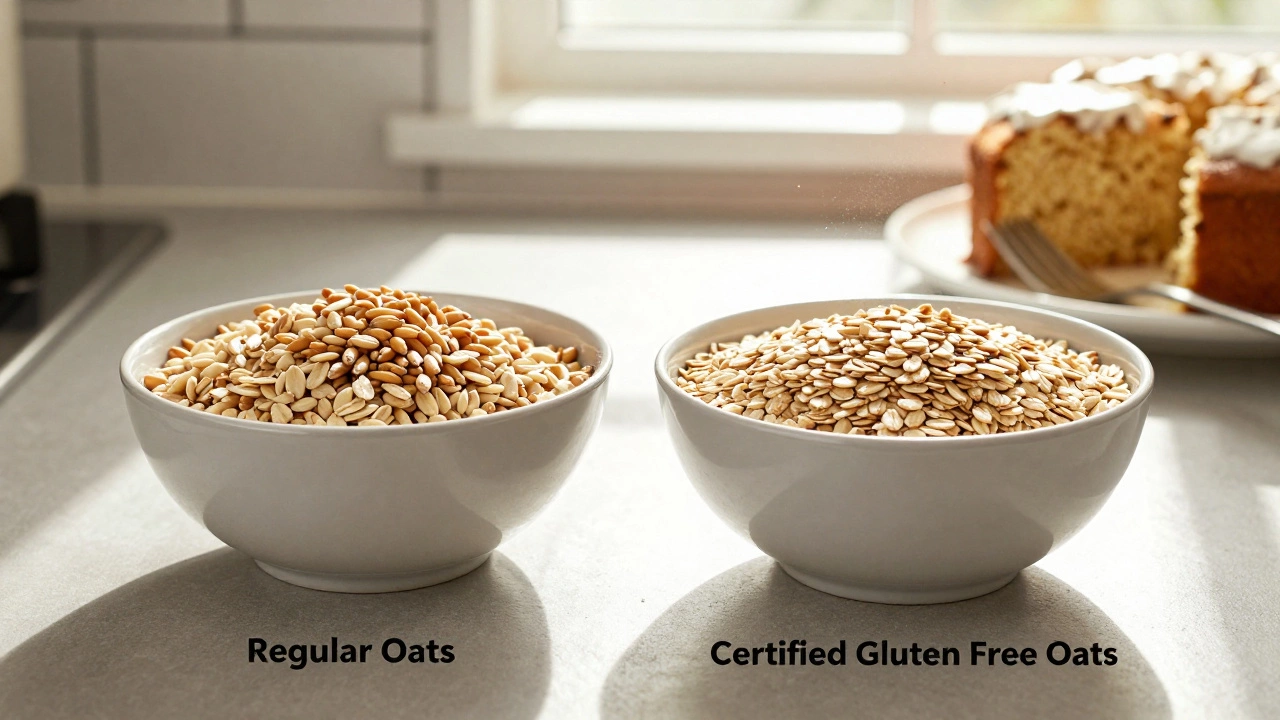
Not all "gluten-free" oats are created equal
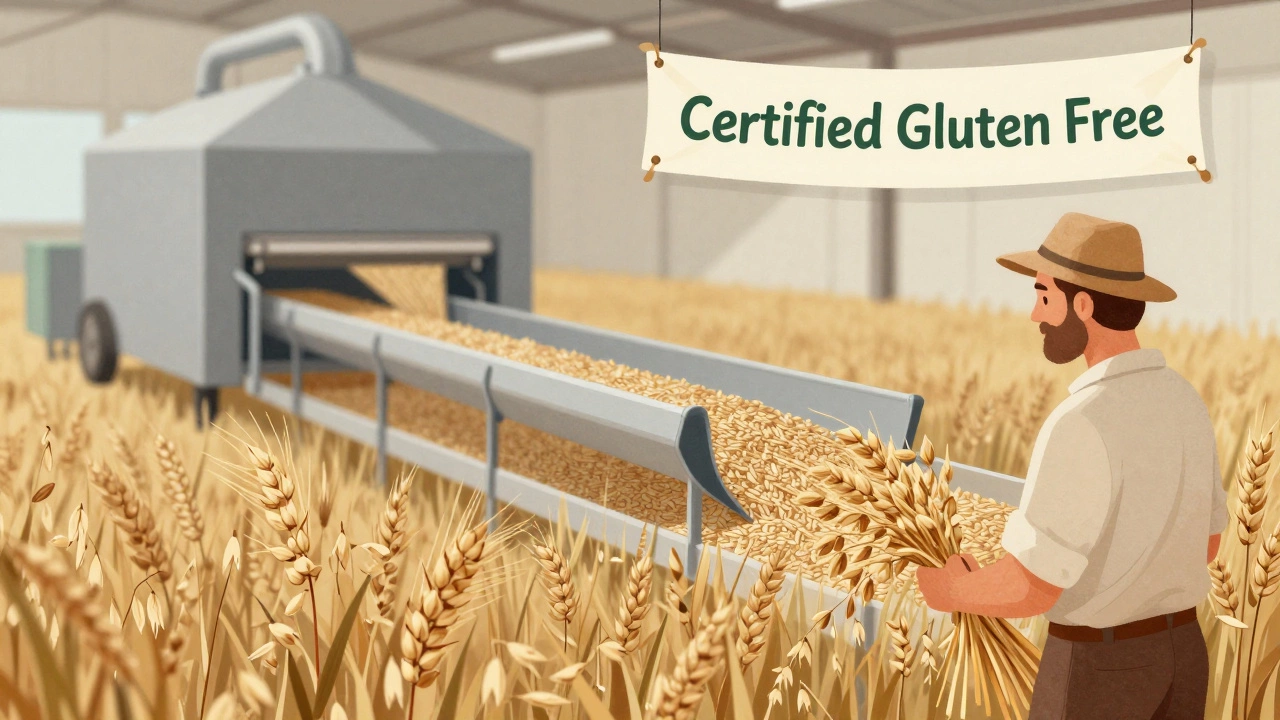
If you’re buying oatmeal for gluten-free cakes, you can’t just grab the cheapest bag off the shelf. Look for brands that explicitly state they’re "certified gluten-free." That means the oats were grown in dedicated fields, processed in facilities that never handle wheat, barley, or rye, and tested to ensure gluten levels stay under 10 ppm-often stricter than the FDA’s 20 ppm standard.
Brands like Bob’s Red Mill, Gluten-Free Oats by Quaker (specifically their gluten-free line), and Pure Oats by Avena Foods all use this dedicated supply chain. They even test every batch. You’ll see their certification logos: the GFCO seal, the NSF mark, or the Celiac Support Association logo. These aren’t marketing gimmicks. They’re third-party validations backed by lab testing.
On the flip side, if a bag just says "oats" or "natural oats," assume it’s contaminated unless proven otherwise. In gluten-free baking, even a tiny amount of gluten can trigger reactions in sensitive individuals. A single teaspoon of contaminated oat flour can push a batch of gluten-free cake over the safety threshold.
Why this matters for gluten-free cakes
Gluten-free cakes rely on binders like xanthan gum or psyllium husk to mimic gluten’s structure. But adding oats can change everything. Oat flour absorbs more liquid than rice or almond flour. If you swap regular oatmeal for untested oats in your favorite cake recipe, you might end up with a dense, gummy mess-or worse, a cake that makes you sick.
Real bakers who make gluten-free cakes for a living always use certified gluten-free oat flour. It’s not just about safety. It’s about texture. Certified oat flour gives cakes a tender crumb, a subtle nuttiness, and a moistness that’s hard to replicate. A 2024 taste test by Gluten-Free Watchdog compared five oat flours in chocolate cake recipes. The cakes made with certified gluten-free oats scored 4.7 out of 5 for texture and flavor. The ones made with regular oats? 2.1. The difference was noticeable even to people without gluten sensitivity.
How to test your oatmeal at home
You don’t need a lab to check if your oatmeal is safe. If you’re unsure, here’s a simple method:
- Take 1 tablespoon of oatmeal and dissolve it in 1/4 cup of warm water.
- Let it sit for 10 minutes.
- Stir it gently. If you see clumps, cloudiness, or a gritty residue that doesn’t dissolve, it might be contaminated.
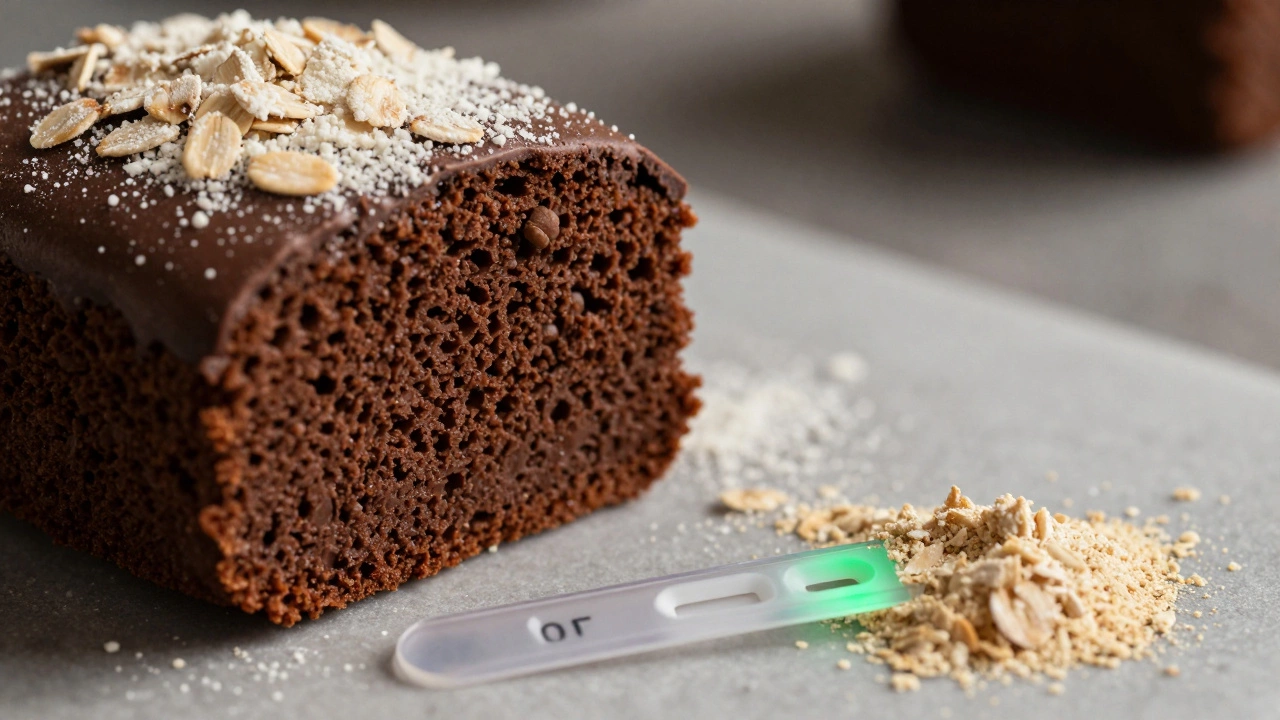
- For peace of mind, buy a home gluten test strip (like Nima or EZ Gluten). They cost about $2 each and detect gluten down to 5 ppm.
It’s not foolproof, but it’s better than guessing. And if you’re baking for someone with celiac disease? Always test. One mistake can have serious consequences.
Alternatives to oatmeal in gluten-free cakes
If you’re still unsure about oats-or if someone in your household reacts to even certified gluten-free oats-there are other options. Almond flour gives a rich, moist crumb. Coconut flour is absorbent and works well in small amounts. Rice flour blends are neutral and predictable. Buckwheat flour, despite its name, is naturally gluten-free and adds a deep, earthy flavor that pairs well with chocolate.
But if you love the texture oats bring to cakes, don’t give up. Just be smart. Use only certified gluten-free oat flour. Measure it precisely. And store it in an airtight container away from other flours.
The bottom line
Oatmeal doesn’t have gluten by nature. But in the real world, it almost always does-unless it’s specifically grown, handled, and tested to avoid contamination. For gluten-free baking, especially cakes where texture and safety are both critical, you need certified gluten-free oats. Anything else is a gamble.
When you bake a gluten-free cake, you’re not just mixing ingredients. You’re building trust-with yourself, and with whoever eats it. Choose your oats like you choose your flour: carefully, intentionally, and without compromise.
Can I eat oatmeal if I have celiac disease?
Yes-but only if it’s certified gluten-free. While oats themselves don’t contain gluten, cross-contamination during farming and processing is common. Studies show up to one-third of regular oat products contain unsafe levels of gluten. Only oats tested and certified by third-party organizations like GFCO or NSF are considered safe for people with celiac disease.
Is all oat flour gluten-free?
No. Oat flour made from regular oats is likely contaminated with gluten. Even if the label says "oat flour," it doesn’t guarantee safety. Look for "certified gluten-free oat flour" on the packaging. Brands like Bob’s Red Mill and Gluten-Free Oats by Quaker have dedicated facilities and test every batch. Don’t assume-always check the certification.
Why do some people react to certified gluten-free oats?
A small percentage of people with celiac disease (about 8-10%) react to avenin, the protein naturally found in oats. This isn’t gluten-it’s a different protein that behaves similarly in the body. If you’ve tried certified gluten-free oats and still have symptoms, stop using them and talk to your doctor. There are plenty of other gluten-free flours that work just as well.
Can I use rolled oats instead of oat flour in gluten-free cakes?
You can, but you shouldn’t without grinding them first. Rolled oats are too coarse to blend evenly into cake batter. They’ll leave a gritty texture and won’t absorb moisture the same way flour does. Always grind certified gluten-free rolled oats into a fine powder using a blender or food processor before using them in baking. Measure by weight for best results-100 grams of oat flour is not the same as 100 grams of rolled oats.
What’s the difference between gluten-free oats and regular oats?
The difference is in how they’re grown and processed. Regular oats are often grown in rotation with wheat or barley and processed on shared equipment. Gluten-free oats come from dedicated fields, are harvested with clean equipment, stored separately, and tested to ensure gluten levels are below 10 ppm. It’s not about the oat-it’s about the supply chain. That’s why certified gluten-free oats cost more.
Popular Posts


Best Tasting Birthday Cakes: A Delicious Quest
Mar, 13 2025
How Long Do Brownies Last? Shelf Life & Storage Tips
Oct, 19 2025

How to Make Brownies That Aren't Dry or Hard
Mar, 12 2026