Pavlova Crack Prevention Calculator
Recommended cooling method:
Recommended Baking Time
Nothing kills a perfect pavlova faster than a cracked top. You’ve whipped the egg whites to stiff peaks, folded in the sugar with care, shaped it into a cloud-like nest, and baked it slowly for hours-only to pull it out of the oven and see jagged lines splitting through the surface. It still tastes amazing, sure. But it doesn’t look like the ones in the magazines. And you can’t help but wonder: why does my pavlova crack? And more importantly, how do you stop it?
Why Pavlova Cracks in the First Place
Pavlova isn’t just a dessert-it’s a delicate balance of science and patience. The crack isn’t a flaw in your technique alone; it’s often the result of how the meringue structure responds to heat and moisture loss. When the outside dries out too fast while the inside is still expanding, tension builds. That tension snaps the surface. It’s like a balloon popping when you overinflate it.
Most cracks happen during cooling, not baking. Even if your oven temperature is perfect, if you take the pavlova out too soon or let it cool too quickly, the air inside contracts faster than the shell can adjust. That’s when the cracks appear-like spiderwebs across the surface.
Temperature Is Everything
Start with the oven. Most recipes say 120°C (250°F). That’s a good baseline, but don’t just set it and forget it. Your oven might run hot. Use an oven thermometer-yes, really. A difference of 10°C can turn a soft, marshmallowy center into a dry, brittle one.
Preheat your oven properly. If you throw the pavlova into a cold oven, it won’t set evenly. If you crank it too high, the outside hardens before the inside can rise. The goal is slow, gentle heat. Bake at 110-120°C for 1.5 to 2 hours, depending on size. A large pavlova (20cm wide) needs at least 90 minutes. Smaller ones? Still 60-70 minutes.
And here’s the secret most bakers miss: don’t open the oven door during baking. Not even for a peek. The sudden drop in temperature shocks the meringue. It’s like splashing cold water on a hot pan-things break.
How to Cool Pavlova Without Cracking
This is where most people mess up. You bake it perfectly, then rush to take it out and decorate it. Big mistake.
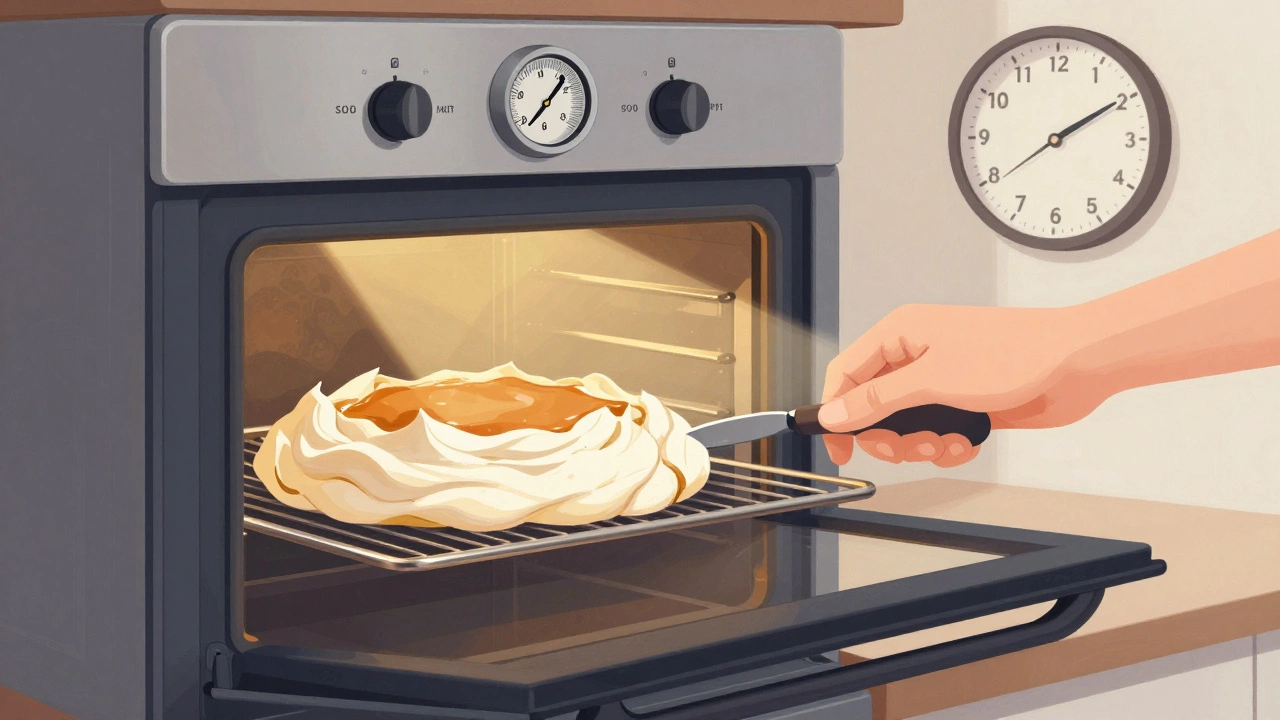
Turn off the oven when the time’s up. Leave the pavlova inside with the door closed. Let it cool slowly for at least 4 hours-overnight is even better. The gradual drop in temperature lets the air inside contract evenly. No sudden shifts. No cracks.
If you’re in a hurry, crack the oven door open just a few centimeters after an hour of turning it off. Let the heat escape slowly. But don’t remove it until it’s room temperature. If it’s still warm when you take it out, the steam inside will keep pushing, and the shell will split.
Use Cornstarch (and Do It Right)
One of the most reliable fixes for cracking is adding 1 teaspoon of cornstarch per 4 egg whites. Cornstarch absorbs excess moisture and stabilizes the structure. It doesn’t change the taste-it makes the meringue more forgiving.
Don’t just sprinkle it on top. Mix it with the sugar before folding it into the egg whites. This ensures even distribution. If you add it after, it won’t blend properly and could leave gritty bits. Use fine cornstarch, not the coarse kind. If you don’t have cornstarch, arrowroot powder works too.
Don’t Overbeat the Egg Whites
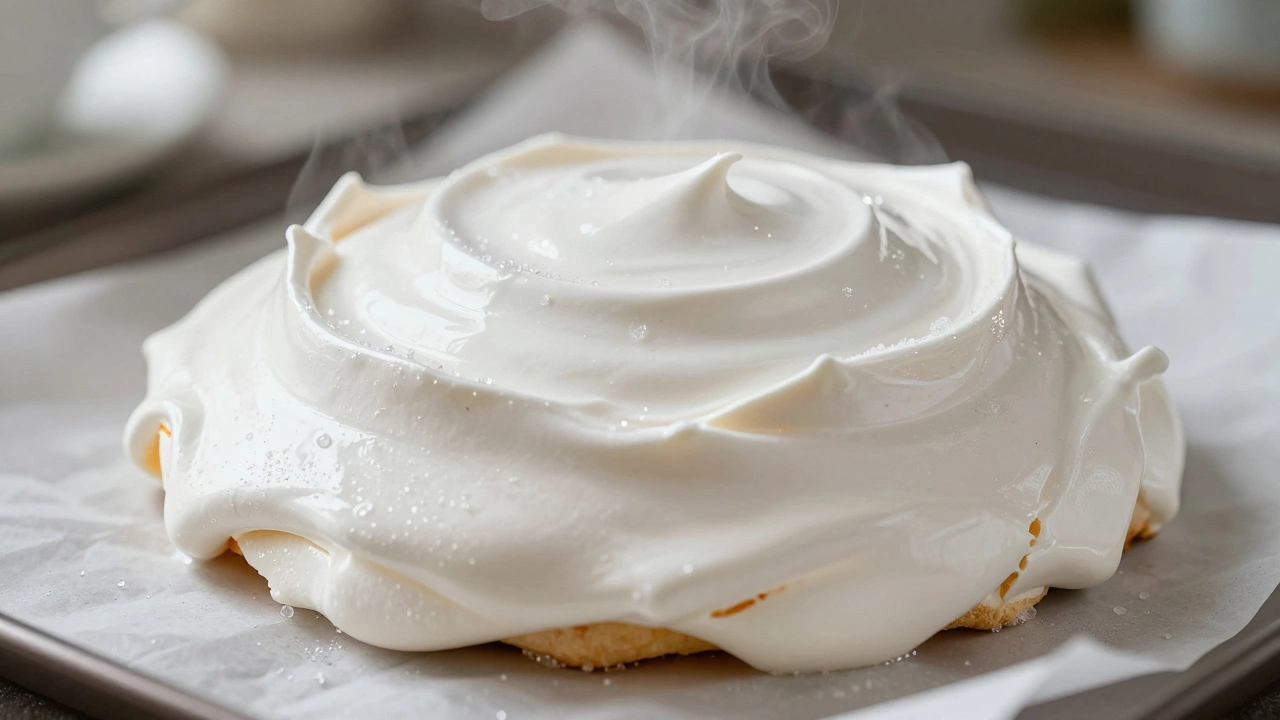
It’s tempting to whip those whites until they’re rock hard. But stiff peaks aren’t the same as dry peaks. You want glossy, firm peaks that hold their shape but still have a slight bounce. If you overbeat, the protein structure becomes too tight and brittle. It can’t expand properly during baking, so it snaps instead.
Stop whipping as soon as the whisk leaves clear trails and the peaks stand up with a slight curl at the tip. If they’re pointy and dry-looking, you’ve gone too far.
Use Fresh Eggs, Not Old Ones
Old egg whites are thinner and contain more water. That means more steam during baking-and more risk of uneven expansion. Fresh egg whites (from eggs less than a week old) have thicker, more stable proteins. They hold air better and create a stronger network.
Separate your eggs while they’re cold, then let the whites sit at room temperature for 30 minutes before whipping. Cold eggs separate easier. Room-temperature whites whip up higher and more evenly.
Shape It Right
Don’t make your pavlova too thin around the edges. A common mistake is spreading it out flat like a pancake. That creates a large surface area that dries out too fast. Instead, build up the sides slightly to form a shallow well in the center. Think of it like a nest, not a disc.
Use parchment paper. Never grease the tray. A greased surface causes the meringue to slide and spread unevenly. Parchment gives it something to grip onto as it bakes. You can trace a circle with a pencil on the paper as a guide-just make sure the pencil doesn’t touch the meringue.
Humidity Is Your Enemy
If you live in a damp place like Brighton, you know this all too well. Humidity makes meringues sticky and prone to weeping or cracking. On rainy days, bake your pavlova only if you can keep the oven door shut the whole time. Avoid baking on days with over 70% humidity if you can.
Some bakers add a splash of white vinegar or lemon juice (½ teaspoon) to the egg whites before whipping. It helps stabilize the foam and cuts through any moisture in the air. It won’t make your pavlova taste sour-it just helps it hold together better.
What to Do If It Already Cracked
Don’t throw it out. Cracked pavlova still tastes incredible. Use it like a deconstructed dessert. Break it into chunks, layer it with whipped cream and berries in a glass, and call it a pavlova trifle. Or crumble it over ice cream. No one will know the difference.
If you’re serving it whole, cover the cracks with a swirl of cream or a dusting of icing sugar. Sometimes, the imperfections make it look more homemade-and more charming.
Quick Checklist for Crack-Free Pavlova
- Use fresh egg whites, separated and brought to room temperature
- Preheat oven properly and use a thermometer
- Bake at 110-120°C for 1.5-2 hours
- Never open the oven door while baking
- Add 1 tsp cornstarch per 4 egg whites, mixed with sugar
- Whip whites to stiff, glossy peaks-not dry
- Shape with raised edges, not flat
- Cool completely in the turned-off oven (4+ hours)
- Avoid baking on humid days
Why This Works
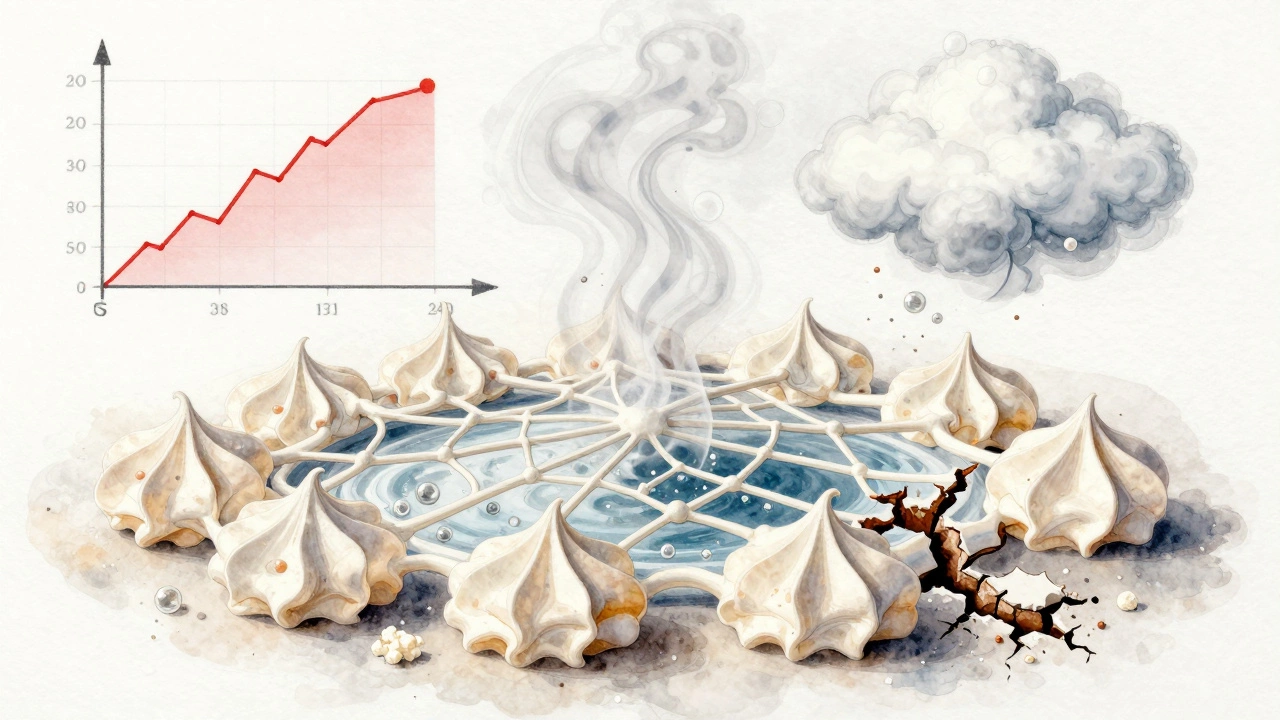
This isn’t magic. It’s physics. Meringue is made of air trapped in protein webs. Heat turns the water inside into steam, which expands. If the structure isn’t strong enough-or if it cools too fast-the steam pushes out and breaks the surface. By controlling temperature, moisture, and time, you’re giving the meringue the space and stability it needs to rise without exploding.
People think pavlova is finicky. It’s not. It just needs respect. Treat it like a living thing-slow, steady, and patient.
Why does my pavlova weep or become sticky underneath?
Weeping or stickiness usually means the sugar didn’t fully dissolve. Make sure you add the sugar slowly, one tablespoon at a time, while whipping the egg whites. Wait until each addition is fully incorporated before adding the next. If the mixture feels grainy when you rub it between your fingers, keep whipping. Also, avoid baking on humid days-moisture in the air gets absorbed by the sugar.
Can I make pavlova ahead of time?
Yes. Once cooled and completely dry, store it in an airtight container at room temperature for up to 2 days. Don’t refrigerate-it will absorb moisture and go soft. Add toppings like cream and fruit just before serving. If you bake it the day before, let it cool in the oven overnight-it’ll be even better.
Can I use egg white powder instead of fresh eggs?
It’s possible, but not ideal. Egg white powder lacks the natural proteins and moisture balance of fresh whites. The texture tends to be less airy and more dense. If you must use it, follow the package instructions exactly and add a little extra cornstarch. Fresh eggs give the best results.
Why does my pavlova collapse in the center?
A collapsed center usually means the meringue wasn’t baked long enough or cooled too quickly. The inside didn’t set properly, so when it cooled, it sank. Make sure you bake it until the outside feels dry and crisp, and the center is still slightly soft but doesn’t jiggle when you shake the tray. Then cool it slowly in the oven.
Should I use caster sugar or granulated sugar?
Caster sugar (superfine sugar) is best. It dissolves faster and creates a smoother texture. Granulated sugar can leave grainy bits if not fully incorporated. If you only have granulated, pulse it in a food processor for 10 seconds to make it finer. Don’t skip this step.
Next Steps
If you’ve tried everything and your pavlova still cracks, try this: bake two at once. One with cornstarch, one without. One cooled in the oven, one taken out after 30 minutes. Compare them the next day. You’ll see the difference immediately. Practice isn’t just repetition-it’s observation.
And remember: even the best bakers get cracks. The goal isn’t perfection. It’s consistency. Once you understand the why behind each step, you’ll stop fearing the cracks-and start enjoying the process.