
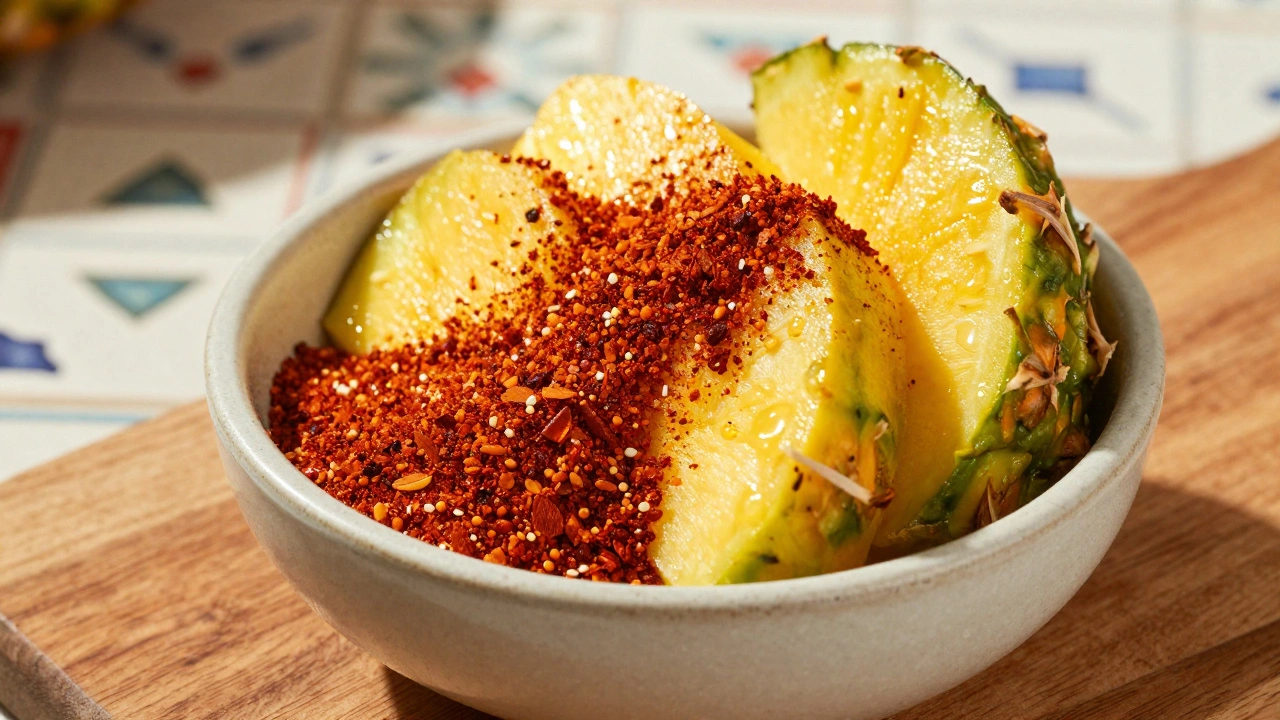
If you’ve ever sprinkled Tajin on mango slices, dipped fruit in it, or stirred it into a vegan chia pudding, you’ve probably wondered: Tajin - is it actually vegan? It’s a bold, tangy, chili-lime seasoning that shows up everywhere from street food carts to Instagram-worthy vegan desserts. But with all the mystery around its ingredients, it’s easy to get confused. Let’s cut through the noise.
What’s in Tajin?
Tajin Clásico, the original version sold in the U.S. and most global markets, has three ingredients: chili peppers, dehydrated lime, and salt. That’s it. No animal products. No dairy. No hidden gelatin or honey. Just ground dried chilies (a mix of jalapeño, guajillo, and ancho), lime powder, and sea salt. All plant-based. All simple. No processing aids. No preservatives. No surprise additives.
You can verify this yourself. Open the container. Read the label. The ingredient list is shorter than your morning coffee order. And if you’re still unsure, check the manufacturer’s website - Clásico is listed as vegan by its producer, Grupo Tampico. No certifications, but no animal-derived ingredients either.
What About Other Tajin Variants?
Not all Tajin products are the same. The brand has expanded. There’s Tajin Fresco (with citric acid and natural flavors), Tajin Clásico with lime and cucumber, and even Tajin Sweet (which includes sugar and artificial flavors). Most of these are still vegan, but you need to check.
Tajin Sweet, for example, contains sugar. Not all sugar is vegan - some is processed with bone char, especially in the U.S. But Tajin Sweet doesn’t specify the sugar source. If you’re strict about refined sugar, you might want to skip it or look for organic or unrefined cane sugar alternatives. Most vegans don’t worry about this level of detail, but if you’re avoiding all animal-derived processing agents, it’s worth noting.
Other flavors like Tajin Mango or Tajin Pineapple are also plant-based. They use natural fruit powders and flavorings. None contain dairy, eggs, or meat. But always read the label. Ingredients can change.
Why People Doubt Tajin Is Vegan
Confusion comes from two places. First, Tajin is often used in dishes that aren’t vegan - like grilled corn with cotija cheese or Mexican street tacos with meat. People assume the seasoning itself contains dairy because it’s paired with it. That’s like thinking soy sauce isn’t vegan because it’s served with fish.
Second, some people mix up Tajin with similar seasonings. There’s a product called “Chili Lime Seasoning” from other brands that sometimes includes milk powder or whey. Tajin doesn’t. It’s pure spice. No fillers. No additives.
Also, some vegans avoid products made in facilities that process animal products. Tajin is produced in Mexico in a facility that handles only plant-based ingredients. There’s no shared equipment with dairy or meat. So cross-contamination isn’t a concern here.

How Vegans Use Tajin in Desserts
Tajin isn’t just for savory snacks. It’s a game-changer in vegan desserts. The bright acidity of lime cuts through sweetness, and the mild heat adds depth. Think of it like black pepper in chocolate - it doesn’t make it spicy, it makes it more interesting.
Here are a few real ways vegans use Tajin in sweets:
- Sprinkled on fresh mango, pineapple, or watermelon chunks - a classic Mexican street treat, fully vegan.
- Stirred into coconut yogurt or cashew cream for a tangy topping.
- Coated on vegan chocolate-dipped strawberries - the salt and spice balance the sweetness perfectly.
- Added to agave-sweetened fruit sorbets for a zesty kick.
- Mixed into vegan caramel sauce for drizzling over ice cream.
One popular dessert trend in 2025 is Tajin-spiked vegan churros. The dough is made with plant milk and flax eggs, fried, rolled in cinnamon sugar, then dusted with Tajin. The result? A dessert that’s sweet, spicy, and crunchy - and 100% plant-based.
Is Tajin Certified Vegan?
No, Tajin Clásico doesn’t carry a vegan certification label like Vegan Society or Certified Vegan. That doesn’t mean it’s not vegan. Many small brands skip certification because it’s expensive and unnecessary when the ingredients are so simple.
Compare it to salt or black pepper - you don’t need a label to know they’re vegan. Tajin is the same. It’s a spice blend with no animal products, no processing aids, and no hidden ingredients. If you’re comfortable with un-certified but clearly labeled products, Tajin is safe.
If you want certified vegan, look for brands like Spice House or Frontier Co-op’s Chili Lime Seasoning, which are certified. But they cost more and taste different. Tajin’s flavor profile is unique - it’s the only one with that specific balance of chili, lime, and salt.

What to Watch Out For
There are three things to keep in mind:
- Don’t confuse Tajin with “Chili Lime Salt” from other brands - some add dairy or MSG derived from animal sources.
- Check the packaging for “may contain” warnings - Tajin doesn’t have them, but if you buy a bulk version from a non-brand store, it might.
- If you’re allergic to citrus or nightshades (chili peppers), Tajin isn’t safe - but that’s not a vegan issue, it’s an allergy issue.
Also, avoid Tajin products labeled “with cheese” or “queso flavor.” Those are clearly not vegan. Stick to Clásico, Fresco, or the fruit-flavored versions.
Final Verdict: Is Tajin Vegan?
Yes. Tajin Clásico is vegan. All its ingredients are plant-based. It’s made in a facility that doesn’t process animal products. It’s been used for decades in vegan-friendly Mexican cuisine. And it’s one of the most versatile seasonings you can keep in your pantry if you eat plant-based.
If you’re new to vegan baking or snacking, Tajin is a low-risk, high-reward addition. It adds complexity without dairy, eggs, or sugar tricks. It’s cheap, shelf-stable, and doesn’t require refrigeration. A single jar lasts months, even with daily use.
So go ahead. Sprinkle it on your vegan chocolate bark. Dust it on your coconut ice cream. Mix it into your fruit salad. You’re not just adding flavor - you’re adding authenticity.
Is Tajin Clásico vegan?
Yes. Tajin Clásico contains only three ingredients: chili peppers, dehydrated lime, and salt. None are derived from animals. It’s not certified vegan, but the ingredients and manufacturing process make it suitable for vegans.
Can I use Tajin in vegan desserts?
Absolutely. Tajin adds a bright, spicy-sour kick that balances sweetness in desserts. Try it on fruit, in chocolate coatings, stirred into coconut yogurt, or dusted on vegan churros. Many vegan chefs use it to elevate simple ingredients without adding sugar or dairy.
Is all Tajin vegan?
Most are, but not all. Tajin Clásico, Fresco, and fruit-flavored versions (like mango or pineapple) are vegan. Avoid Tajin products with “cheese,” “queso,” or “dairy” in the name. Always check the ingredient list - some newer flavors may contain sugar processed with bone char, though this is rare.
Does Tajin contain sugar?
No, Tajin Clásico does not contain sugar. Only the sweet variants, like Tajin Sweet, include sugar. Even then, it’s not a major ingredient - the spice blend is still the star. If you’re avoiding sugar entirely, stick to Clásico.
Where is Tajin made?
Tajin is produced in Mexico by Grupo Tampico. The facility processes only plant-based ingredients and does not handle dairy, eggs, or meat. There’s no cross-contamination risk for vegans.
Can I use Tajin if I’m gluten-free?
Yes. Tajin contains no gluten-containing ingredients. It’s naturally gluten-free and is often labeled as such on packaging. Many gluten-free vegan recipes use Tajin as a flavor booster without worry.
Popular Posts


Why Eggs Matter in Cheesecake Recipes
Mar, 20 2025