Brownies Hard After Baking: Why It Happens and How to Fix It
When your brownies, a dense, fudgy chocolate dessert baked in a pan and cut into squares come out of the oven hard instead of fudgy, it’s not your fault—it’s usually a timing or temperature issue. Brownies are tricky because they’re meant to be underbaked just enough to stay soft in the middle. Too much time in the oven, even by five minutes, turns them into a dry, crumbly brick. This isn’t about bad recipes; it’s about missing the sweet spot between cakey and gooey.
The brownie texture, the internal consistency that ranges from fudgy to cakey, determined by fat-to-flour ratio and baking time depends heavily on how long you bake them and how you cool them. Many people assume if the top looks set, the brownies are done. But the center keeps cooking from residual heat after you pull them out. That’s why waiting to cut them is just as important as baking them. brownies cooling time, the period needed after baking for internal moisture to redistribute and set properly isn’t just a suggestion—it’s a rule. Cut too soon, and they crumble. Wait too long without covering them, and they dry out. The same brownie batter can turn out perfect or rock-hard based on these two steps alone.
Another common culprit? Too much flour. Some recipes call for extra flour to make brownies hold shape, but that’s a trap. More flour = more gluten = tougher texture. Even a tablespoon too much can turn your fudgy treat into a dense cookie. And if you’re using a different kind of chocolate—say, baking bars instead of chips—the cocoa butter content changes how the batter sets. Dark chocolate with high cocoa solids can dry out faster. Butter quality matters too. Margarine or low-fat spreads don’t melt the same way, and that affects moisture retention.
Then there’s the oven. Is it running hot? Most home ovens are off by 15–20 degrees. If yours is too hot, the edges bake fast while the center stays raw, then overcooks as it sits. Use an oven thermometer. It’s cheap, and it’ll save you from a batch of hard brownies. Also, bake on the middle rack. Too high? Tops burn. Too low? Bottoms get tough. And don’t open the oven door early. Every peek drops the temperature and messes with the rise.
And don’t forget the pan. Dark metal pans absorb more heat than glass or light aluminum. If you switched pans and suddenly your brownies are hard, that’s why. A dark pan needs a lower oven temp—reduce it by 25 degrees. Glass pans take longer to heat up, so you might need to bake a few minutes longer. Same batter, different pan, totally different result.
What you’ll find in the posts below are real fixes from real bakers who’ve been there. You’ll learn how long to actually wait before cutting, why letting brownies cool overnight can help or hurt, and how to rescue overbaked ones with simple tricks. No fluff. No guesswork. Just the exact steps that turn hard brownies into soft, fudgy ones—every time.
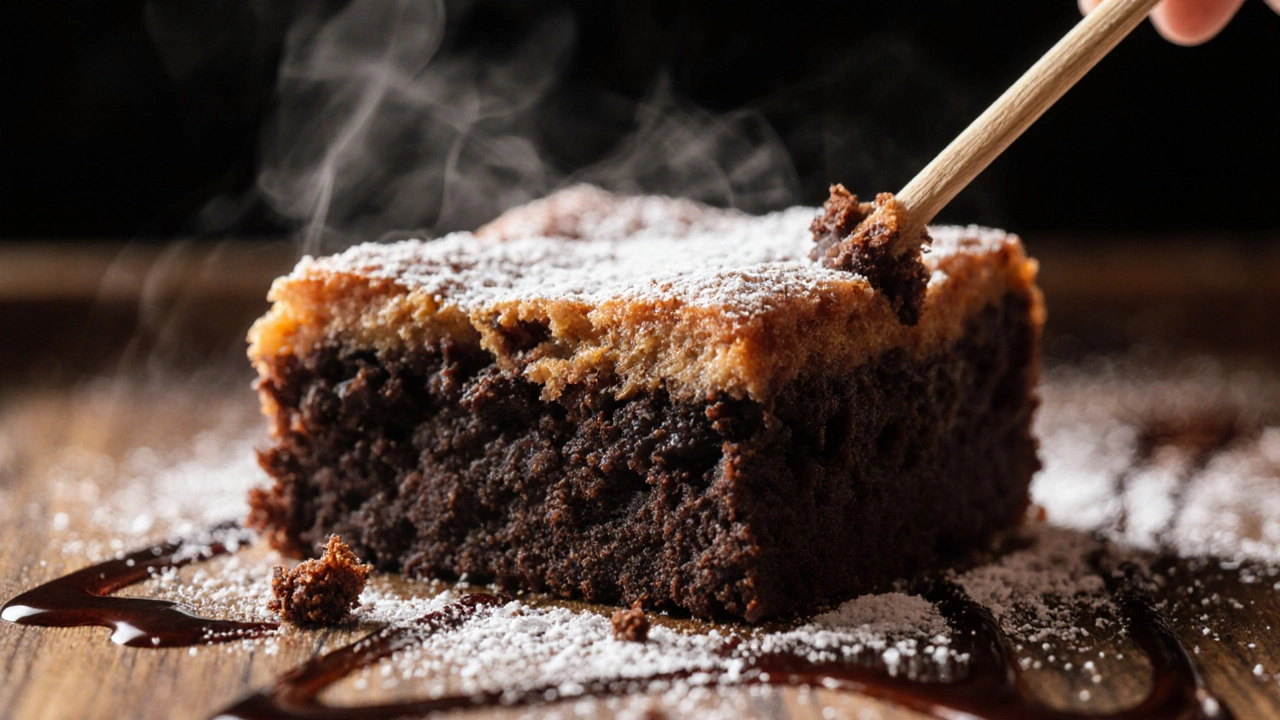
Why Brownies Turn Hard After Baking
Brownies turn hard after baking due to overbaking, too much flour, or improper storage. Learn how to fix texture issues and bake moist, fudgy brownies every time.
View More