
Fudge Setting Time: How Long It Really Takes and What Affects It
When you make fudge, a dense, creamy chocolate confection that relies on precise sugar crystallization, the biggest question isn’t how long to cook it—it’s how long to wait for it to set. Many people pull their fudge out of the fridge too early, only to get a sticky, grainy mess. The truth? Fudge doesn’t set because it’s cold—it sets because the sugar crystals form just right. And that takes time, patience, and the right conditions.
Fudge setting time, the period between pouring and cutting usually takes 2 to 4 hours at room temperature, but it can stretch to 6 if your kitchen is warm or humid. That’s why many recipes say "cool overnight"—it’s not just a suggestion, it’s a science. The sugar syrup cools slowly, letting tiny crystals form evenly. If you rush it with the fridge, you get big crystals, and that’s what makes fudge grainy. Fudge texture, the smooth, melt-in-your-mouth quality everyone wants depends more on how you cool it than how long you stir. Stirring too early or too much is the #1 mistake. You need to wait until the fudge hits about 110°F before you start beating it—that’s when the crystals are ready to form. And once you start stirring, go fast and steady until it thickens. No pauses. No distractions.
What else affects how fast fudge sets? The ingredients. Evaporated milk, a concentrated dairy product with less water than regular milk helps fudge set faster and smoother because there’s less liquid to evaporate. If you swap it for regular milk, you’re adding extra water, which means longer cooling and a higher chance of failure. Same goes for vanilla—it doesn’t just add flavor, it helps the mixture cool evenly. Skip it, and the fudge might set unevenly or taste flat. Even the pan you use matters. A heavy-bottomed pot gives you even heat, which means even cooling. Thin pans? They heat up fast and cool too fast, throwing off the whole process.
There’s no magic timer. Fudge sets when it’s ready—not when your clock says so. The best test? Drop a tiny bit onto a cold plate. If it holds its shape and doesn’t run, it’s ready to pour. If it’s still runny, give it another 10 minutes on the stove. And once it’s poured? Resist the urge to poke, press, or peek. Let it sit. Let it rest. The perfect fudge isn’t made in the pot—it’s made in the waiting.
Below, you’ll find real-tested advice from bakers who’ve been there—stirring too soon, rushing the cool-down, and learning the hard way. Whether you’re fixing grainy fudge, wondering why yours won’t harden, or just want to nail it the first time, these posts give you the exact steps, the science behind them, and the tricks that actually work.
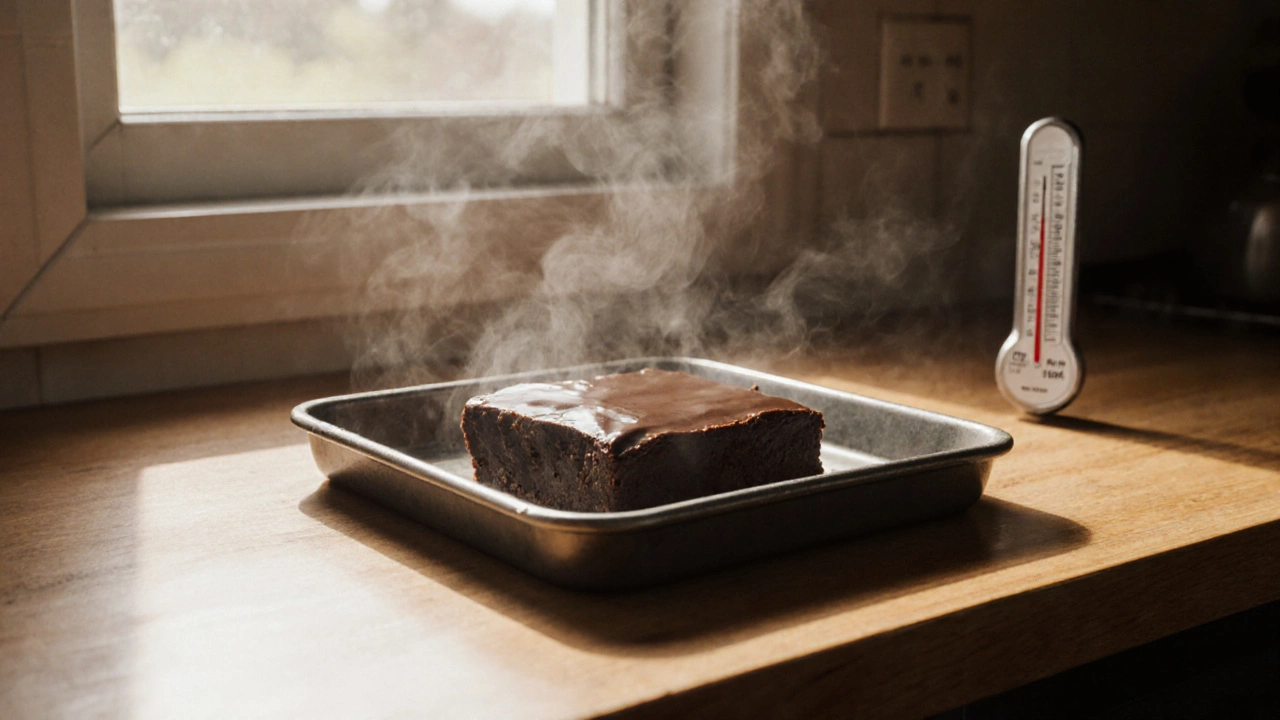
How Long Does It Take for Fudge to Fully Harden?
Fudge takes 4 to 6 hours to harden at room temperature. Learn why timing, temperature, and patience matter for creamy, cuttable fudge every time.
View MorePopular Posts

Can You Freeze Cream Cheese?
Feb, 25 2025


Gluten-Free Flour: What to Use for Cakes
Jun, 15 2025