Brownie Type Calculator
What kind of brownie are you making?
Select your brownie preference to see the key differences in ingredients, texture, and baking characteristics.
Your Brownie Profile
Key Characteristics
Key Characteristics
| Feature | Fudgy Brownie | Cakey Brownie |
|---|---|---|
| Texture | Moist, dense, almost molten center | Slightly lighter, more cake-like |
| Flour Ratio | Less flour | More flour |
| Butter/Chocolate | More fat for richness | Less fat for structure |
| Baking Time | Shorter (20-25 mins) | Longer (25-30 mins) |
| Crust | Crinkly top | Smooth top |
| Serving Style | Often eaten with fork | Can be eaten by hand |
Ever bite into a rich, fudgy brownie and wonder-why is it called that? The word brownie doesn’t come from a person’s name, a place, or even a fancy chef. It’s simpler than you think, and its story ties into American kitchens, a cookbook mistake, and a little bit of luck.
It’s Not About the Color
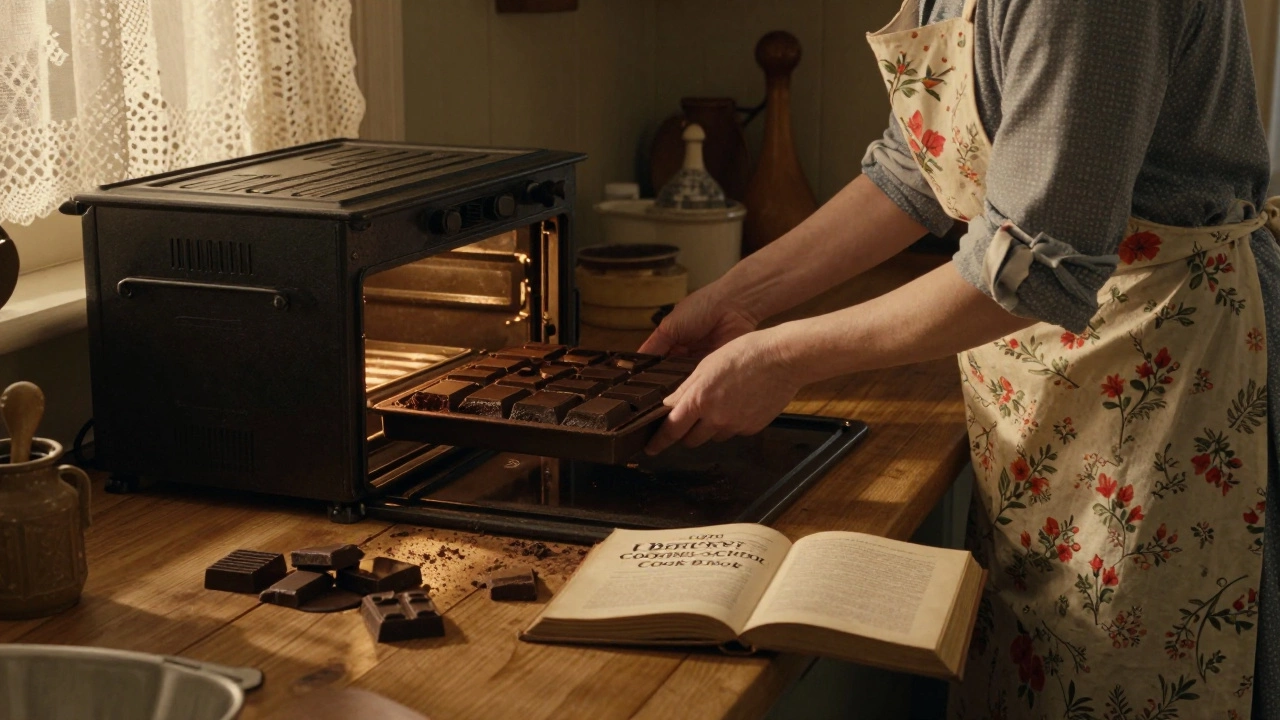
You’d assume "brownie" refers to its color-deep, chocolatey brown. But that’s not where the name started. Early versions of the dessert weren’t even brown. In fact, the first known recipe, from the 1896 Boston Cooking-School Cook Book by Fannie Merritt Farmer, called for a chocolate cake baked in a square pan and cut into pieces. It was labeled "Brownies" because it was a smaller, denser version of a chocolate cake, not because of its hue.
Back then, bakers didn’t have cocoa powder like we do today. They used melted chocolate or chocolate liquor, which gave the batter a dark, almost black color. The name "brownie" stuck because it was a shorthand term for a small, rich cake. Think of it like "cupcake"-it didn’t mean it was served in a cup, just that it was a bite-sized version of a larger dessert.
The Real Origin: A Cookbook Error
The big turning point came in 1897. A woman named Fanny Farmer published a recipe titled "Brownies" that included chocolate, nuts, and butter. But the real spark happened when a Chicago-based cookbook, The Fannie Farmer Cookbook, accidentally printed a recipe under the heading "Brownies" that was meant to be a "Brown Cake." The error stuck. Readers loved the dense, chewy squares and started calling them brownies-no matter how they looked.
By the early 1900s, "brownie" was a household word. Newspapers, women’s magazines, and school bake sales all used the term. It spread fast because it was easy to say, easy to remember, and it described something familiar: a small, sweet, chocolatey treat.
Why Not "Chocolate Square" or "Fudge Cake"?
Why did "brownie" win out over other names? Partly because of how it was marketed. In the 1900s, American homes were full of women who baked for their families, not professional pastry chefs. They needed simple names. "Brownie" sounded friendly, cozy-even a little playful. It didn’t sound like a fancy dessert. It sounded like something your mom made after school.
There’s also a cultural angle. Around the same time, "brownie" was a popular term for helpful little spirits in Scottish and English folklore-tiny, mischievous creatures who did chores at night. The name carried that same feeling: something small, sweet, and secretly wonderful.
The Evolution: Fudgy vs. Cakey
Over the decades, the brownie changed. In the 1930s, cocoa powder became widely available, and bakers started experimenting. Some wanted a lighter, cake-like texture. Others craved something dense, almost molten inside. That’s when the two main styles emerged: cakey brownies and fudgy brownies.
The fudgy kind? That’s what most people think of today. It’s made with more fat (butter and chocolate), less flour, and often baked for a shorter time. The cakey version? More flour, more baking powder, and a longer bake. Both are brownies-but they’re different beasts.
Today, you can find brownies with sea salt, espresso, peanut butter swirls, or even vegan versions made with black beans. But no matter the twist, they’re still called brownies. Because the name isn’t about ingredients. It’s about feeling.
What Makes a Brownie a Brownie?
There’s no official rulebook, but here’s what most bakers agree on:
- It’s baked in a square or rectangular pan
- It’s cut into pieces after baking
- It’s dense, not airy
- It contains chocolate (or cocoa) as the main flavor
- It’s not a cookie, even if it’s chewy
That last one matters. A chocolate chip cookie is soft, spread-out, and chewy. A brownie holds its shape. It’s a slice. You eat it with a fork. You might even share it.
Why the Name Still Works Today
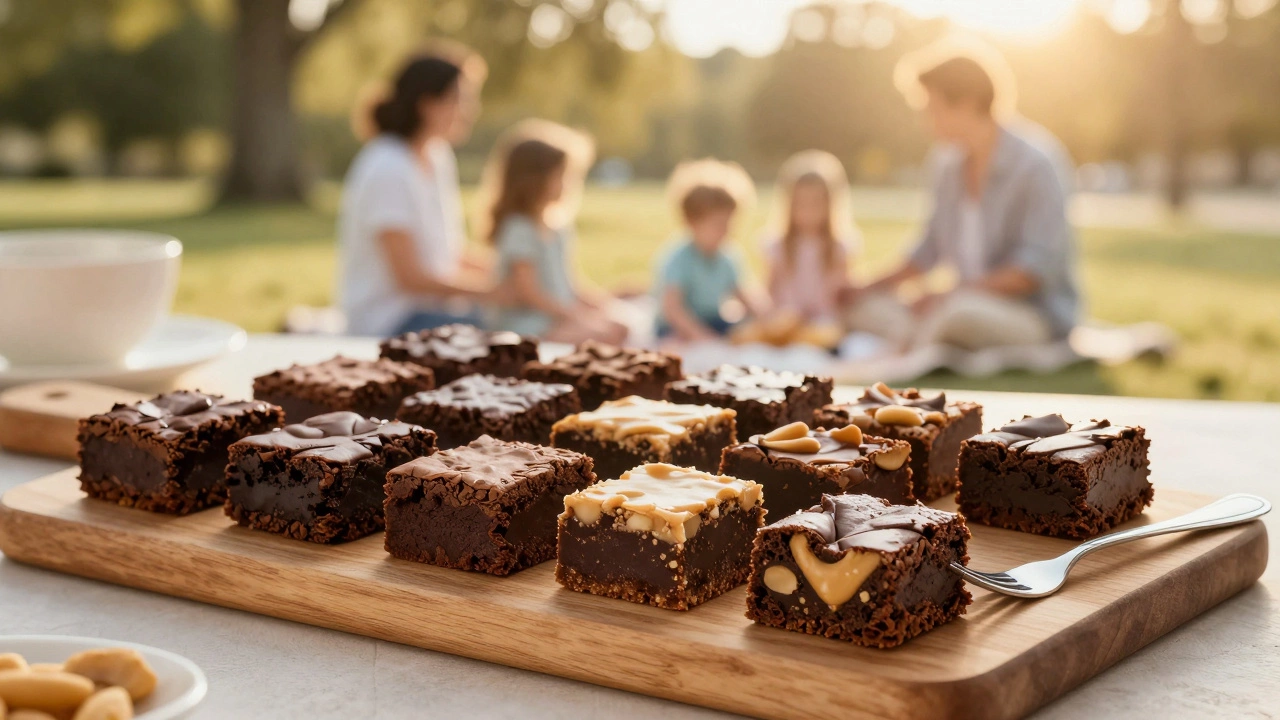
Think about how we say it: "I’m bringing brownies to the party." It’s casual. It’s warm. It doesn’t sound like a dessert you’d find in a Parisian patisserie. It sounds like home.
The name "brownie" survived because it didn’t try to be fancy. It didn’t need a French name or a chef’s title. It was just a sweet, chocolatey square that showed up at school bake sales, family reunions, and after-school snacks. And that’s why, over 125 years later, we still call it a brownie.
Fun Fact: Brownies in Pop Culture
Did you know the first brownie recipe was published in 1897, but the first known photograph of a brownie appeared in a 1906 issue of Ladies’ Home Journal? The caption read: "A new cake for tea-brownies." That’s when the name became mainstream.
By the 1920s, brownies were in school lunchboxes. By the 1950s, they were in TV commercials. In 1987, the U.S. declared July 14 as National Brownie Day. No official law, just a sweet tradition.
Even in 2026, when you see "brownie" on a menu, you know exactly what you’re getting. Not a cake. Not a cookie. Something in between. Something better.
Is a brownie a cake or a cookie?
A brownie is neither-it’s its own category. It’s baked in a pan like a cake, but it’s denser and often eaten like a cookie. The texture falls between the two: fudgy brownies are moist and rich like a cake, while cakey brownies have a slight lift. But unlike cookies, brownies are cut into squares after baking and usually served with a fork.
Why are brownies always square?
They’re baked in rectangular or square pans for practicality. It’s easier to cut uniform pieces for sharing, packing, or selling. Round pans would make uneven slices. Square pans also fit neatly in lunchboxes, on trays, and in display cases. The shape became standard because it works.
Can brownies be made without chocolate?
Technically, yes-but they wouldn’t be called brownies. Recipes like "blondies" use brown sugar and vanilla instead of chocolate. They’re similar in texture but lack the deep chocolate flavor that defines a brownie. Without chocolate, it’s a different dessert entirely.
Who invented the brownie?
No single person invented the brownie. It evolved from a recipe mistake in the late 1890s. Fannie Farmer’s cookbook helped popularize it, but the name likely came from home bakers who called their dense chocolate squares "brownies" as a casual shorthand. It was a collective creation, not a solo invention.
Are brownies the same as fudge?
No. Fudge is made by boiling sugar, butter, and milk until it thickens, then cooling it into a soft, creamy block. Brownies are baked like cake-using flour, eggs, and chocolate-and have a firmer structure. Fudge melts in your mouth. Brownies hold their shape. They’re cousins, not twins.