Marie Antoinette Cake Ingredient Checker
Authentic Marie Antoinette cake requires puff pastry with at least 82% butter fat. Store-bought pastry often contains lower fat content or hydrogenated oils, which affects texture and flavor.
Result
✓Your puff pastry meets the authentic requirements for Marie Antoinette cake.
This allows for the delicate layers and buttery texture characteristic of this royal pastry.
When you hear the name Marie Antoinette cake, you might picture a fancy, sugar-dusted pastry fit for a queen. And you’d be right. This isn’t just another layered cake-it’s a piece of French history baked into a dessert. Born in the opulent courts of 18th-century France, the Marie Antoinette cake was never meant for everyday eating. It was a luxury, a statement, a symbol of excess. Today, it’s rare to find it on restaurant menus, but home bakers and pastry lovers are bringing it back-not as a relic, but as a delicious, surprising treat.
What Exactly Is a Marie Antoinette Cake?
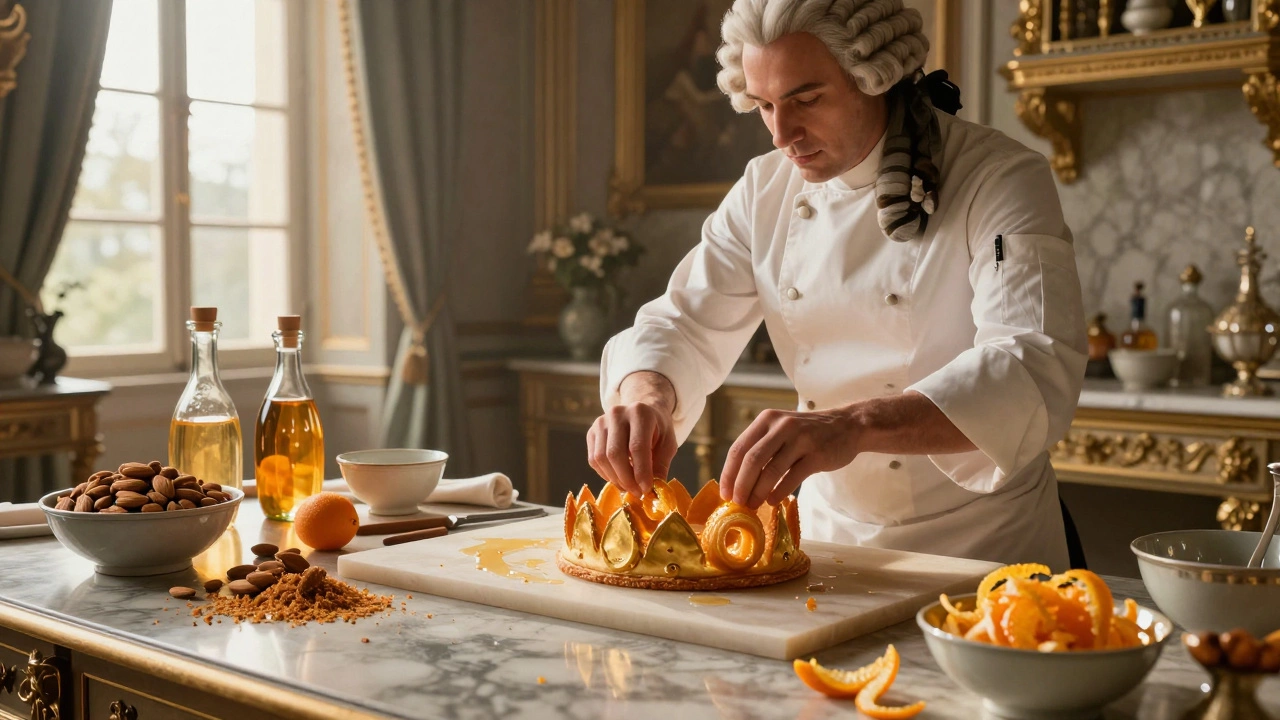
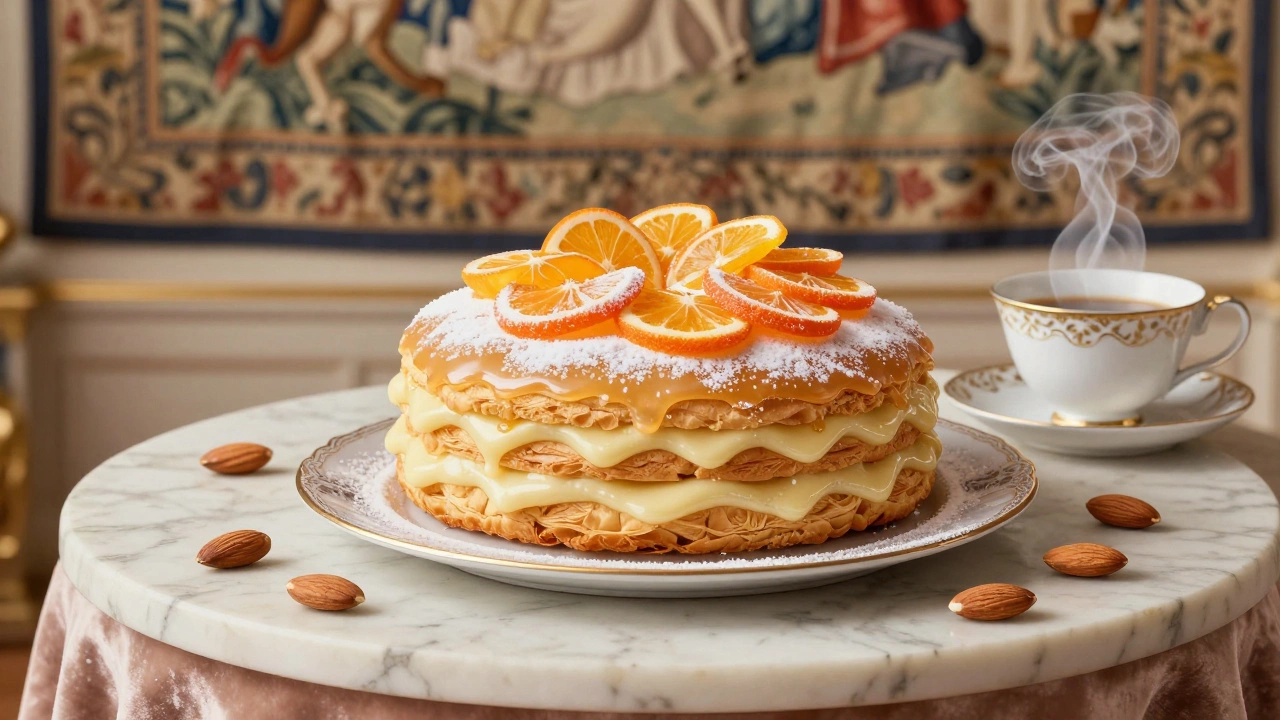
The Marie Antoinette cake is a layered dessert made of delicate puff pastry, almond cream, and candied citrus peel. Unlike a traditional cake with flour and eggs as its base, this one uses layers of buttery, flaky pastry-similar to a croissant-stacked with a rich, nutty filling. The top is glazed with a thin, shiny sugar syrup and often decorated with candied orange or lemon slices. Some versions include a dusting of powdered sugar or a drizzle of honey. It’s not sweet in the way a birthday cake is. It’s subtle, elegant, and deeply aromatic.
It’s important to clarify: this isn’t a cake in the modern sense. It doesn’t rise like a sponge. It doesn’t have a crumb. It’s more like a savory-sweet pastry tart, but with multiple layers. Think of it as a cross between a mille-feuille and a frangipane tart-with royal flair.
The History Behind the Name
Marie Antoinette, the last queen of France before the Revolution, was famously accused of saying, "Let them eat cake," though there’s no evidence she ever said it. Still, the phrase stuck-and so did the idea that she lived in a world of endless sweets. The cake named after her wasn’t invented by her, but by her court’s pastry chefs as a tribute to her taste for refinement.
Historical records from Versailles show that her personal pastry chef, Jean-Baptiste-Charles-François de la Rochette, created elaborate layered pastries using the finest almonds, orange blossom water, and sugar imported from the Caribbean. The cake became a favorite at court banquets, served only on special occasions. Its construction was labor-intensive: each puff pastry layer had to be rolled by hand, rested overnight, and baked slowly to achieve the perfect crispness without burning.
After the Revolution, the cake faded from public view. The aristocracy was gone, and sugar was no longer a symbol of power. For over 200 years, it was mostly forgotten-until a few French pastry schools in Lyon and Paris began reviving it as part of their heritage baking programs.
Key Ingredients and Why They Matter
There are no shortcuts in a true Marie Antoinette cake. Every ingredient has a purpose.
- Puff pastry - Made from high-fat butter (at least 82% fat) and cold, unbleached flour. Store-bought won’t cut it. The layers must be hand-folded, not machine-rolled.
- Almond cream (frangipane) - A blend of ground almonds, sugar, butter, eggs, and a splash of orange liqueur or orange blossom water. The almonds must be freshly ground. Pre-ground almond flour lacks the nutty depth.
- Candied citrus peel - Typically orange or lemon. The peel is boiled in sugar syrup for hours until translucent. This isn’t store-bought candied peel-it’s made from scratch.
- Sugar glaze - A thin syrup of sugar and water, brushed on after baking to seal in moisture and add shine.
One surprising detail? The cake is often baked in a ring mold, not a square or round pan. This shape was chosen because it resembled the ornate crowns worn by French royalty. It’s not decorative-it’s symbolic.
How It’s Made (Step-by-Step)
Making a Marie Antoinette cake takes time. Plan for two days.
- Day One: Make the puff pastry - Mix flour and cold butter into a dough, then fold it six times, chilling between each fold. This creates 729 layers. It’s tedious, but essential.
- Make the frangipane - Cream butter and sugar, then mix in ground almonds, egg yolks, and a few drops of orange blossom water. Chill overnight.
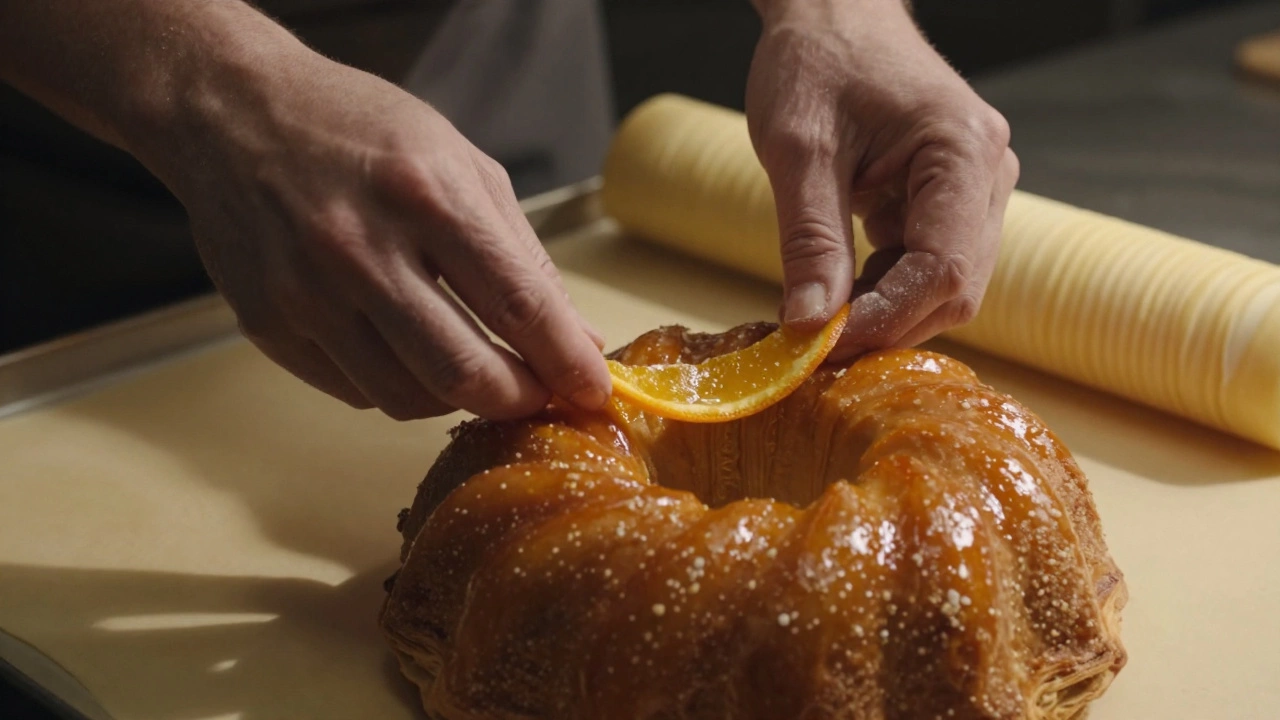
- Candy the citrus peel - Slice peel thinly, boil in water to remove bitterness, then simmer in sugar syrup for two hours. Let dry on parchment.
- Day Two: Assemble - Roll out the pastry, cut into rings, bake at 375°F until golden. Let cool completely.
- Layer - Spread frangipane between pastry layers. Top with candied peel.
- Glaze - Brush with warm sugar syrup. Let set for 30 minutes.
- Serve - At room temperature. Never refrigerated. The pastry loses its crispness.
It’s not a cake you make on a whim. It’s a project. But the result? A dessert that tastes like history.
How It Tastes
If you’ve had a mille-feuille, imagine it more refined. The pastry is crisp but melts on the tongue. The frangipane is creamy, not overly sweet, with a deep nuttiness. The candied citrus adds a bright, slightly bitter contrast. The sugar glaze gives a whisper of sweetness without cloying. It’s not dessert you eat for a sugar rush. It’s dessert you savor slowly-with tea, in silence, maybe with someone you trust.
Many people expect it to be heavy. It’s not. It’s light, airy, and surprisingly balanced. The bitterness of the citrus peel cuts through the richness. The almonds give structure without heaviness. It’s the kind of dessert that makes you pause.
Where to Find It Today
You won’t find it at your local bakery. Even in France, it’s rare. But a few artisanal patisseries still make it:
- Pâtisserie des Rêves in Paris - They serve it seasonally in winter, with candied bergamot.
- Le Clos des Dames in Lyon - Their version includes a hint of violet syrup.
- Brighton’s Little Almond - A small shop in England that revived the recipe after finding an old French cookbook in a secondhand market.
If you’re curious, your best bet is to make it yourself. There are no shortcuts. But if you do, you’ll taste something no modern dessert can replicate.
Why It’s Worth Trying
Most cakes today are about volume. More frosting. More layers. More sugar. The Marie Antoinette cake is the opposite. It’s restraint. It’s precision. It’s elegance without flash.
In a world of Instagram desserts, this one doesn’t care if it’s photogenic. It doesn’t need to be pink or glittery. It just needs to be made right. And when it is? It’s unforgettable.
It’s not just a cake. It’s a reminder that the best things in life aren’t loud. They’re quiet. Carefully made. And deeply, quietly delicious.
Is Marie Antoinette cake the same as a mille-feuille?
No. A mille-feuille is made of three layers of puff pastry with pastry cream between them and topped with icing. The Marie Antoinette cake uses frangipane (almond cream), candied citrus, and a sugar glaze instead of icing. It’s also baked in a ring shape and has a more complex flavor profile.
Can I use store-bought puff pastry?
Technically yes, but it won’t taste the same. Store-bought puff pastry often contains hydrogenated oils and less butter, which changes the texture and flavor. For an authentic Marie Antoinette cake, hand-folded, high-butter-content pastry is non-negotiable.
Why is candied citrus peel so important?
It’s not just decoration. The bitterness of the peel balances the sweetness of the almond cream and sugar glaze. Without it, the cake becomes cloying. The peel also adds texture and aroma-orange blossom water and citrus oils are key to its signature scent.
Can I make it without alcohol?
Yes. Traditional recipes sometimes include a splash of orange liqueur like Cointreau, but it’s optional. You can substitute it with orange blossom water or even a few drops of pure orange extract. The flavor will still come through.
How long does it last?
It’s best eaten the day it’s made. If you must store it, keep it at room temperature under a glass dome for up to 24 hours. Refrigeration ruins the pastry’s crispness. Freezing isn’t recommended-it makes the layers soggy.