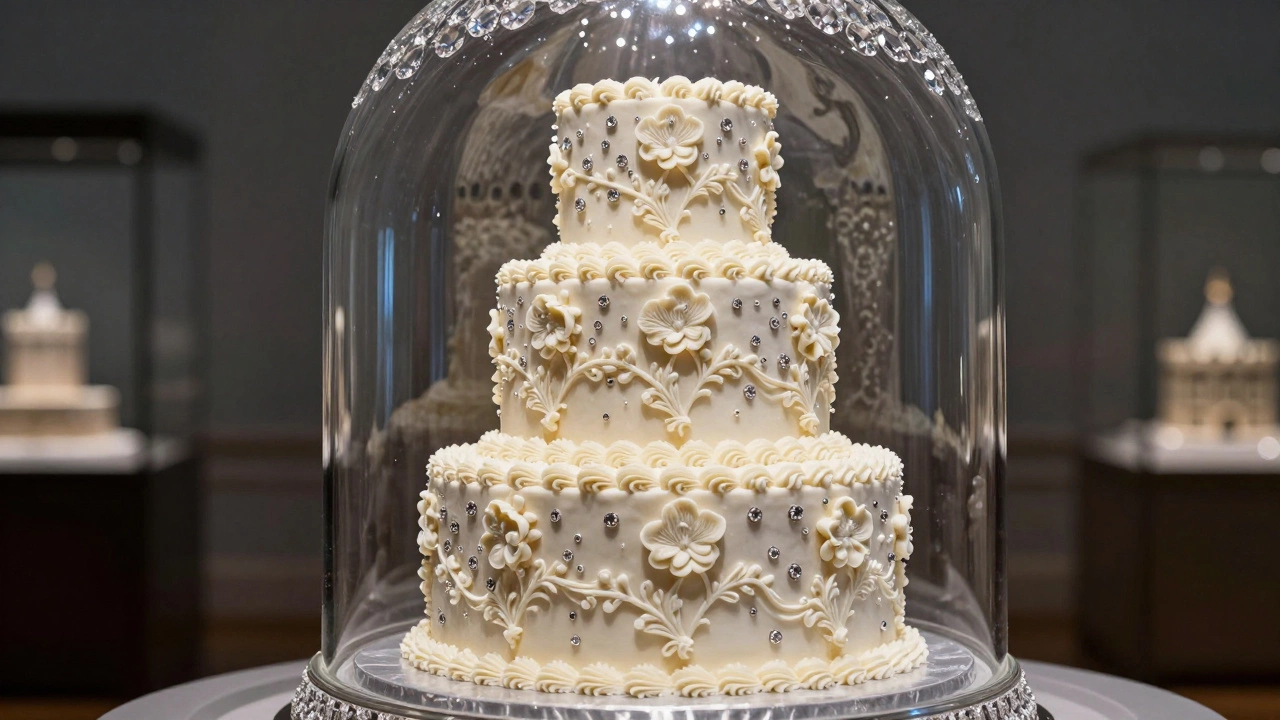
The most fancy cake in the world isn’t just sweet-it’s a masterpiece of engineering, art, and extravagance. It doesn’t just feed a crowd; it makes headlines, breaks records, and costs more than most people’s cars. This isn’t your birthday cake with sprinkles. This is the Diamond Jubilee Cake, a one-of-a-kind creation that holds the title for the most expensive and ornate cake ever made.
What Makes a Cake "Fancy"?
Fancy isn’t just about size or layers. It’s about materials, time, craftsmanship, and rarity. A cake becomes fancy when it uses ingredients you can’t buy at the grocery store-like edible 24-karat gold leaf, hand-blown sugar sculptures, or rare vanilla beans from Madagascar that cost $500 per pound. It’s when a single cake takes over 800 hours to build, and when the decorator has trained for decades in sugar artistry.
Most cakes you see in bakeries are made to be eaten. The most fancy cakes are made to be seen-then preserved. Some are displayed in glass cases for months, lit like museum pieces. They’re not meant to be cut into slices. They’re meant to be photographed, admired, and remembered.
The Diamond Jubilee Cake: A $75 Million Masterpiece
In 2012, British confectioner Nicky Hirst created the Diamond Jubilee Cake to celebrate Queen Elizabeth II’s 60-year reign. The cake weighed over 200 pounds and stood nearly five feet tall. But what made it legendary wasn’t its size-it was what was inside.
The cake’s outer layer was made of white chocolate ganache, piped with intricate floral patterns by hand. But the real showstopper? Over 1,200 real diamonds, each embedded into the sugar glaze using food-grade adhesive. These weren’t cubic zirconia. These were genuine, certified diamonds-ranging from 0.1 to 0.5 carats-sourced from a private collection. The cake also contained edible gold leaf, rare saffron-infused sponge, and truffle-filled buttercream made from caviar-grade black truffles.
The entire cake was encased in a hand-blown crystal dome and displayed at the Tower of London for three weeks. After the celebration, the diamonds were removed and donated to a children’s charity. The cake itself was preserved and now resides in the Royal Collection Trust’s archives.
Its estimated value? $75 million. Not because of the cake ingredients-though they were rare-but because of the diamonds alone. That’s more than the cost of a private jet.
Other Contenders for the Title
While the Diamond Jubilee Cake holds the record, other cakes have pushed boundaries in their own ways.
- The $10 Million Wedding Cake by Italian pastry chef Carlo Cracco featured 300,000 hand-placed edible pearls, 15 pounds of Belgian chocolate, and a centerpiece made entirely of frozen sugar crystals that took 72 hours to sculpt.
- The $2.7 Million "Golden Cake" by Dubai’s Cake Studio was covered in 24-karat gold leaf and embedded with 200 carats of white diamonds. It was commissioned for a royal wedding and served only to 12 guests-each slice came with a diamond pendant.
- The "Couture Cake" by French artist Pierre Hermé used 300 hours of hand-painted edible paint to recreate a Monet water lily painting on the surface. The sponge was infused with rare Yuzu citrus and aged balsamic vinegar.
Each of these cakes shares a common thread: they’re not about taste alone. They’re about storytelling. They’re about turning dessert into legacy.
Why Do People Spend So Much on a Cake?
It’s not about hunger. It’s about status. For billionaires, celebrities, and royalty, a cake is the final touch on a grand event. It’s the last thing guests see before they leave a gala, wedding, or coronation. It’s the one thing that can’t be copied, replicated, or bought off the shelf.
These cakes are commissioned like fine art. Clients don’t ask for "a chocolate cake." They ask for "a cake that makes people gasp when they walk in." The price tag reflects the exclusivity, the secrecy, the obsession with perfection.
Some of these cakes are made by teams of 15+ pastry chefs, sculptors, and jewelers working for months. The Diamond Jubilee Cake alone had a team of 22 specialists-from sugar artists to gemologists-working around the clock.
What’s Inside the Cake? (Spoiler: It’s Not Just Sugar)
Even the most fancy cakes need to taste good-or at least, not terrible. The Diamond Jubilee Cake used:
- French vanilla bean from Madagascar (only 12 pods were used, each aged for 18 months)
- Belgian dark chocolate with 85% cacao
- Black truffle buttercream (made from fresh truffles, not extract)
- Edible gold and platinum leaf (food-grade, certified safe for consumption)
- Handcrafted sugar flowers made from isomalt, each taking 4 hours to shape
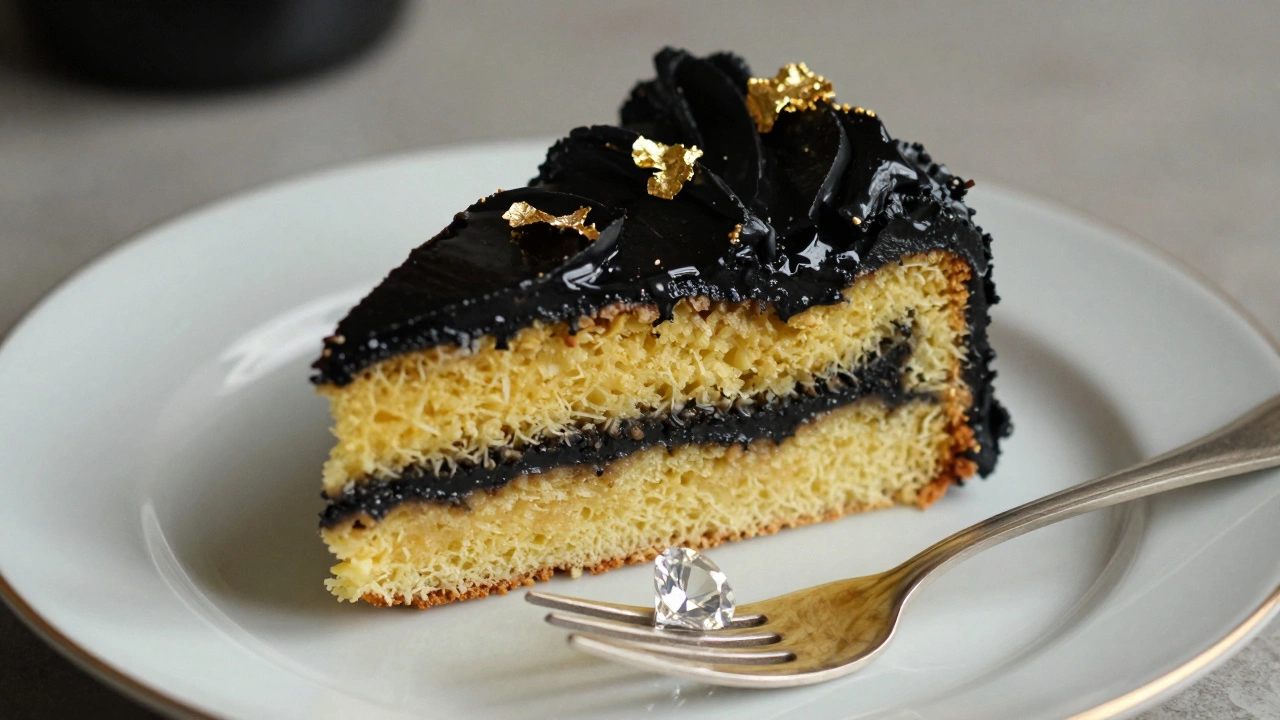
The cake was designed to be eaten in small portions over three days. Each guest received a single slice, served on a porcelain plate with a silver fork. The cake was kept at 55°F to preserve the sugar structures and prevent melting.

Can You Make a Fancy Cake at Home?
Maybe not a $75 million one. But you can make a cake that feels fancy without breaking the bank.
Here’s how:
- Use real vanilla bean paste instead of extract-it adds flecks and depth.
- Top with edible gold leaf (available online for under $10).
- Make a mirror glaze with gelatin and chocolate-it gives a glossy, professional finish.
- Use fresh berries and herbs for color contrast.
- Pipe buttercream with a star tip for texture.
These small touches turn an ordinary cake into something that feels luxurious. You don’t need diamonds. You just need attention to detail.
The Real Value of a Fancy Cake
At the end of the day, the most fancy cake in the world isn’t about the price. It’s about the human effort behind it. The sleepless nights. The trembling hands holding a sugar brush. The years of training. The passion poured into something that will be gone in hours.
That’s why people still talk about the Diamond Jubilee Cake. Not because it had diamonds. But because it reminded us that even in a world of mass production, someone still chooses to make something beautiful-by hand, with care, and for no reason other than it matters.
What is the most expensive cake ever made?
The most expensive cake ever made is the Diamond Jubilee Cake, created in 2012 to honor Queen Elizabeth II’s 60-year reign. It was valued at $75 million, primarily due to the 1,200 real diamonds embedded into its design. The cake also featured rare ingredients like black truffle buttercream and edible gold leaf.
Is it safe to eat diamonds on a cake?
Yes, but only if they’re specifically certified as food-grade. The diamonds used on the Diamond Jubilee Cake were set into the cake using a food-safe adhesive and were removed before anyone ate the cake. No one consumed the diamonds-they were decorative. Eating non-food-grade gemstones can be dangerous.
How long does it take to make a luxury cake like this?
The Diamond Jubilee Cake took over 800 hours to create, spread across three months. Most high-end cakes require between 200 to 600 hours, depending on complexity. Sugar sculptures alone can take 40 hours per piece. This doesn’t include planning, testing, or sourcing rare ingredients.
Can you buy a replica of the Diamond Jubilee Cake?
No. The original cake was a one-of-a-kind commission and is now preserved in the Royal Collection Trust. Replicas without diamonds exist, but they’re not exact copies. Even if you had the budget, the original team of artisans has disbanded, and the materials used are no longer available in the same form.
What’s the difference between a fancy cake and a regular cake?
A regular cake is made to be eaten quickly and affordably. A fancy cake is made to be experienced. It uses rare ingredients, handcrafted details, and often includes non-edible luxury elements like real gold or diamonds. It’s designed to be displayed, admired, and remembered-not just consumed.
What Comes Next?
If you’re inspired by these cakes but don’t have $75 million to spend, start small. Try making a mirror-glazed cake with gold leaf for your next celebration. Learn how to pipe rosettes. Experiment with flavor pairings like salted caramel and black sesame. The path to fancy doesn’t start with diamonds-it starts with curiosity.
Because in the end, the most fancy thing about any cake isn’t what’s on top. It’s the care that went into making it.