
Brazilian Macaron Flavor Finder
Find Your Perfect Macaron Flavor
Discover authentic Brazilian macarons inspired by local ingredients and traditions.
Select preferences to see recommended Brazilian macarons
Macarons didn’t just appear in Brazil one day, wrapped in pretty boxes and sold for double the price of a coffee. They arrived with a story - one of migration, taste, and quiet revolution in the country’s dessert scene. If you’ve ever bitten into a crisp, colorful macaron filled with ganache or passion fruit cream, you might wonder: who brought these delicate French treats to Brazilian soil?
The French Connection
Macarons trace their roots back to Italy, but it was France that turned them into the glossy, almond-macadamia wonders we know today. By the early 20th century, Parisian pâtissiers like Ladurée had perfected the sandwich-style macaron - two almond meringue shells with a buttercream or ganache center. These weren’t just cookies; they were edible art.
When Brazilian elites began traveling to Europe in the 1970s and 1980s, they brought back more than just fashion and perfume. They brought cravings. A few adventurous chefs in São Paulo and Rio started experimenting with French recipes, but macarons remained rare. They were expensive, finicky, and unfamiliar. Most Brazilians had never seen one, let alone tasted it.
The First True Macaron Pioneer
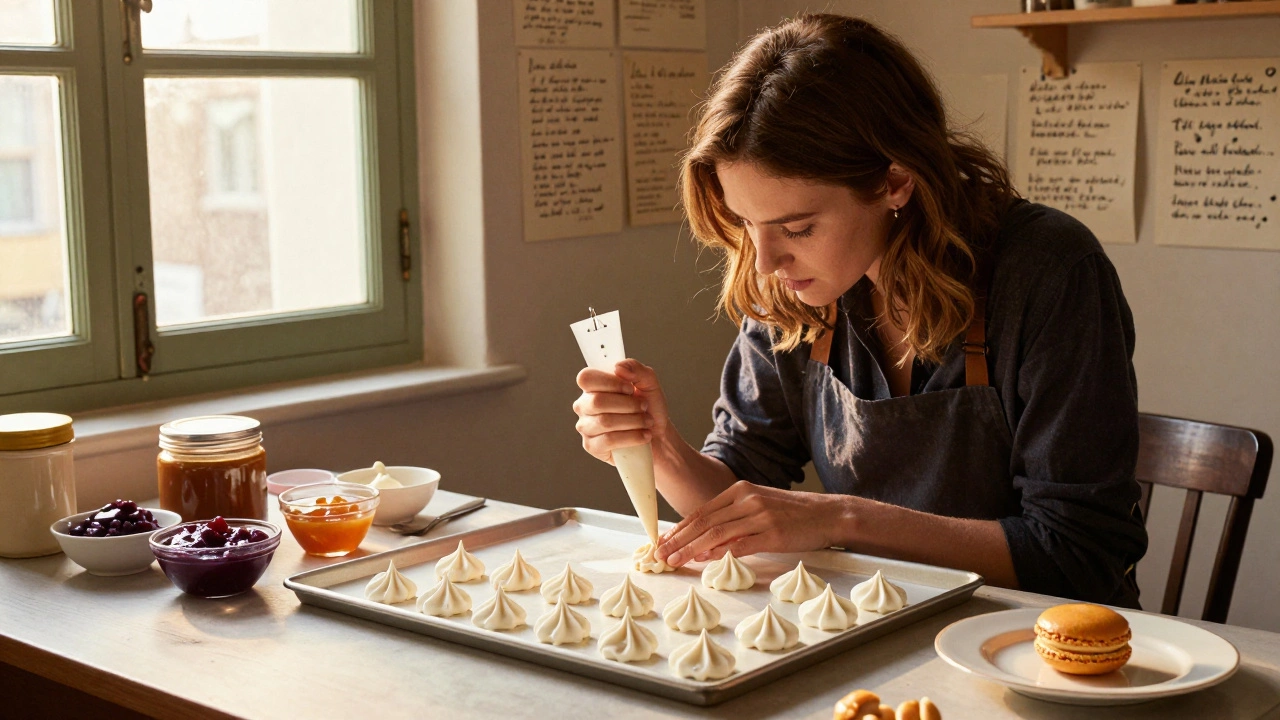
The person most credited with introducing authentic French-style macarons to Brazil is Christine Ferber - not a Brazilian, but a French pastry chef who moved to São Paulo in 1998. Ferber had trained under the legendary Pierre Hermé in Paris and brought with her exacting standards: precise almond flour ratios, aged egg whites, and temperature-controlled drying ovens.
She opened a small atelier in Jardins, São Paulo, called La Maison de la Macaron. At first, few customers understood what they were paying R$15 for a tiny cookie. But Ferber didn’t advertise. She gave samples. She taught pastry students. She used local ingredients - guava jam, cashew caramel, açaí ganache - to make macarons feel Brazilian without losing their French soul.
By 2003, her macarons were featured in Veja magazine. By 2006, other pastry shops began copying her methods. The trend had officially landed.
Why Macarons Took Off in Brazil
It wasn’t just Ferber. Brazil’s growing middle class, rising interest in gourmet food, and social media played huge roles. Instagram changed everything. In 2012, a photo of a pastel-colored macaron stack from a tiny bakery in Belo Horizonte went viral. Suddenly, people wanted not just to eat macarons - they wanted to *show* them.
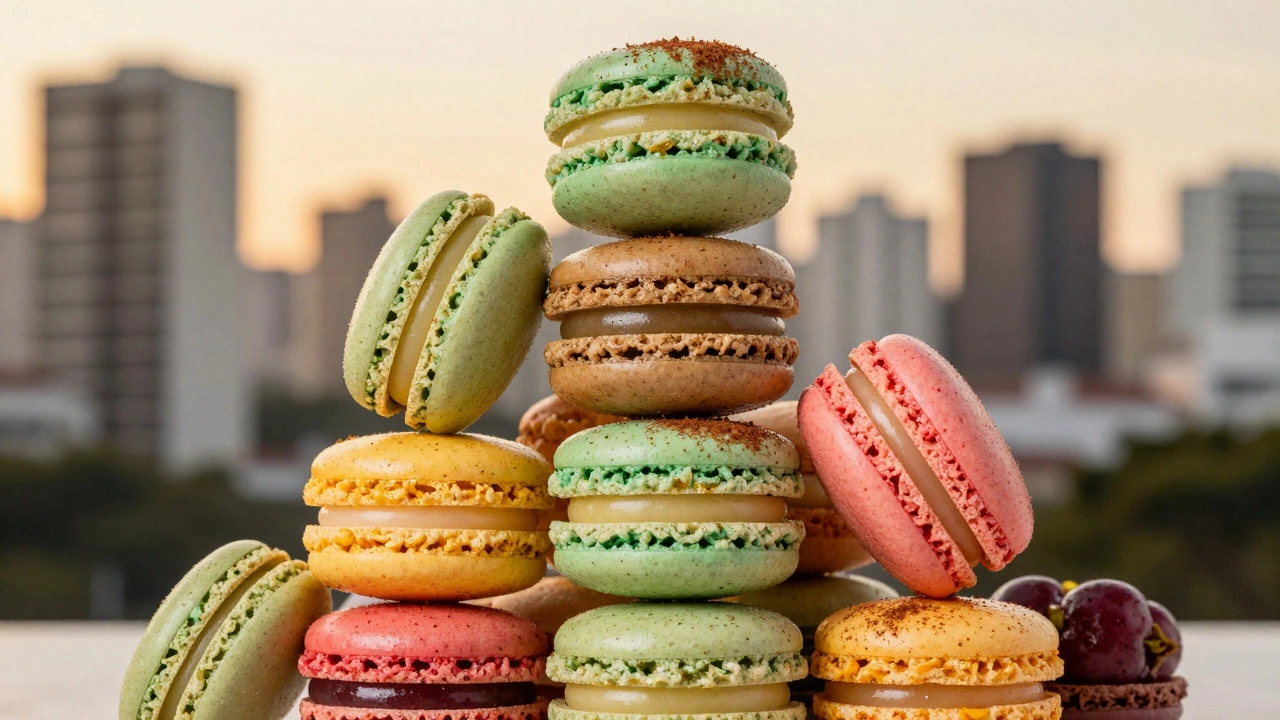
Unlike traditional Brazilian sweets like brigadeiros or quindins, macarons were visually striking, Instagram-ready, and felt luxurious. They became gifts for birthdays, weddings, and corporate events. High-end hotels started offering macaron towers. Supermarkets began stocking frozen versions. Even convenience stores in São Paulo started carrying them in refrigerated cases.
By 2015, Brazil had over 200 dedicated macaron bakeries. Today, you can find them in every major city - from Florianópolis to Manaus. Local flavors dominate now: pão de mel filling, doce de leite with sea salt, caipirinha-infused buttercream. Macarons stopped being French imports. They became Brazilian creations.
The Science Behind the Shift
Macarons are notoriously hard to make. The shells crack if the batter’s overmixed. They don’t rise right if the oven’s too humid. Most Brazilian bakers in the early 2000s failed repeatedly. What changed?
Professional training. Culinary schools like Le Cordon Bleu in São Paulo started offering macaron-specific courses. YouTube tutorials in Portuguese flooded the internet. Online forums like Pão e Doce became hubs for troubleshooting. Bakers shared tips: use a scale, age egg whites for 48 hours, preheat the oven for 30 minutes. Slowly, success rates rose.
By 2018, a study by the Brazilian Institute of Food Technology found that 68% of macaron makers in São Paulo used precise temperature control and humidity monitoring - tools once reserved for professional French kitchens. The bar had been raised.
Macarons Today: More Than a Trend
Today, macarons are woven into Brazil’s dessert culture. They’re not just sold in bakeries - they’re used in wedding favors, corporate branding, and even as prizes in TV cooking shows. Some bakers now make macarons with cassava flour for gluten-free diets. Others use coconut sugar to cut refined sugar content. Vegan versions with aquafaba are common.
Brands like Macarons & Co. in Rio and Doce de Almôndega in Belo Horizonte ship nationwide. One bakery in Curitiba even makes macarons shaped like Brazilian animals - toucans, jaguars, and araras - filled with native fruits. They’re not just desserts. They’re cultural hybrids.
And the demand keeps growing. In 2025, Brazil imported over 120 tons of almond flour - up 300% since 2015 - mostly for macaron production. Local farmers now grow almonds in the northeast, reducing reliance on imports. The macaron isn’t just popular. It’s becoming self-sustaining.
What Makes a Brazilian Macaron Different?
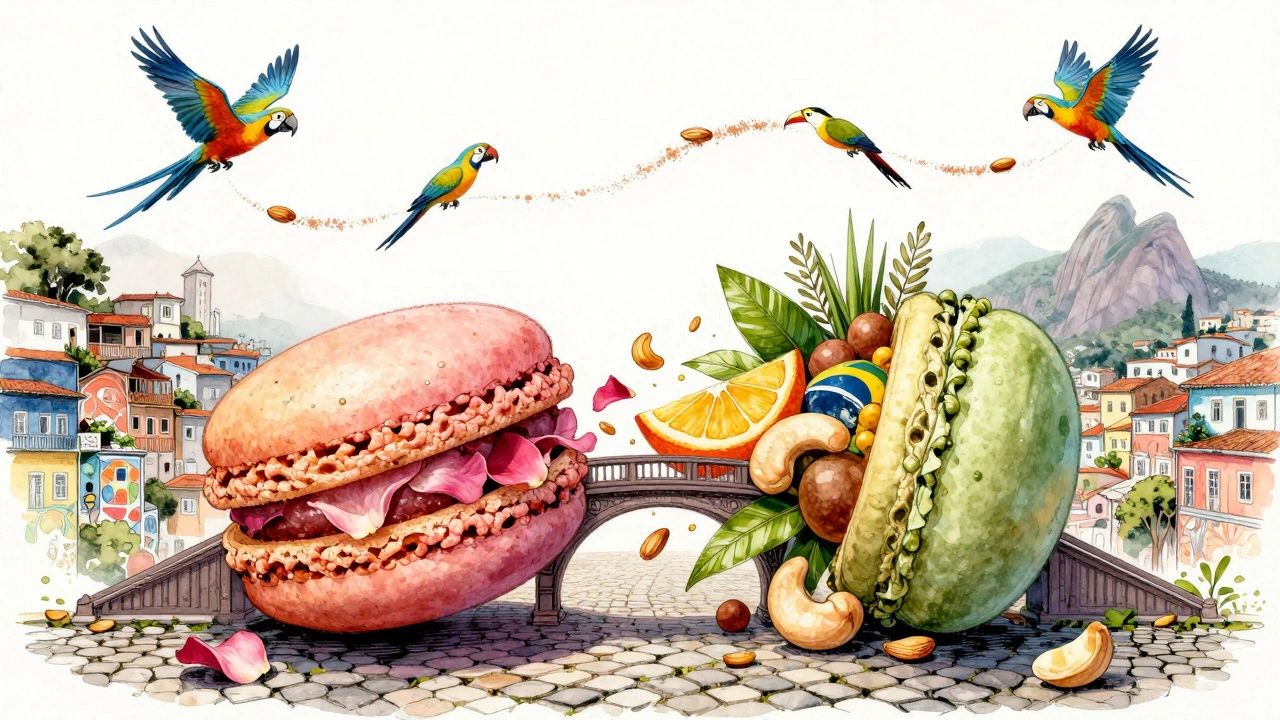
French macarons are elegant, subtle, and restrained. Brazilian macarons? They’re bold. Sweet. Unapologetic.
Where a Parisian might use rose petal jam, a Brazilian baker reaches for tamarind or jabuticaba. Where a French version might have a whisper of vanilla, the Brazilian version adds a splash of cachaça or a dusting of cinnamon. The shells are often thicker, the fillings more generous. They’re designed to impress - not just to please.
Texture matters too. Brazilian macarons tend to have a softer crunch, almost chewy, because humidity affects the drying process. Many bakers now use dehumidifiers in their kitchens - a detail you won’t find in most French recipes.
Where to Find the Best Macarons in Brazil Today
If you’re looking for authentic, high-quality macarons in Brazil, here are a few standout names:
- La Maison de la Macaron (São Paulo) - The original. Still using Ferber’s original recipes.
- Doce de Almôndega (Belo Horizonte) - Famous for their pão de mel-filled macarons.
- Macarons & Co. (Rio de Janeiro) - Offers seasonal flavors like mango with lime zest.
- Macaroon (Porto Alegre) - Known for vegan and sugar-free options.
- Bolos de Lá (Salvador) - Uses local ingredients like dendê oil and cashew.
Many now offer online ordering and nationwide shipping. Some even let you design your own flavor combo.
The Legacy of a Tiny Cookie
Christine Ferber didn’t just bring macarons to Brazil. She gave Brazilian bakers permission to experiment. She showed them that tradition doesn’t mean copying - it means evolving.
Today, Brazil is one of the fastest-growing markets for macarons in Latin America. It’s not because they’re French. It’s because they became Brazilian.
Next time you bite into a macaron with guava filling or a hint of cashew, remember: this isn’t just dessert. It’s a story of curiosity, courage, and flavor that crossed oceans - and stayed.
Who really brought macarons to Brazil?
While French expats and travelers introduced the idea, Christine Ferber, a French pastry chef who opened La Maison de la Macaron in São Paulo in 1998, is widely credited with popularizing authentic, high-quality macarons in Brazil. She adapted the recipe using local ingredients and trained local bakers, turning macarons from a curiosity into a cultural staple.
Are Brazilian macarons different from French ones?
Yes. Brazilian macarons often have thicker shells, richer fillings, and bolder flavors like tamarind, cashew, açaí, or cachaça. They’re designed to be more visually striking and sweeter than traditional French versions. Humidity also affects texture, so many Brazilian bakers use dehumidifiers to control drying.
Can you find vegan or gluten-free macarons in Brazil?
Absolutely. Many Brazilian bakeries now offer vegan macarons made with aquafaba (chickpea brine) instead of egg whites, and gluten-free versions using almond or cassava flour. Brands like Macaroon in Porto Alegre specialize in these options.
Why did macarons become so popular in Brazil?
Social media, especially Instagram, made macarons visually appealing and desirable as gifts. Their elegance, bright colors, and gourmet image appealed to Brazil’s growing middle class. Local bakers then made them more relatable by using native fruits and flavors, turning them into a cultural hybrid rather than a foreign import.
Where can I buy authentic Brazilian macarons?
Top bakeries include La Maison de la Macaron in São Paulo, Doce de Almôndega in Belo Horizonte, Macarons & Co. in Rio, and Macaroon in Porto Alegre. Many offer nationwide shipping and custom flavors. Look for shops using local ingredients like jabuticaba, tamarind, or cashew for the most authentic Brazilian experience.
Popular Posts
Hidden Gluten Foods You Didn’t Expect
Oct, 9 2025
Best Places to Store Macarons for Freshness
Oct, 29 2024