
Macaron Cost Breakdown Calculator
Configure Your Scenario
Cost Comparison Results
Detailed Breakdown (per batch)
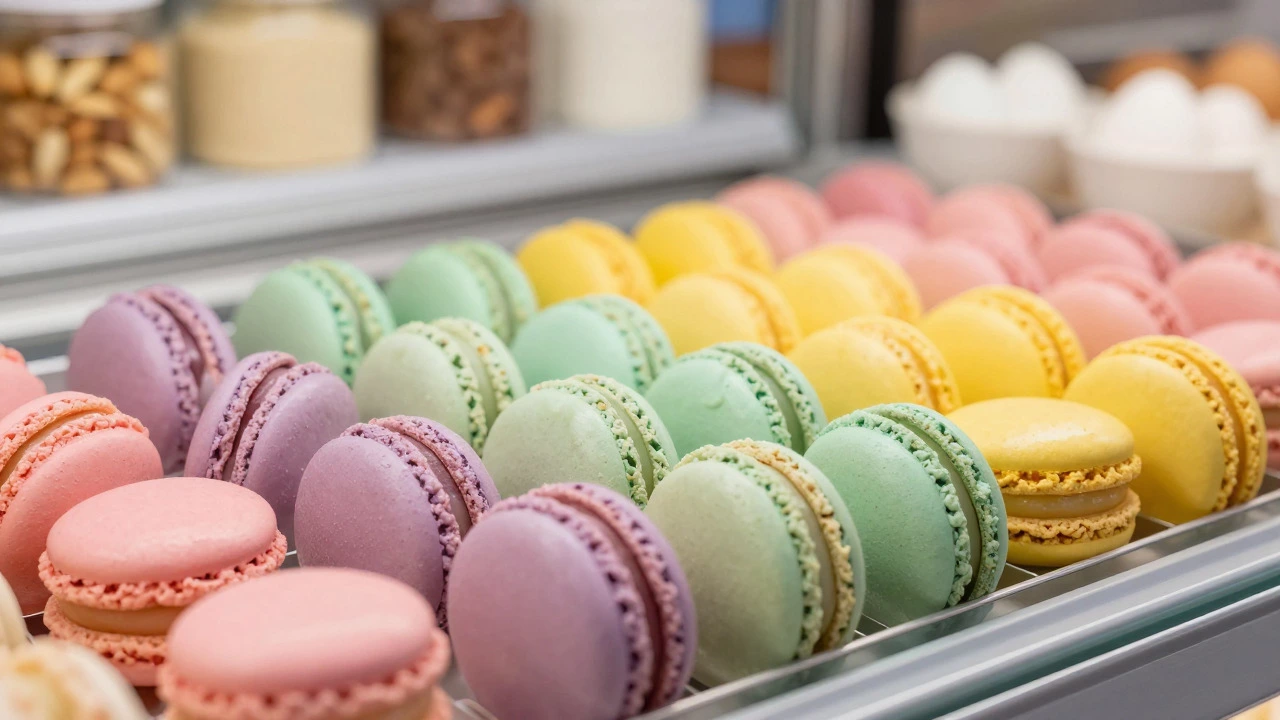
Ever walked past a high-end patisserie, spotted a box of vibrant macarons is a delicate French almond meringue cookie sandwiched with ganache or buttercream, and felt your wallet twitch? You are not alone. A single macaron often costs between $3 and $5 in the US, while in London or Paris, prices can soar to £4 or €5 per piece. For a small, two-bite treat, that feels steep. But when you break down the ingredients, labor, and technical skill required, the price tag starts to make sense.
The Ingredient Factor: It’s Not Just Sugar
You might assume that because macarons look simple-just two shells and a filling-the ingredients should be cheap. In reality, the core components are some of the most expensive items in a professional bakery. The primary ingredient is almond flour is finely ground blanched almonds that provide structure and flavor to the shell. Unlike regular wheat flour, which is abundant and cheap, almond flour requires processing whole nuts into a fine powder without releasing too much oil. High-quality, unbleached almond flour can cost upwards of $10 to $15 per pound, compared to roughly $1 for all-purpose flour.
Beyond the nuts, the recipe demands precision. You need egg whites, but not just any egg whites. Professional bakers often use aged egg whites (from eggs left out for 24-48 hours) to achieve the right viscosity for the French meringue is a mixture of egg whites and sugar whipped to stiff peaks, forming the base of the macaron shell. If the egg whites are too fresh, they don’t whip properly; if they are too old, they become watery. This trial-and-error process means bakers buy more eggs than they actually use in the final product, driving up waste costs.
Then there is the filling. While basic vanilla or chocolate ganache is affordable, premium macarons feature complex flavors like pistachio, lavender, raspberry coulis, or salted caramel. These require imported fruits, high-grade cocoa, or specialized extracts. A box of twelve macarons might contain three different fillings, each requiring separate prep time and high-quality sourcing.
Labor and Time: The Invisible Cost
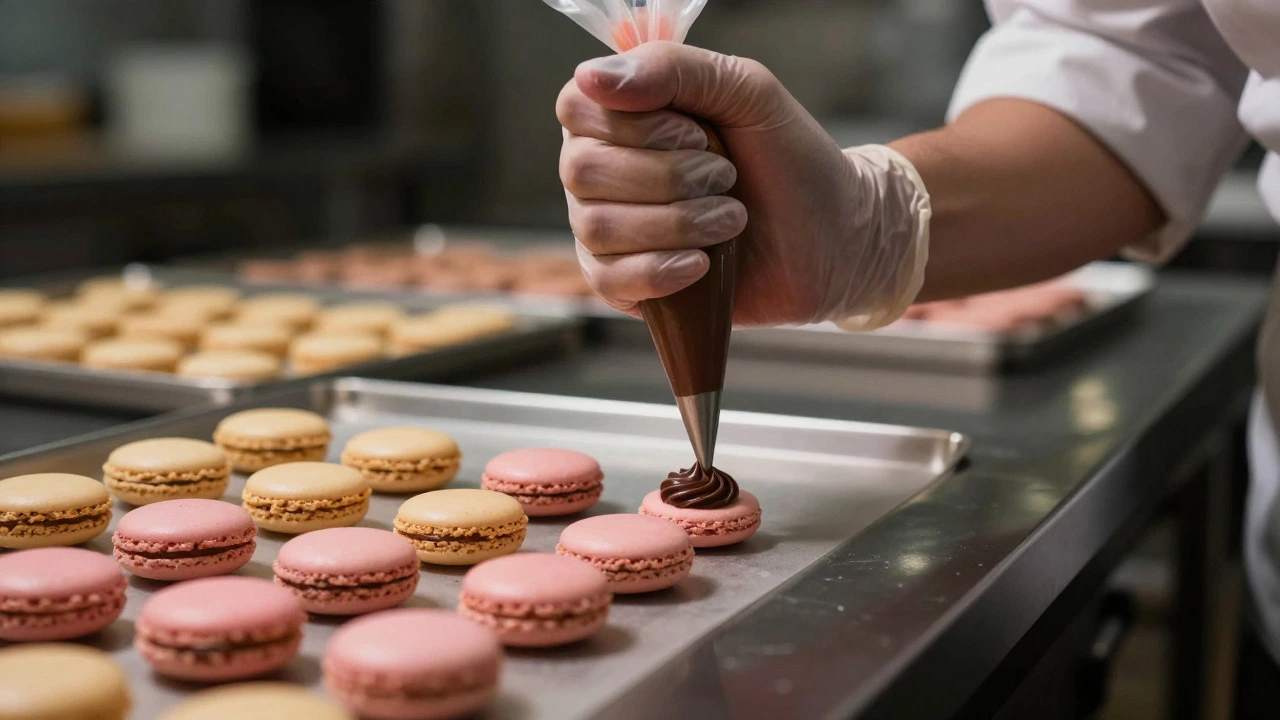
If ingredients were the only factor, you could argue that home bakers should be able to produce them cheaper. And technically, they can. But the value of a store-bought macaron lies in consistency and labor. Making macarons is notoriously difficult. Even experienced chefs fail batches regularly. The technique involves piping precise circles, letting them dry to form a skin (a process called "drying" or "resting"), and then baking at a very specific temperature for a short duration.
Here is where the time sink begins. After baking, the shells must cool completely before filling. The filling itself must be chilled until it holds its shape. Then, the baker must pipe the filling onto one shell and carefully cap it with another. This assembly is done by hand. One skilled pastry chef can typically assemble and package about 100 to 150 macarons in an hour, depending on the complexity of the design. That translates to roughly 40 seconds per macaron of direct manual labor. When you factor in hourly wages, benefits, and overhead, the labor cost alone adds significantly to the price.
The Skill Barrier: Why Consistency Costs Money
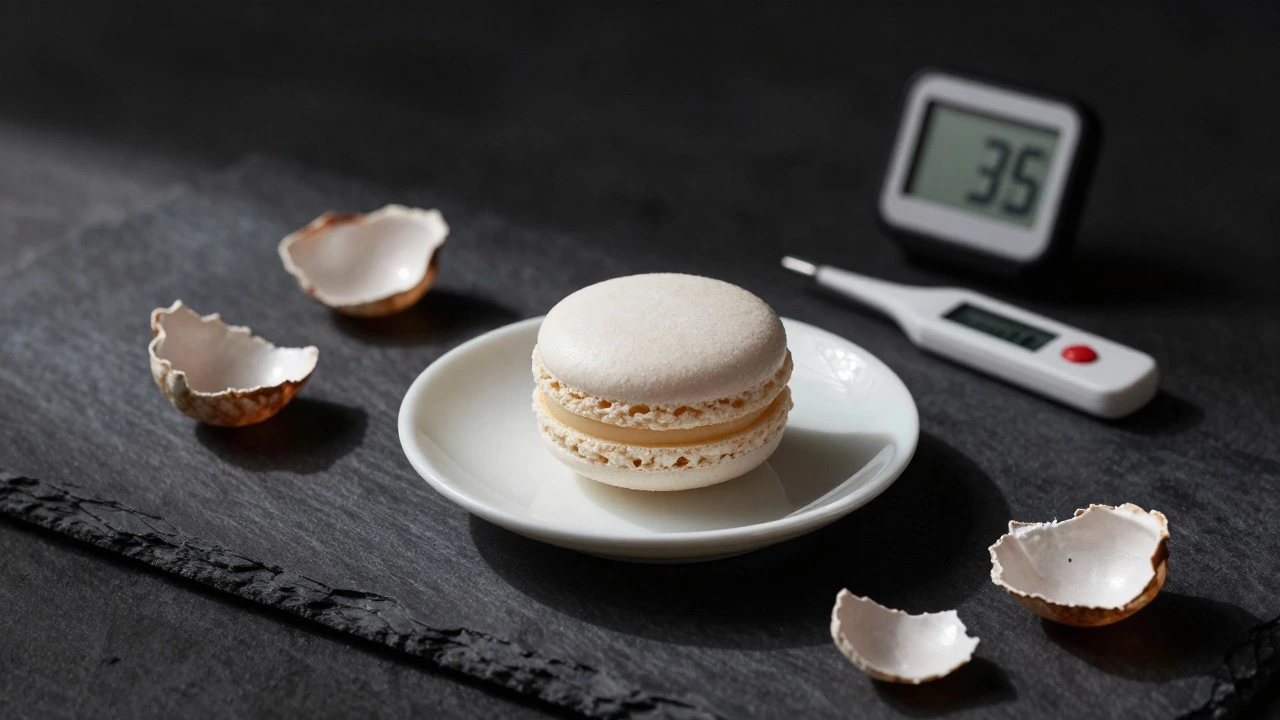
Why can’t every bakery sell them for $1? Because the margin for error is tiny. A macaron is considered successful only if it has a smooth top, no cracks, a ruffled "foot" around the edge, and a clean snap. If the oven temperature is off by even 10 degrees, or if the humidity in the kitchen is too high, the entire batch can fail. This leads to what industry experts call "yield loss." It is common for a batch of 100 shells to result in only 70-80 sellable cookies. The rest are used for employee snacks, crushed for dusting, or discarded.
This yield loss is a major hidden cost. If a bakery produces 500 shells a day but only sells 400, the cost of the 100 unsellable shells is absorbed into the price of the ones that do go out the door. Customers pay for the perfect ones, effectively subsidizing the learning curve and the inevitable failures that come with working with such a temperamental dough.
Packaging and Presentation
Let’s be honest: we buy macarons as much for the experience as the taste. They are visual art. The colors, the shapes, and the presentation matter. High-end brands invest heavily in packaging. Custom-printed boxes, individual paper cups, tissue paper, and branded stickers all add to the cost. A standard cardboard box might cost $0.10, but a premium rigid box with a window and custom printing can cost $0.50 to $1.00 per unit. Multiply that by hundreds of units, and it becomes a significant line item.
Furthermore, the display matters. Macarons are fragile. They bruise easily if stacked incorrectly. This requires careful handling and storage. Many shops keep them in climate-controlled displays to prevent condensation, which would ruin the crisp texture. This infrastructure cost is passed on to the consumer.
Comparison: Home Baking vs. Store-Bought
To really understand the price gap, let’s compare the costs directly. Below is a breakdown of the estimated costs for producing 12 macarons (one box) in a professional setting versus a home kitchen.
| Category | Professional Bakery | Home Kitchen |
|---|---|---|
| Ingredients (Almonds, Sugar, Eggs, Filling) | $6.00 - $8.00 | $4.00 - $5.00 |
| Labor (Assembly & Prep) | $3.00 - $4.00 | $0.00 (Your time) |
| Overhead (Rent, Utilities, Equipment) | $2.00 - $3.00 | $0.00 |
| Packaging & Branding | $1.00 - $2.00 | $0.00 |
| Waste/Yield Loss Buffer | $1.00 - $2.00 | $0.00 (You eat the fails) |
| Total Cost | $13.00 - $19.00 | $4.00 - $5.00 |
Notice how the professional cost is nearly double the raw ingredient cost. This highlights that you are paying for expertise, convenience, and presentation, not just food. If you bake at home, your "cost" is primarily your time. It takes about 4-6 hours from start to finish (including drying and chilling times). If you value your time at $15/hour, your home-baked box actually costs you $60-$90 in opportunity cost. So, in a way, buying them is the cheaper option if you value your leisure time highly.
Is It Worth It?
So, why are macarons so expensive? It comes down to a combination of premium ingredients, intensive labor, high failure rates, and aesthetic packaging. They are not just cookies; they are a demonstration of technical skill. When you bite into a well-made macaron, you are tasting the result of precise ratios, controlled environments, and meticulous handiwork.
Does that justify the price? For many, yes. They serve as a luxury treat, a gift, or a moment of indulgence. If you want to save money, consider buying from local independent bakeries rather than famous tourist traps, where margins are tighter and competition keeps prices lower. Or, try making them yourself once. The first batch might be a disaster, but the second will be better. By the third, you’ll understand exactly why those little shells command such a high price tag.
Are macarons healthier than other desserts?
Not necessarily. While they contain healthy fats from almonds, they are still high in sugar and refined carbohydrates. The nutritional profile depends heavily on the filling. Ganache-based fillings are higher in fat, while fruit curds may have less saturated fat but similar sugar levels. They are a treat, not a health food.
How long do macarons last?
Properly stored in an airtight container in the refrigerator, macarons last for 3-5 days. Interestingly, they taste better after 24 hours because the moisture from the filling migrates into the shell, creating a softer, chewier texture. Avoid freezing them unless you plan to keep them for more than a week, as the texture can degrade upon thawing.
What makes a macaron "good"?
A good macaron has three key characteristics: a smooth, glossy top; a ruffled "foot" around the base; and a hollow interior that creates a satisfying snap. The shell should be crisp on the outside but tender on the inside. The filling should complement the shell without overpowering it, and the ratio of shell to filling should be balanced.
Can I make macarons gluten-free?
Yes, traditional macarons are naturally gluten-free since they are made with almond flour instead of wheat flour. However, you must ensure that all other ingredients, including the sugar and any additives, are certified gluten-free to avoid cross-contamination. This makes them a popular choice for people with celiac disease or gluten sensitivities.
Why do macarons crack on top?
Cracking usually happens because the shell did not dry long enough before baking. The surface needs to form a skin to hold the expanding air bubbles during the initial rise in the oven. If the surface is still wet, it splits as the meringue expands. Humidity in the kitchen also plays a huge role; high humidity prevents the skin from forming properly.
Popular Posts
Preventing Hard Brownie Edges: Tasty Secrets
Mar, 1 2025