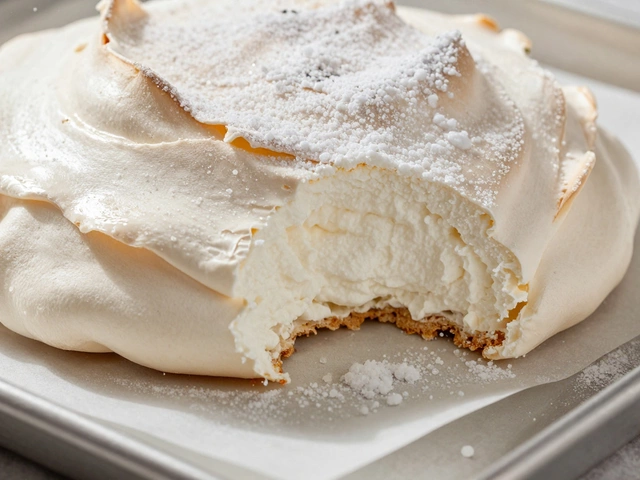
Pavlova Rescue & Diagnosis Tool
Fill in the details on the left and click "Diagnose" to see if your pavlova is perfect, needs fixing, or should be repurposed.
The Myth of the "Ruined" Meringue
You’ve spent hours whipping egg whites to stiff peaks. You’ve folded in sugar with surgical precision. You’ve piped a perfect nest onto your baking sheet. Then, you pull it out of the oven, and something feels… off. Is it too hard? Did it crack? Did it collapse into a sad, chewy puddle? The immediate panic sets in: can pavlova be overcooked?
Here is the short answer that might save your sanity: No, not in the way you think. Unlike a steak or a chicken breast, a pavlova doesn’t have a clear "well-done" point where it turns tough and inedible. It’s mostly air and sugar. However, you can absolutely ruin its structural integrity and textural contrast through improper heat management. What people call "overcooking" is usually one of three things: weeping (syrup leaking), collapsing (loss of volume), or becoming excessively brittle.
Let’s break down what actually happens inside that meringue when you leave it in the oven too long, how to spot the difference between a mistake and a feature, and how to rescue your dessert before guests arrive.
Understanding the Anatomy of a Perfect Pavlova
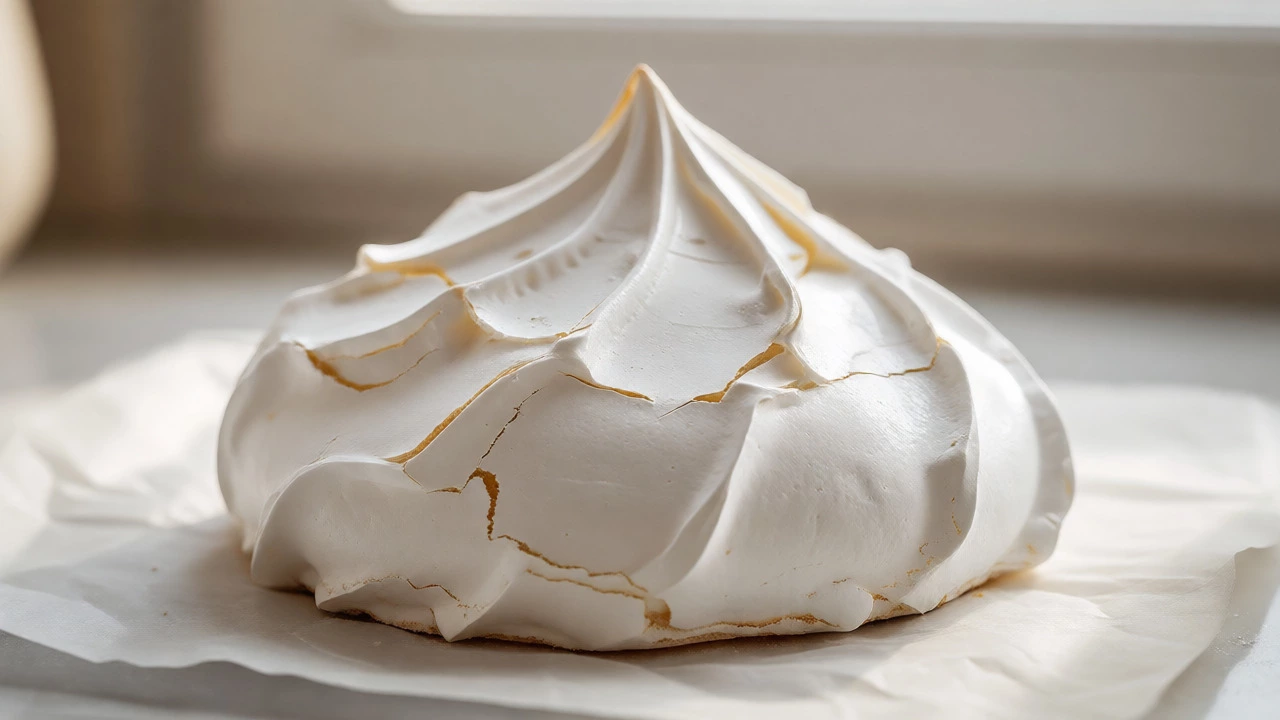
To understand what goes wrong, you first need to know what goes right. A classic Pavlova is a meringue-based dessert named after ballerina Anna Pavlova, characterized by a crisp outer shell and a soft, marshmallow-like interior. This duality is the holy grail of meringue baking.
The science is straightforward but finicky. Egg white proteins unwind and bond around air bubbles when whipped. Sugar dissolves into this foam, stabilizing it. When heated, two things happen simultaneously:
- Exterior: The surface dries out rapidly, forming a rigid, glass-like crust.
- Interior: The center remains moist and gelatinous because the low temperature prevents it from drying completely.
If you bake it at high heat, the outside hardens before the inside sets, leading to cracks. If you bake it too long at low heat, the moisture evaporates entirely, turning the whole thing into a dry cookie rather than a creamy cloud. That’s the real danger zone.
Signs You Might Have Gone Too Far
How do you know if your pavlova has crossed the line from "perfectly baked" to "over-baked"? Look for these specific physical cues. Remember, a little browning is normal; a dark brown color is not.
1. Excessive Cracking and Shattering
A few hairline cracks on top are charming. But if your pavlova shatters into shards when you tap it, or if large fissures run deep into the structure, you likely dried it out too much. This often happens if the oven temperature spiked or if the cooling process was rushed. Brittle shells are hard to serve without making a mess, though they still taste fine.
2. Weeping (Syrup Leakage)
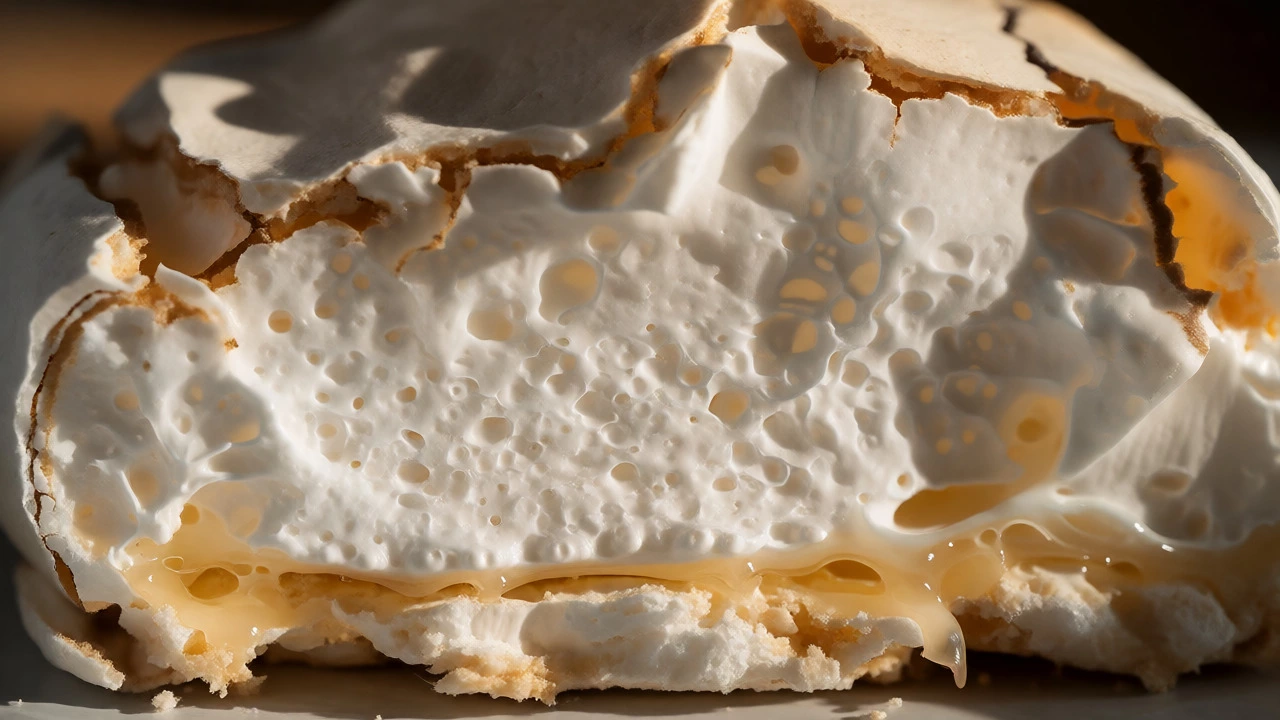
This is counterintuitive. You’d think weeping means it’s undercooked, but sometimes it’s a sign of instability caused by over-whipping or sudden temperature changes during baking. If you see sticky droplets pooling on the bottom of your parchment paper, the sugar crystallization failed. While technically a "weeping" issue, prolonged exposure to heat can exacerbate this by forcing moisture out of an already unstable foam.
3. Loss of Volume (The Collapse)
If your pristine white dome shrinks into a flat disc, you didn’t necessarily overcook it; you likely opened the oven door too early or cooled it too fast. However, if it collapses *after* being fully set and hard, it may have become too heavy with absorbed moisture from the air as it cooled, or the structure became too rigid to support its own weight as the steam escaped.
4. Chewy Instead of Creamy
The most common complaint about "overcooked" pavlovas is texture. If the center is rubbery or chewy rather than pillowy and soft, you removed too much moisture. This happens when you bake for too many hours or at a temperature slightly above the recommended 100°C-120°C (200°F-250°F) range.
The Temperature and Time Sweet Spot
Most recipes suggest baking at 120°C (250°F) for 60-90 minutes, then letting it cool in the turned-off oven. Why so long? Because meringues need time to dry without burning. Sugar burns at relatively low temperatures compared to meat or bread. If you crank the heat up to speed things up, you’ll get a brown, bitter exterior and a raw interior.
Here is a quick reference guide to help you diagnose your current batch based on visual and tactile feedback.
| State | Visual Cue | Texture Test | Cause |
|---|---|---|---|
| Ideal | Bright white or very pale cream; slight crackling sound when tapped | Shell is crisp; center is soft and marshmallow-like | Correct temp/time |
| Undercooked | Dull appearance; feels tacky/sticky to touch | Center is liquid or runny; shell is soft | Insufficient drying time |
| Over-dried | Pale yellow or beige tint; extensive cracking | Entire piece is crunchy/brittle; no soft center | Too long in oven/high heat |
| Weeping | Sugar syrup beads on surface or base | Sticky, wet spots despite hard shell | Unstable foam/temp shock |
Why Does Heat Ruin the Texture?
Meringue is essentially a protein foam trapped in sugar syrup. Proteins coagulate at specific temperatures. If you apply too much heat, the proteins tighten up excessively, squeezing out water. This water migrates to the surface, creating those sticky beads (weeping). Meanwhile, the remaining structure becomes dense and rubbery because the delicate air pockets have collapsed or merged.
In my kitchen here in Brighton, I’ve tested dozens of batches. The biggest enemy isn't just the clock-it's the humidity. On damp days, meringues take longer to dry. If you stick to the timer regardless of weather conditions, you might end up pulling them out too soon, leading to undercooking. Conversely, if you try to compensate for humidity by increasing heat, you risk over-drying. The best approach is to judge by feel, not just time.
Rescue Missions: Can You Fix an Overcooked Pavlova?
So, you pulled it out, and it’s rock hard. Or maybe it’s cracked beyond repair. Is it trash? Absolutely not. Here is how to repurpose your "failed" pavlova.
If It’s Too Hard/Brittle
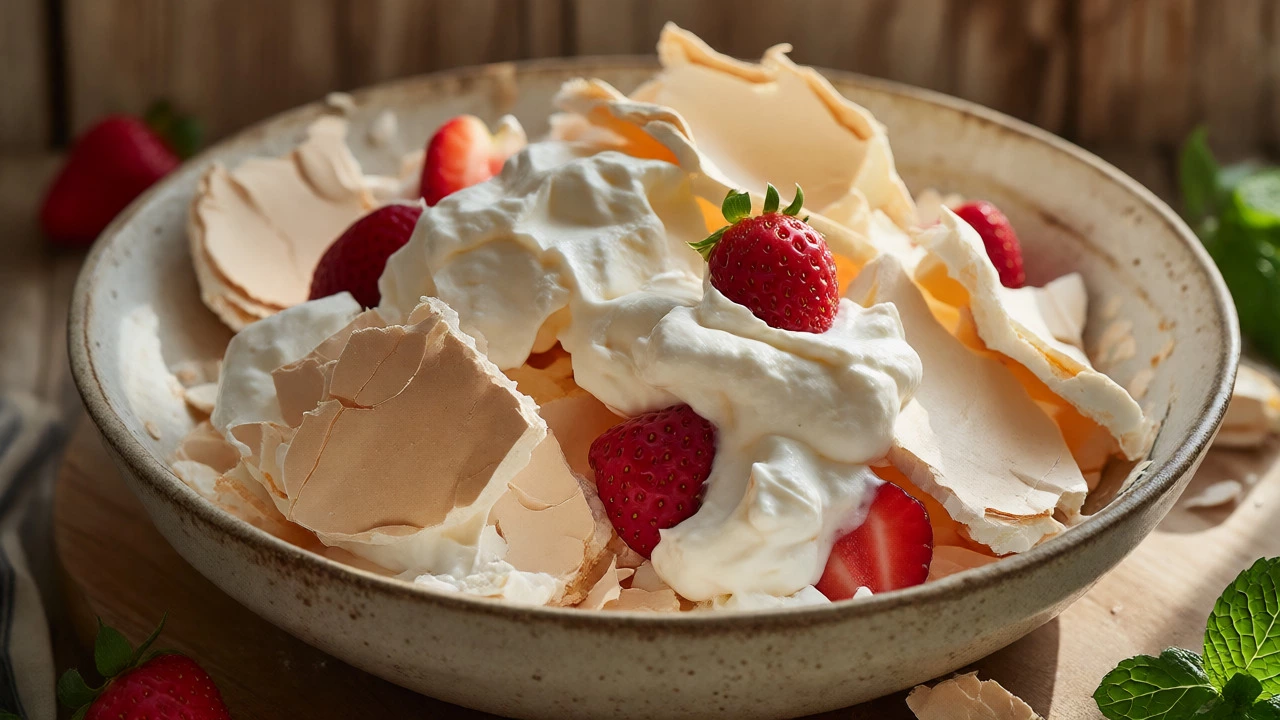
Break it apart. Seriously. Turn it into Eton Mess, a traditional British dessert consisting of broken meringue, strawberries, and cream. The crunch of the over-dried meringue contrasts beautifully with fresh fruit and double cream. Nobody will know it wasn’t perfectly formed.
If It’s Chewy/Rubbery
This is harder to fix post-bake, but you can mask it. Slice it thinly and layer it with strong flavors like passionfruit curd, lemon posset, or salted caramel. The acidity cuts through the chewiness. Alternatively, use it as a base for a trifle, soaking the layers in liqueur or fruit juice to rehydrate the texture slightly.
If It Collapsed
Embrace the rustic look. Pile it into a bowl, top with generous amounts of whipped cream and berries, and call it "Deconstructed Pavlova." Presentation solves most structural sins.
Prevention: How to Avoid the Overcook Trap Next Time
Getting it right next time requires attention to detail. Here are five pro tips to ensure your next pavlova is flawless.
- Use Room Temperature Eggs: Cold eggs don’t whip as well. Let them sit out for 30 minutes before separating.
- Add Acid: A teaspoon of white vinegar or lemon juice stabilizes the foam, preventing collapse and reducing weeping.
- Don’t Rush the Cooling: This is critical. Leave the pavlova in the oven with the door ajar until it reaches room temperature. Sudden temperature drops cause thermal shock, leading to cracks.
- Check for Dryness: The pavlova should lift easily from the parchment paper. If it sticks, it needs more time.
- Store Properly: Keep finished pavlovas in an airtight container in a dry place. Humidity makes them soft and sticky within hours.
Remember, baking is chemistry, but it’s also forgiving. Even if your pavlova looks like a shattered mosaic, it will still taste like sweet, airy heaven once topped with cream. Don’t let perfectionism stop you from enjoying the process.
Frequently Asked Questions
Is a brown pavlova overcooked?
Not necessarily. A light golden hue is normal and adds flavor. However, dark brown patches indicate burnt sugar, which tastes bitter. To prevent excessive browning, lower the oven temperature and extend the baking time.
Why did my pavlova go soft overnight?
Meringue is hygroscopic, meaning it absorbs moisture from the air. If stored uncovered or in a humid environment, the crisp shell will soften. Store in an airtight container away from humidity, ideally adding it only right before serving.
Can I rebake a soft pavlova?
Yes, but carefully. If it’s just the shell that’s soft, you can return it to a low oven (100°C/200°F) for 10-15 minutes to crisp it up. Watch closely to avoid burning. If the center is liquid, it’s better to add toppings and eat it as Eton Mess.
What causes weeping in pavlova?
Weeping occurs when sugar crystals form on the surface due to unstable egg whites or rapid temperature changes. Adding acid (vinegar/lemon juice) helps stabilize the foam. Also, ensure all equipment is grease-free, as fat destabilizes meringue.
How long does pavlova last?
Unfilled pavlova shells last up to 2 weeks in an airtight container in a cool, dry place. Once filled with cream and fruit, consume within 2-4 hours, as the moisture from the filling will soften the meringue.
Popular Posts
How to Tell if Mascarpone Cheese Has Gone Bad
Apr, 20 2026
Exploring the Delight: All About Macaron Towers
Nov, 5 2024