
Ever pulled out a block of mozzarella from the fridge, only to realize you bought too much-and now you’re wondering if you can freeze it for your next tiramisu? You’re not alone. Many home bakers stock up on fresh mozzarella for that creamy, mild layer in traditional tiramisu, but it doesn’t always get used right away. The truth? You can freeze mozzarella, but not all types behave the same. And if you’re planning to use it in tiramisu later, there are some critical steps you can’t skip.
Not All Mozzarella Is the Same
Mozzarella comes in two main forms: fresh and low-moisture. Fresh mozzarella is packed in water or whey, has a soft, spongy texture, and melts into a creamy pool. It’s the kind you find in little balls at the deli counter, often labeled "bocconcini" or "ciliegine." Low-moisture mozzarella, on the other hand, is the kind wrapped in plastic, sold in blocks, and used on pizzas. It’s firmer, drier, and lasts longer in the fridge.For tiramisu, you want fresh mozzarella. It’s the traditional substitute for mascarpone in some Italian households, especially in southern regions where mascarpone was once hard to find. Fresh mozzarella gives tiramisu a lighter, slightly tangy creaminess that balances the espresso-soaked ladyfingers. But because it’s 60-70% water, freezing it changes everything.
What Happens When You Freeze Fresh Mozzarella
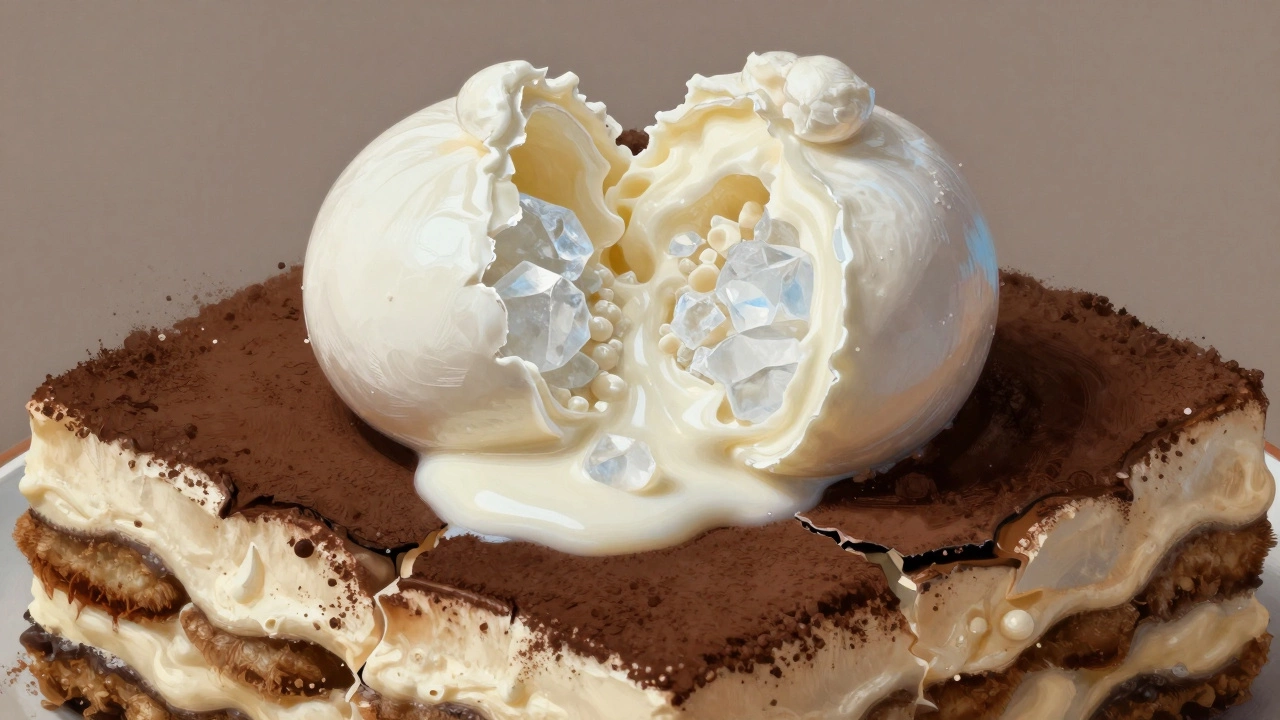
When you freeze fresh mozzarella, the water inside forms ice crystals. These crystals break the delicate protein structure that gives the cheese its smooth texture. Once thawed, the cheese becomes grainy, crumbly, and watery. It won’t blend smoothly into a cream layer like mascarpone. Instead, you’ll end up with a soggy mess that separates when stirred.One baker in Naples tested this exact scenario in 2023. She froze fresh mozzarella balls for three weeks, then tried blending them with sugar and cream for tiramisu. The result? A curdled, grainy filling that didn’t hold its shape. She described it as "like eating wet chalk with a side of water."
How to Freeze Mozzarella (If You Must)
If you’ve got extra fresh mozzarella and don’t want to waste it, here’s how to freeze it without completely ruining it:- Drain the mozzarella thoroughly. Pat it dry with paper towels to remove as much surface moisture as possible.
- Wrap each ball tightly in plastic wrap, then place them in a freezer-safe zip-top bag. Squeeze out all the air.
- Label the bag with the date. Fresh mozzarella lasts up to two months in the freezer.
- Thaw it slowly in the fridge overnight. Never microwave it or leave it on the counter.
Even after doing all this, don’t expect it to work like mascarpone. The texture will be compromised. But here’s the trick: use it for cooking, not for no-bake desserts.
What to Do With Frozen Mozzarella Instead
Frozen mozzarella is fine for melting. Use it in:- Lasagna
- Stuffed shells
- Grilled sandwiches
- Caprese salads (if you don’t mind a softer texture)
But if you’re making tiramisu, skip the frozen mozzarella entirely. Instead, use a simple substitute that actually works.
Better Alternatives for Tiramisu
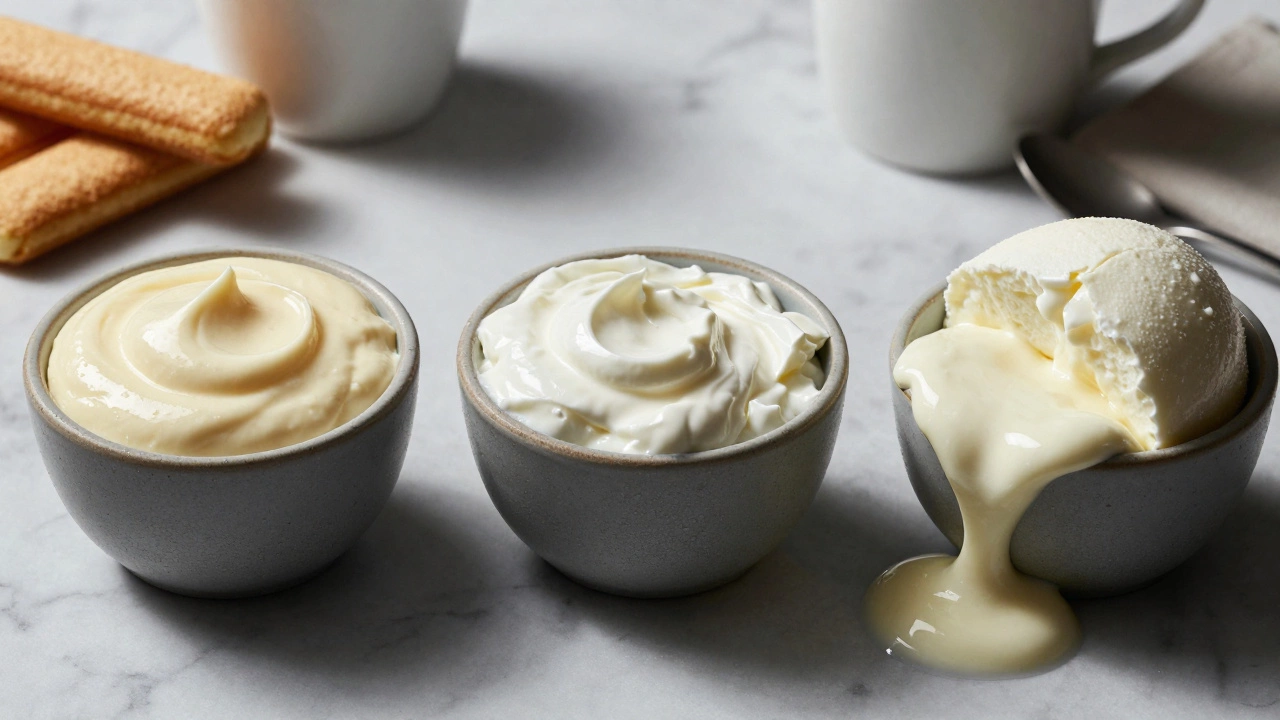
You don’t need fresh mozzarella to make good tiramisu. Here are three proven substitutes that hold up in the fridge and blend smoothly:- Mascarpone - the classic. It’s rich, smooth, and doesn’t separate. If you can’t find it, check Italian delis or order online.
- Cream cheese + heavy cream - blend 8 oz softened cream cheese with 1/2 cup whipped heavy cream and 2 tbsp sugar. It’s close to mascarpone in texture and flavor.
- Greek yogurt + sour cream - mix 1 cup full-fat Greek yogurt with 1/2 cup sour cream and 3 tbsp sugar. Strain it overnight in a cheesecloth to remove excess liquid. This version is lighter and tangier, but it holds shape.
One Italian pastry chef in Bologna uses the yogurt-sour cream blend year-round. She says it’s more stable than mascarpone in humid climates and doesn’t melt as easily in warm kitchens.
Storage Tips for Fresh Mozzarella (Without Freezing)
If you’re buying fresh mozzarella for tiramisu, here’s how to keep it fresh longer without freezing:- Keep it in its brine. Don’t drain it unless you’re using it.
- Store it in an airtight container in the fridge. Change the brine every 2 days if you’re keeping it longer than 3 days.
- Use it within 5 days. After that, the flavor turns sour and the texture gets rubbery.
Pro tip: If your mozzarella starts to smell like sour milk or feels slimy, toss it. It’s not worth risking your dessert-or your stomach.
Why Freezing Isn’t Worth It for Tiramisu
Tiramisu is a delicate dessert. The layers need to hold their shape, the cream needs to be smooth, and the ladyfingers need to soak up the coffee without turning to mush. Freezing mozzarella introduces too many variables: excess water, broken proteins, inconsistent texture. It’s a gamble that rarely pays off.Instead of freezing, buy only what you need. Most fresh mozzarella comes in 8-oz balls-perfect for one tiramisu recipe. If you’re hosting, buy two. If you’re making it for yourself, buy one and use it within 48 hours.
There’s no shortcut that matches the real thing. And in tiramisu, the real thing matters.
What to Do If You Already Frozen It
You froze the mozzarella. Now what?- Don’t try to use it in tiramisu.
- Thaw it in the fridge and use it in cooked dishes.
- If it’s too watery after thawing, drain it again and pat it dry. You can still crumble it over pasta or bake it into a casserole.
But if you’re set on making tiramisu? Start fresh. Use mascarpone or one of the substitutes above. Your dessert will thank you.
Can you freeze fresh mozzarella for tiramisu?
Technically yes, but you shouldn’t. Freezing changes the texture of fresh mozzarella, making it grainy and watery. It won’t blend smoothly into a tiramisu cream layer and will ruin the dessert’s structure. Use it fresh instead.
What’s the best substitute for mozzarella in tiramisu?
Mascarpone is the traditional choice. If you can’t find it, mix softened cream cheese with whipped heavy cream and sugar. Another option is strained Greek yogurt blended with sour cream and sugar. Both hold shape and blend well without separating.
How long does fresh mozzarella last in the fridge?
Fresh mozzarella lasts 4 to 5 days in the fridge if stored in its brine in an airtight container. Change the brine every 2 days to keep it fresh. After 5 days, it starts to turn sour and lose its soft texture.
Can you freeze low-moisture mozzarella for tiramisu?
No. Low-moisture mozzarella is meant for melting, not for creamy desserts. It’s too dry and salty for tiramisu and won’t blend into a smooth filling. Stick to fresh mozzarella or better substitutes like mascarpone.
Why do some recipes call for mozzarella in tiramisu?
In parts of southern Italy, especially during times when mascarpone was expensive or hard to find, fresh mozzarella was used as a substitute. It’s milder and less rich than mascarpone, but it still adds creaminess. Modern versions usually use mascarpone, but the mozzarella version is still a regional tradition.