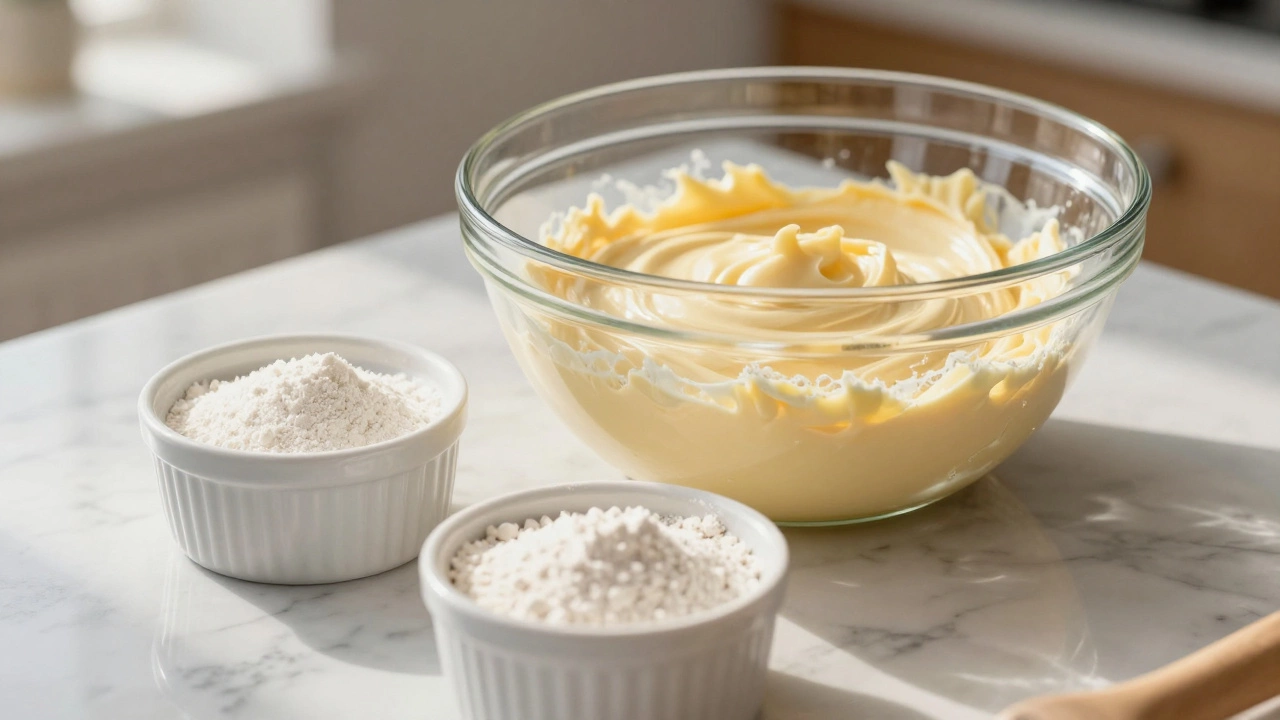
Cheesecake Thickener Calculator & Comparator
Recipe Settings
Recommended Measurements
Cornstarch
Best for glossy, translucent finish
All-Purpose Flour
Adds structure, slight wheat flavor
| Attribute | 🌽 Cornstarch | 🌾 Flour |
|---|---|---|
| Clarity | Translucent, Glossy | Opaque, Matte |
| Flavor | Neutral | Slight Wheat Note |
| Gluten | Free | Contains |
| Power | High (2x stronger) | Moderate |
There is a moment of panic that every baker knows well. You are halfway through mixing your cheesecake batter, the cream cheese is smooth, the sugar is dissolved, and then you hit the thickener step. Your recipe calls for cornstarch, but your pantry only has all-purpose flour. Do you swap them? Will it ruin the dessert? This question comes up constantly in home kitchens because both ingredients do the exact same chemical job: they absorb moisture to stop your custard from turning into soup. However, using one over the other changes the final texture, taste, and appearance of your cake more than you might expect.
The short answer is that cornstarch is generally the superior choice for traditional, creamy New York-style cheesecakes. It creates a cleaner, glossier finish without adding any flavor or opacity. Flour, on the other hand, adds a slight cloudiness and a subtle wheat taste that can clash with delicate fruit toppings. But before you throw away that bag of flour, let’s look at why each works, when to use which, and how to make sure your cheesecake sets perfectly regardless of what you have in your cupboard.
Why do we need thickeners in cheesecake at all?
Cheesecake is essentially a custard made from eggs, sugar, and dairy. Without a stabilizer, the proteins in the eggs can over-coagulate during baking, leading to cracks, weeping (liquid separating from the solid), or a grainy texture. Thickeners like cornstarch or flour help bind the liquid components, ensuring a smooth, sliceable structure that holds its shape when you cut into it.
The Science Behind the Smoothness
To understand why one might be better than the other, we have to look at how these starches behave under heat. Both Cornstarch is a pure starch extracted from the endosperm of corn kernels. Because it contains no protein or fat, it gelatinizes at a lower temperature than flour, around 150°F (65°C). This means it starts working quickly as your oven heats up, creating a tight network that traps water molecules efficiently. The result is a glossy, translucent set that feels silky on the palate.
All-Purpose Flour is a mixture of starch and gluten-forming proteins derived from wheat. It requires higher temperatures to fully activate and thickens more slowly. While this can sometimes lead to a slightly softer set initially, the presence of gluten means the final product has a bit more structural integrity if you are making a dense, heavy cake. However, that same gluten content introduces a cloudy haze to the filling and a faint "cooked dough" aftertaste that purists often dislike in a dessert meant to highlight tangy cream cheese.
If you are curious about other culinary resources while you plan your bake, you might find interesting directories online, such as this directory, though sticking to trusted baking guides is usually safer for recipe accuracy.
Texture and Taste Comparison
Let’s break down the practical differences you will notice when you take the cake out of the oven and slice into it later.
| Attribute | Cornstarch | All-Purpose Flour |
|---|---|---|
| Clarity | Translucent, glossy | Opaque, slightly cloudy |
| Flavor Impact | Neutral, no taste | Slight wheat/dough note |
| Thickening Power | High (use half the amount) | Moderate (use full amount) |
| Gluten Content | None (Gluten-Free) | Contains Gluten |
| Best For | Fruit-topped, light cakes | Dense, rustic styles |
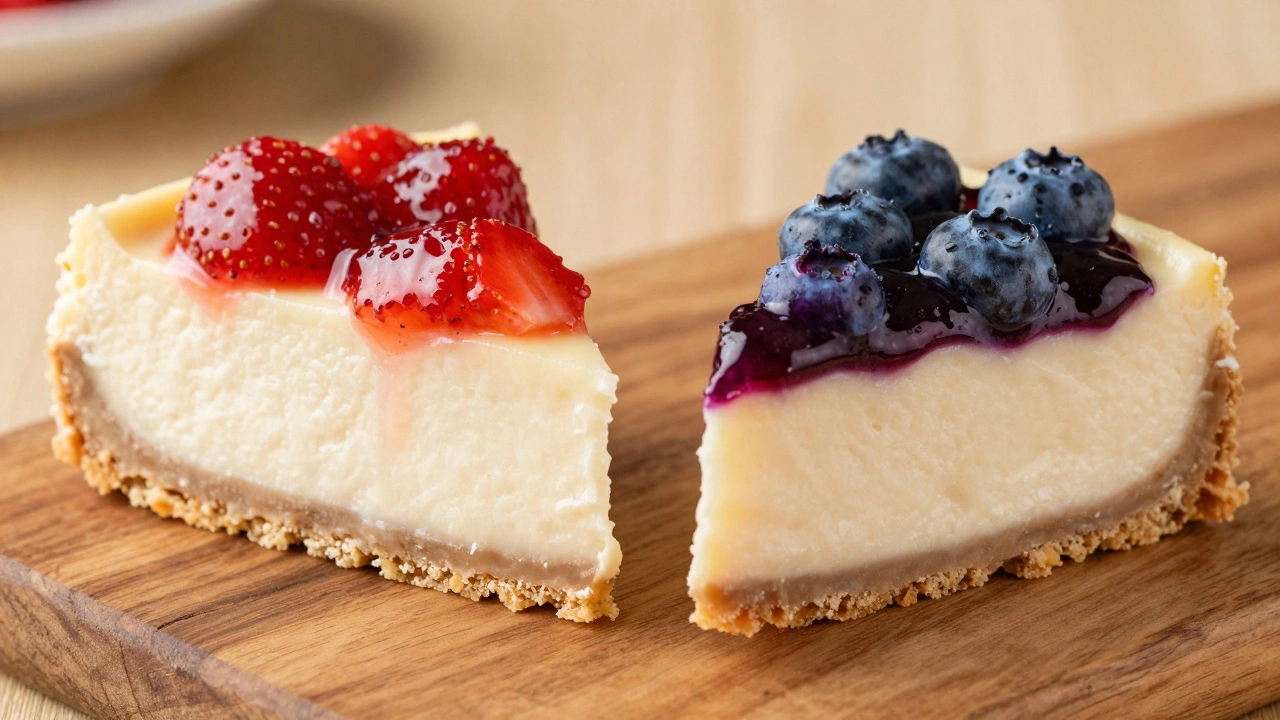
When you use cornstarch, the visual appeal is immediate. The filling looks pristine white and shiny. If you are topping your cheesecake with a vibrant strawberry compote or a blueberry sauce, the contrast between the bright red berries and the stark white filling is visually striking. With flour, that contrast softens. The filling takes on a matte, off-white appearance that can make berry toppings look less vivid. In professional patisserie, clarity is king, which is why cornstarch dominates commercial recipes.
Taste is subjective, but the neutrality of cornstarch allows the high-quality cream cheese and vanilla extract to shine. Flour competes slightly. If you are using cheap cream cheese with a strong processed taste, flour might mask some of those notes, which could be seen as a benefit or a drawback depending on your standards. For artisanal bakers using premium ingredients, masking is rarely the goal.
How to Use Each Correctly
You cannot simply swap these ingredients one-for-one. Cornstarch is roughly twice as powerful as flour in terms of thickening ability. Using equal amounts will lead to a gummy, rubbery mess with cornstarch, or a runny disaster with flour.
Using Cornstarch: For a standard 9-inch cheesecake, you typically need about 1 to 2 tablespoons of cornstarch. The trick is to avoid lumps. Never add dry cornstarch directly to cold cream cheese; it will clump instantly. Instead, mix the cornstarch with the sugar in your bowl before adding the wet ingredients. The granules of sugar help separate the fine starch particles, ensuring an even distribution throughout the batter. Some bakers prefer to make a slurry by mixing cornstarch with a small amount of milk or cream first, but the sugar method is faster and just as effective for cheesecakes.
Using All-Purpose Flour: If you must use flour, you will need about 2 to 4 tablespoons for the same 9-inch cake. Similar to cornstarch, whisk it thoroughly with the sugar. Because flour contains gluten, over-mixing the batter after adding the eggs can develop that gluten network, leading to a tough crust around the edges. Mix gently until just combined. Flour also benefits from a brief cook time if you are making a baked cheesecake, but since the whole cake bakes, the oven does the work for you. Just ensure your internal temperature doesn’t exceed 170°F (77°C) to prevent curdling.
When to Choose One Over the Other
Your choice should depend on the style of cheesecake you are making and dietary restrictions.
- Choose Cornstarch if: You want a classic, smooth New York style. You are serving it with fresh fruits or jams. You need a gluten-free option. You value a glossy, professional appearance.
- Choose Flour if: You are making a rustic, German-style cheesecake where a denser crumb is acceptable. You are out of cornstarch and don’t want to run to the store. You are making a very large, tall cake that needs extra structural support to prevent collapsing.
There is also the option of using neither. Many modern recipes rely solely on the coagulation of egg yolks and the reduction of moisture during baking. These recipes require precise temperature control and a water bath to succeed. If you are a beginner, skipping the thickener entirely is risky. A small amount of cornstarch acts as insurance against cracking and weeping, giving you a margin for error that flour provides less effectively due to its slower activation.
Troubleshooting Common Issues
Even with the right thickener, things can go wrong. Here is how to fix common problems related to starch usage.
Gummy Texture: This happens when you use too much cornstarch or under-bake the cake. The starch absorbs water but hasn't had enough time to release it back into the matrix as it cools. Ensure you measure accurately-level tablespoons, not heaping ones. Also, let the cheesecake cool completely in the turned-off oven with the door ajar. This gradual cooling allows the starch network to set properly without shocking the structure.
Grainy Mouthfeel: This is usually caused by undissolved starch clumps. Always sift your cornstarch or flour before adding it to the sugar. If you see specks in your finished cake, next time, consider blooming the starch. Mix it with a little warm liquid (like melted butter or warm cream) before folding it into the main batter. This pre-hydrates the starch granules, preventing them from seizing up in the cold cream cheese.
Weeping (Liquid Separation): If you see a pool of clear liquid on top of your cooled cheesecake, you likely over-baked it or didn't use enough thickener. The proteins tightened too much and squeezed out the whey. Adding cornstarch helps bind this free liquid. If it already happened, you can spoon the liquid off, but prevention is better. Next time, increase the cornstarch by half a tablespoon and check for doneness earlier. The center should still jiggle slightly like Jell-O when you shake the pan.
Final Thoughts on Your Cheesecake Base
While the thickener matters, remember that the base of your cheesecake plays a huge role in the overall experience. A soggy crust can undo all the good work of a perfect filling. Whether you use a graham cracker crust, a biscuit base, or a nut-based foundation, ensure it is pre-baked (blind baked) if it contains a lot of butter. This creates a barrier that prevents moisture from the filling from seeping down and ruining the crunch.
In the end, cornstarch is the gold standard for a reason. It gives you control, clarity, and a neutral canvas for your flavors. Flour is a capable backup, but it demands respect for its properties. Know what you have in your pantry, adjust your measurements accordingly, and trust the process. Your next cheesecake will be smoother, creamier, and more impressive than ever.
Can I use potato starch instead of cornstarch?
Yes, potato starch is an excellent alternative to cornstarch. It behaves very similarly, providing a clear, glossy finish and neutral taste. It is also gluten-free. Use it in the same quantities as cornstarch. However, potato starch can break down if cooked for too long at high temperatures, so keep an eye on your baking time.
Do I need to bake my cheesecake longer if I use cornstarch?
No, the baking time remains largely the same. Cornstarch actually activates at a lower temperature than flour, so it begins setting earlier. Rely on the jiggle test rather than time alone. When the edges are set but the center still moves slightly, it is done.
Why does my cheesecake crack even with thickener?
Cracking is usually caused by over-mixing (incorporating too much air), baking at too high a temperature, or cooling too quickly. Thickeners help with structure, but they cannot fix thermal shock. Always use a water bath for even heating and let the cake cool gradually in the oven.
Is cornstarch healthier than flour?
Nutritionally, they are similar in calories and carbohydrates. Cornstarch is purely carbohydrate, while flour contains small amounts of protein and fiber. For most people, the difference is negligible in the context of a dessert. The main health consideration is gluten sensitivity; cornstarch is safe for those with celiac disease, while regular flour is not.