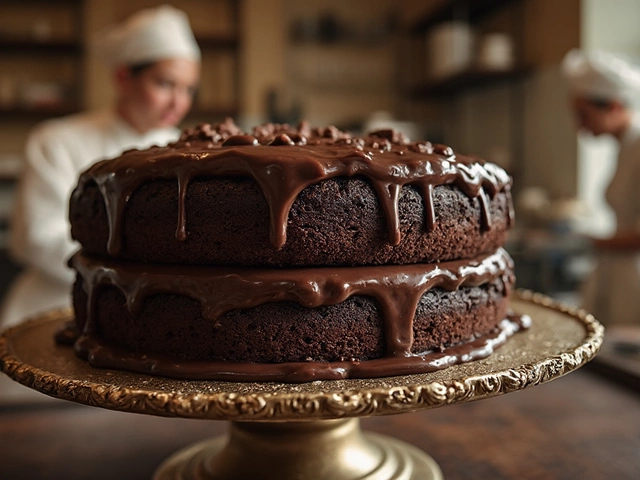
Ever bite into a brownie and wonder why some are dense and chocolatey while others are light and cake-like? It’s not just the recipe-it’s the type. Brownies aren’t one-size-fits-all. There are at least seven distinct styles, each with its own texture, flavor profile, and baking trick. Whether you’re craving a chewy bite or a melt-in-your-mouth square, knowing the differences helps you pick the right one-or even bake your perfect version.
Fudgy Brownies
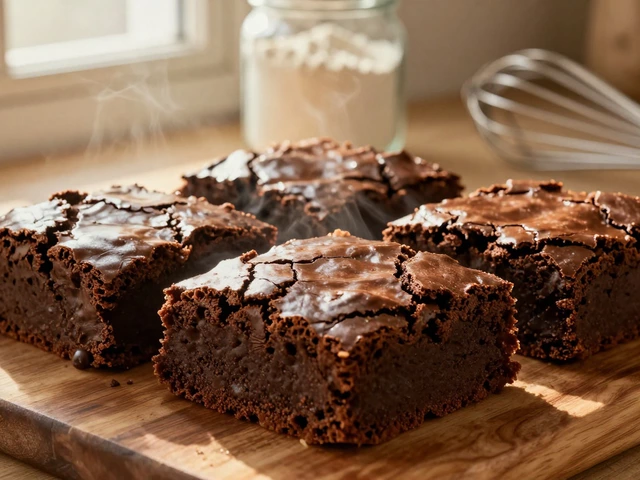
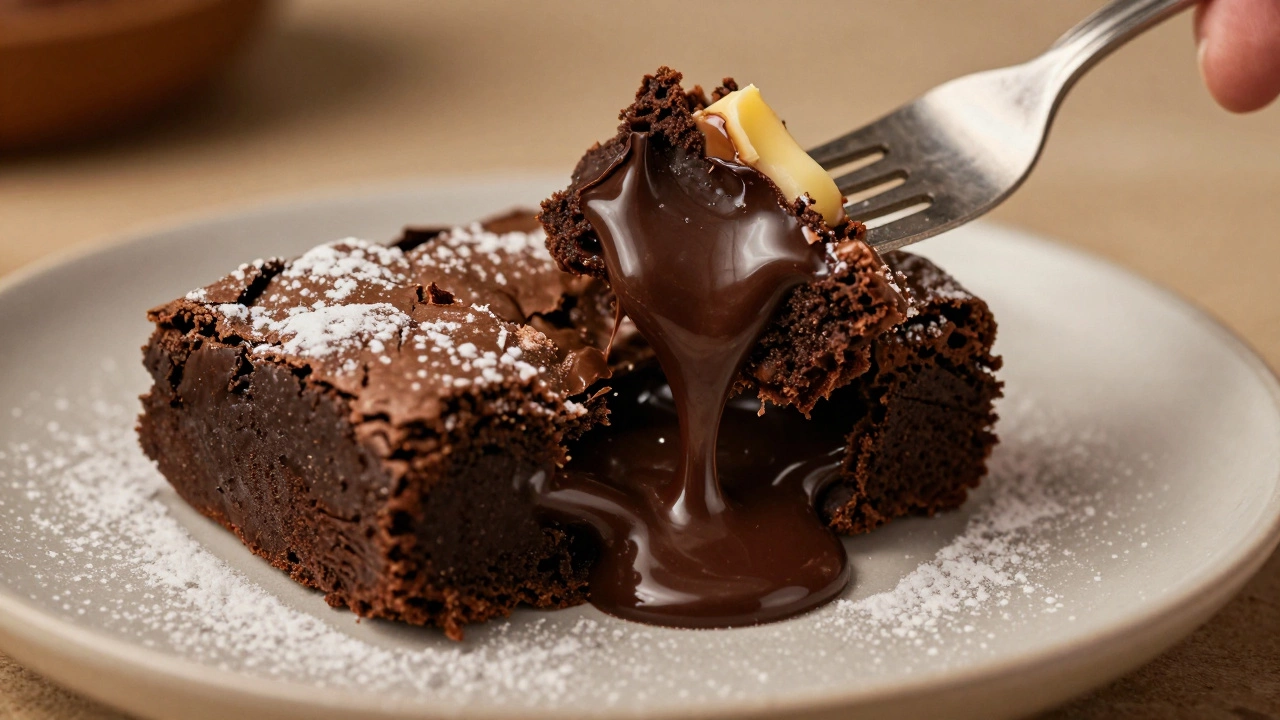
Fudgy brownies are the classic chocolate lover’s dream. They’re dense, moist, and almost pudding-like in the center. The secret? Less flour, more butter and chocolate. A typical fudgy brownie recipe uses a 1:1 ratio of butter to chocolate by weight, with just enough flour to hold it together. Baking time is critical-take them out when the center still jiggles slightly. They’ll set as they cool. This style is what most people picture when they think of a brownie: rich, intense, and deeply chocolatey. No nuts. No frosting. Just pure chocolate indulgence.
Cakey Brownies
If you prefer your brownies light and airy, like a slice of chocolate cake, you’re after cakey brownies. These use more flour and often include baking powder for lift. Some recipes even add a splash of milk or buttermilk to tenderize the crumb. They’re less dense, more crumbly, and hold their shape better when sliced. Cakey brownies are great for parties because they’re easier to handle and don’t stick to your fingers as much. They’re also a good base for toppings like whipped cream or ice cream since they don’t overwhelm the flavor.
Chewy Brownies
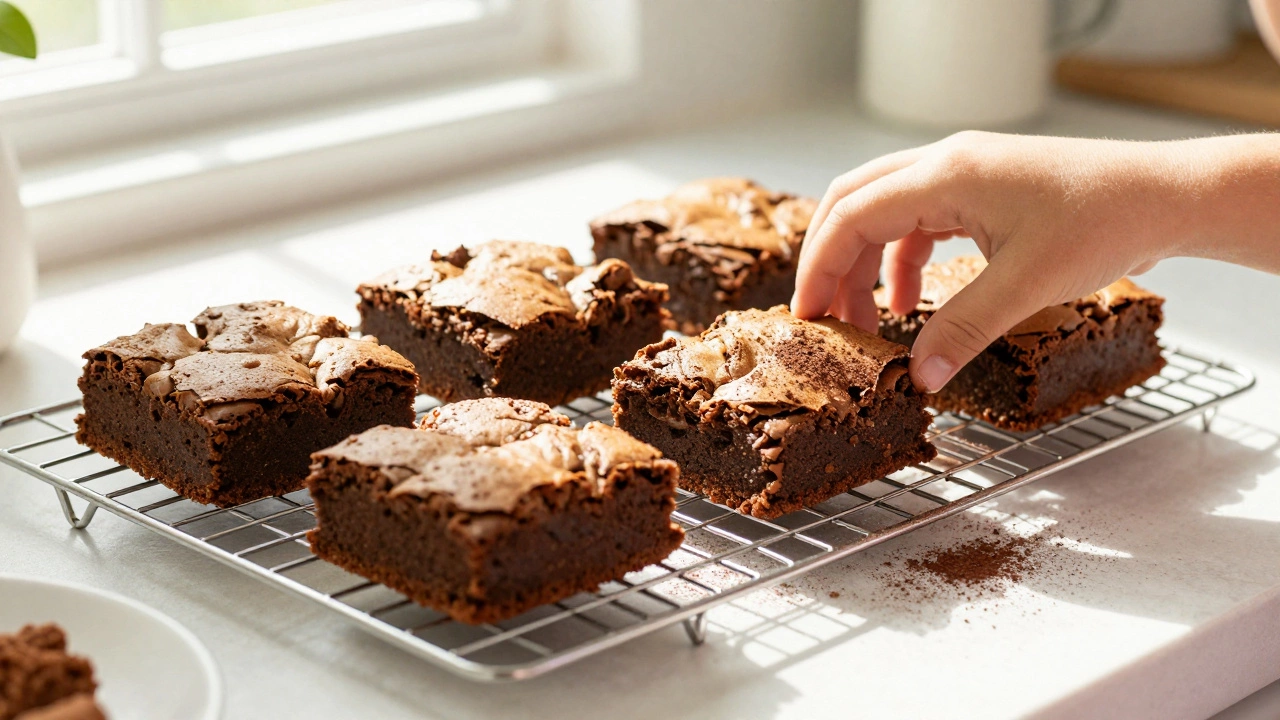
Chewy brownies sit right between fudgy and cakey. They’re dense but spring back slightly when pressed. The trick to chewiness? Brown sugar. It holds moisture better than white sugar and creates a sticky, elastic texture. Many bakers also use melted butter instead of creamed butter to reduce air bubbles, which keeps the structure tight. Egg yolks help too-they add fat and emulsifiers that boost chew. Brownies like this are perfect for people who want richness without the mess of a fudgy center. They hold up well in lunchboxes and travel nicely.
Blondies
Blondies aren’t technically brownies, but they’re always grouped with them. They’re the vanilla cousin: golden, buttery, and sweet. Made with brown sugar, vanilla, and often nuts or chocolate chips, blondies have the same dense texture as fudgy brownies but without the cocoa. Some versions include butterscotch chips or caramel swirls for extra depth. They’re a favorite for people who love the texture of brownies but want something less chocolate-heavy. If you’ve ever had a gooey blondie with sea salt on top, you know why they’re so popular.
Vegan Brownies
Vegan brownies have come a long way. Gone are the days of chalky, dry substitutes. Modern recipes use flaxseed meal mixed with water as an egg replacer, avocado or mashed banana for moisture, and coconut oil or vegan butter instead of dairy. Dark chocolate with at least 70% cacao ensures the chocolate flavor stays strong. Many vegan brownies end up fudgy or chewy because plant-based ingredients naturally retain moisture. They’re not just for vegans-lots of people prefer them for their rich, intense flavor and cleaner ingredient list. Just make sure your chocolate is labeled vegan; some brands use milk powder.
Gluten-Free Brownies
Gluten-free brownies used to be crumbly and disappointing. Today, they’re often indistinguishable from regular ones. The key is using the right flour blend-usually a mix of rice flour, tapioca starch, and xanthan gum to mimic gluten’s binding power. Almond flour is another popular option; it adds fat and protein, which helps with texture. Some recipes use oat flour, but make sure it’s certified gluten-free to avoid cross-contamination. The best gluten-free brownies are fudgy or chewy. Cakey versions tend to fall apart. If you’ve had a gluten-free brownie that tasted like cardboard, you weren’t alone-but that’s not the norm anymore.
Specialty and Creative Brownies
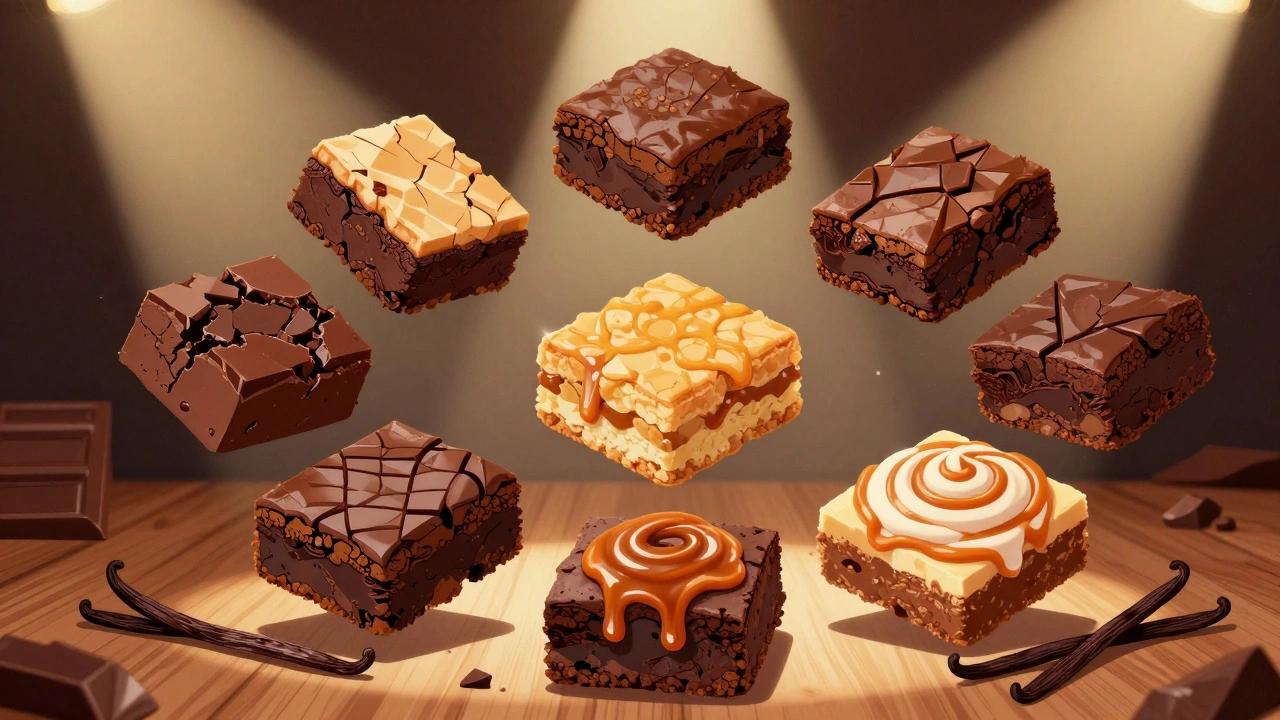
Beyond the classics, there’s a whole world of creative brownies. Think brownie sundaes with salted caramel swirls, brownie cookies with chocolate chip centers, or brownie bites with peanut butter pockets. Some bakers swirl in cream cheese for a marble effect. Others add espresso powder to deepen the chocolate flavor without making it taste like coffee. There are even savory brownies with chili or sea salt flakes for a sweet-and-spicy kick. These aren’t traditional, but they show how flexible the brownie base can be. If you’ve ever seen a brownie with a layer of ganache on top or a crust of crushed pretzels, that’s innovation in action.
How to Tell Them Apart
Here’s a quick way to identify each type by touch and taste:
- Fudgy: Sticks to the fork, melts slowly, leaves a chocolate film on your lips.
- Cakey: Crumbles easily, light texture, tastes more like chocolate cake.
- Chewy: Bounces back when pressed, slightly sticky, holds shape without crumbling.
- Blondie: Golden color, buttery aroma, no chocolate bite.
- Vegan: Often slightly denser, may have a hint of banana or nuttiness.
- Gluten-Free: Can be slightly grainy if low-quality flour is used; best when moist and fudgy.
Which Type Should You Bake?
It depends on what you’re after. For a quiet night in? Go fudgy. Hosting a potluck? Cakey brownies are easier to serve. If someone’s vegan or gluten-free, don’t assume they’ll settle for less-make a version that’s just as good. Many bakers keep multiple recipes on file because each type suits a different mood or occasion. You might even find that your favorite changes with the season-fudgy in winter, blondie in summer.
The truth is, there’s no single ‘best’ brownie. There are seven great ones-and maybe more if you start experimenting. Start with one style, master it, then tweak. Swap the sugar. Add a pinch of salt. Try a different chocolate. That’s how you find your perfect brownie.
Are blondies considered brownies?
Blondies aren’t technically brownies because they don’t contain cocoa or chocolate. But they’re made the same way-baked in a pan, cut into squares, and served similarly. Most bakeries and recipe books group them with brownies because they share the same texture and structure. Think of them as the vanilla sibling.
Can I make gluten-free brownies without xanthan gum?
Yes, but they’ll be more crumbly. Xanthan gum helps bind the ingredients and mimic gluten’s elasticity. Without it, use a flour blend with psyllium husk or ground flaxseed, which also act as binders. Almond flour alone can work if you increase the fat content with extra butter or oil. Just expect a denser, less uniform texture.
Why do my brownies come out dry?
Dry brownies usually mean they were overbaked or had too much flour. Brownies continue cooking from residual heat after you take them out, so pull them from the oven when the center still looks slightly underdone. Also, measure flour by weight, not cups-scooping packs in extra flour. Too much flour = dryness. Also, using low-fat butter or skipping eggs can reduce moisture.
Do vegan brownies taste different?
They can, but not necessarily in a bad way. Flax eggs add a subtle nutty note. Avocado can make them richer and slightly greenish if not blended well. Banana adds sweetness and moisture but can give a faint fruity undertone. If you use high-quality dark chocolate and avoid overmixing, most people can’t tell the difference. The best vegan brownies taste like chocolate, not substitutes.
What’s the best chocolate to use for brownies?
Use chocolate with 60-70% cacao. Too low, and it’s sugary and flat. Too high, and it’s bitter. Dark chocolate melts smoothly and gives depth. Avoid chocolate chips-they’re designed to hold shape, not melt. Instead, chop a bar. If you’re making vegan brownies, make sure the chocolate is dairy-free. Brands like Lindt, Green & Black’s, and Valrhona work well.