Brownie Doneness Calculator
Find Your Perfect Brownie Doneness
Result
There’s nothing worse than cutting into a batch of brownies only to find they’re dry, crumbly, and taste like cardboard. You followed the recipe, measured everything carefully, and still ended up with something that feels more like a brick than a fudgy treat. The good news? Hard brownies aren’t inevitable. They’re usually the result of a few simple mistakes-and fixing them is easier than you think.
Overbaking is the #1 culprit
Most brownie recipes say to bake for 20-25 minutes. But oven temperatures vary, and if you’re watching the clock too closely, you’re probably pulling them out too late. Brownies keep cooking after you take them out of the oven. That’s called carryover heat. If you wait until a toothpick comes out completely clean, you’ve already overbaked them.
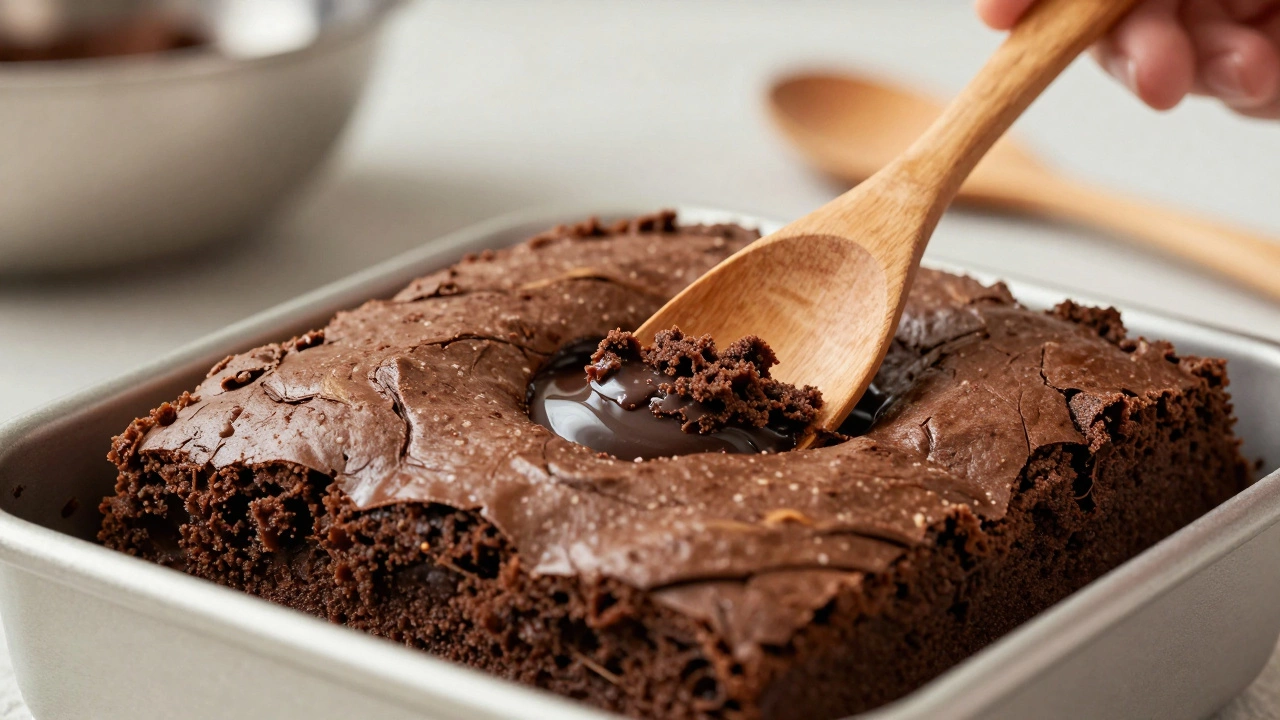
Instead, aim for a toothpick with moist crumbs clinging to it. When you insert it into the center, it should come out with a few sticky bits-not a clean sweep. That’s your sweet spot. A perfectly baked brownie will still jiggle slightly in the middle when you shake the pan. If it looks set all the way through, it’s going to dry out as it cools.
Use the right amount of fat
Fat is what gives brownies their rich, melt-in-your-mouth texture. Butter and oil are the two main players here. Butter adds flavor, but oil helps keep things moist longer. The best brownies use a mix of both. A recipe that calls for 1 cup of butter alone? That’s a red flag. Try one that uses 1/2 cup butter and 1/4 cup vegetable oil. The oil coats the flour proteins better, slowing down gluten formation and keeping the crumb tender.
Don’t skimp on the fat. Some people try to cut calories by reducing butter or oil. That’s a recipe for dryness. If you’re using a boxed mix, add an extra tablespoon of oil or melted butter. It makes a noticeable difference.
Don’t overmix the batter
When you stir the batter too much, you develop gluten in the flour. Gluten is great for bread. It’s terrible for brownies. Overmixing turns your fudgy treat into something chewy and dense-like a small, chocolatey tire.
Once you add the flour, mix just until you can’t see any dry streaks. A few lumps are fine. Seriously. If you’re using a stand mixer, switch to the paddle attachment and mix on low for no more than 30 seconds. If you’re doing it by hand, use a spatula and fold gently. Think of it like adding eggs to scrambled eggs-you don’t want to beat them into submission.

Choose the right flour
Not all flours are created equal. All-purpose flour works fine, but if you’re using a high-protein flour like bread flour, you’re asking for trouble. Bread flour has more gluten, which means more structure-and more toughness. Stick to all-purpose. If you want to get fancy, try replacing 1-2 tablespoons of flour with cocoa powder. That doesn’t just add chocolate flavor; it reduces gluten development slightly, making the texture softer.
Also, don’t pack your flour. Scooping it straight from the bag compresses it and adds extra weight. Use a spoon to lightly fluff it up, then spoon it into the measuring cup and level it off with a knife. That one habit alone can save your brownies from becoming too dense.
Use eggs the right way
Eggs are the glue that holds brownies together. But too many, or the wrong kind, can make them cakey instead of fudgy. Most classic brownie recipes use 2-3 large eggs. If you see a recipe with 4 or more, it’s probably aiming for a cake-like texture.
Room-temperature eggs mix better and create a smoother batter. Cold eggs can cause the melted chocolate or butter to seize up, leading to uneven texture. Take them out 30 minutes before you start baking. If you forget, put them in a bowl of warm water for 5 minutes. It helps.
Also, don’t use egg whites only. Some people think removing yolks makes brownies “lighter.” It doesn’t. It makes them dry. The yolk is where the fat and emulsifiers live. Without them, you lose moisture and richness.
Let them cool properly
Here’s a trick most people miss: don’t cut into brownies while they’re hot. Even if they smell amazing and you can’t wait, wait at least two hours. Brownies continue to set as they cool. Cutting too soon? You’re not just risking a messy plate-you’re disrupting the structure before it fully forms.
Let them cool in the pan on a wire rack. Then, once they’re at room temperature, chill them in the fridge for 30 minutes. That’s when the texture becomes fudgy and clean-cutting. Cold brownies slice neatly. Warm ones crumble.
Storage matters more than you think
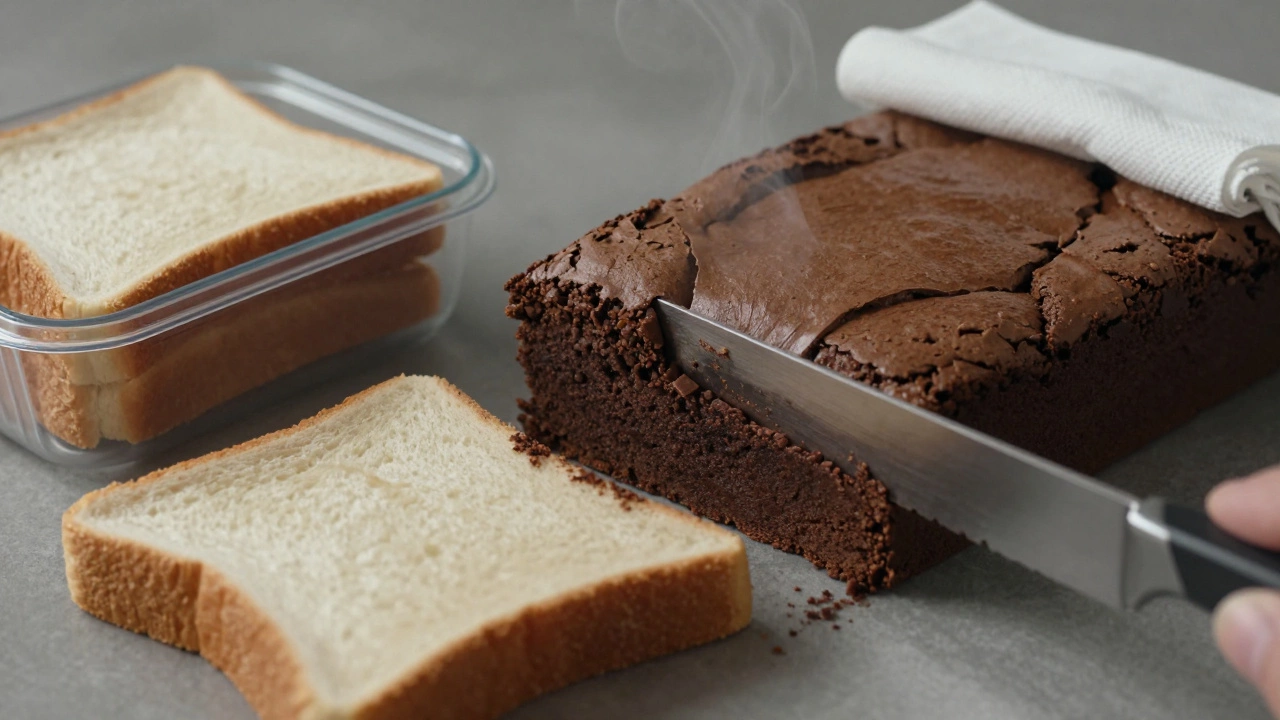
Storing brownies in the fridge might seem smart, but it’s a mistake. Refrigerators suck moisture out of baked goods. Your brownies will dry out faster than you think. Instead, keep them at room temperature in an airtight container with a slice of bread. Yes, bread. The moisture from the bread transfers slowly to the brownies and keeps them soft for days.
If you must refrigerate them-say, for travel-wrap them tightly in plastic wrap first, then put them in a sealed container. But even then, let them sit at room temperature for 20 minutes before serving. The texture will thank you.
What if they’re already hard?
Oops. You baked them too long. They’re dry. Can you save them? Sort of.
One trick: place a damp paper towel over the top of the brownies and microwave them in 10-second bursts. The steam helps rehydrate the surface. It won’t turn them into fudgy perfection, but it’ll make them edible again.
Another option: turn them into brownie bread pudding. Cube them, layer them in a dish with warm custard, and bake until soft. It’s not the same as a fresh brownie, but it’s a delicious second chance.
Quick checklist for soft brownies
- Use a recipe with both butter and oil
- Measure flour by spooning, not scooping
- Use 2-3 large eggs, not more
- Mix batter just until combined-no more
- Remove from oven when toothpick has moist crumbs
- Let cool completely before cutting
- Store in an airtight container with a slice of bread
If you follow even half of these, your brownies will be noticeably better. The difference between dry and fudgy isn’t magic-it’s technique.
Popular Posts
How to Tell if Mascarpone Cheese Has Gone Bad
Apr, 20 2026