
Fudge Temperature Adjuster
Enter your altitude to get the precise fudge cooking temperature for perfect texture.
Nothing’s more frustrating than carefully making fudge, waiting for it to cool, and then discovering it’s still soft, sticky, and barely holds its shape. You followed the recipe, measured everything, even stirred it just right-but it didn’t set. Sound familiar? You’re not alone. Most people who make fudge at home hit this wall. The good news? It’s almost always one or two simple mistakes-and fixing them is easier than you think.
Why Your Fudge Won’t Set
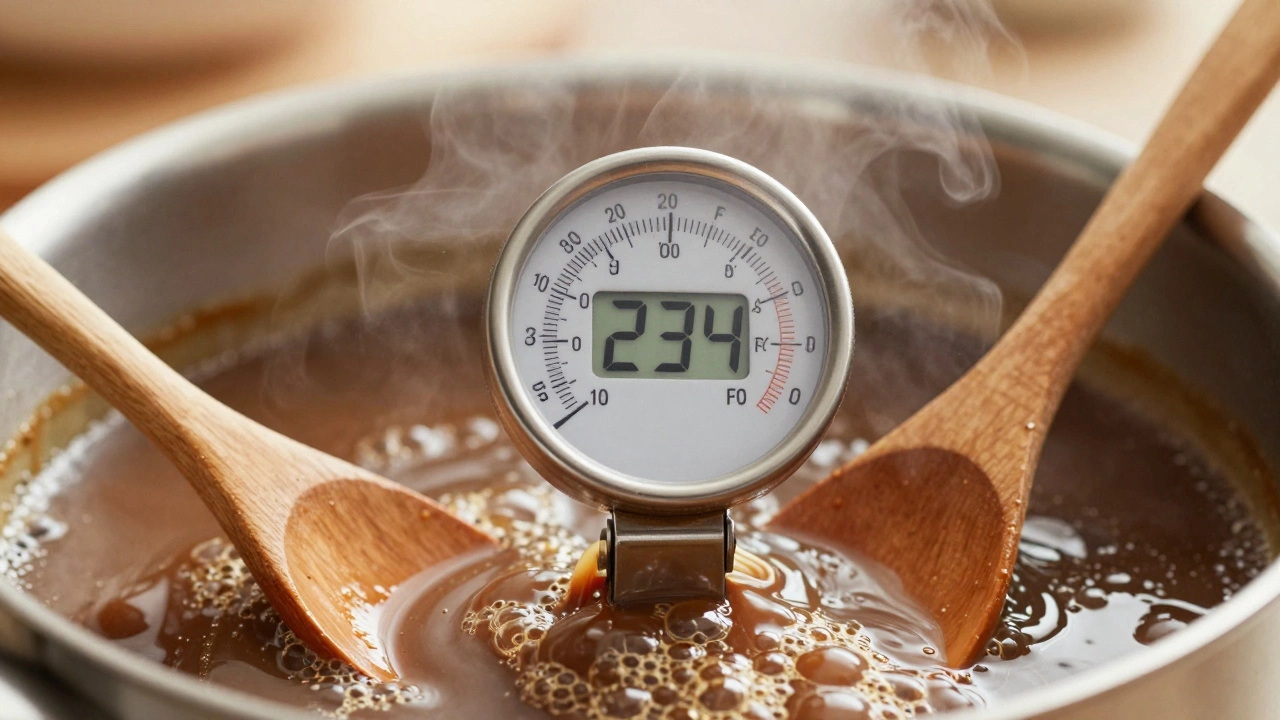
Fudge doesn’t set because the sugar syrup didn’t reach the right temperature. That’s it. No fancy science, no secret ingredients. Fudge is basically a sugar crystal suspension. When you heat sugar, water, and butter together, you’re creating a syrup. As it cools, the sugar crystals form a firm, smooth structure. But if the syrup doesn’t get hot enough, those crystals never form properly. The result? Goopy fudge that sticks to your spoon and your fingers.The magic temperature for fudge is 234°F (112°C). That’s the soft-ball stage. At this point, the syrup has lost enough water to become thick enough to hold shape when cooled. If you stop heating at 220°F, you’re making caramel sauce, not fudge. If you go past 240°F, you risk grainy or hard fudge. Temperature is everything.
Many recipes say "cook until thick" or "until it looks right." That’s not helpful. Visual cues change depending on humidity, altitude, and your stove. A pot of fudge can look thick but still be 20 degrees short of where it needs to be. That’s why a candy thermometer isn’t optional-it’s essential.
Use a Candy Thermometer (Yes, Really)
If you don’t own a candy thermometer, buy one. They cost less than $10 online. Look for one with a clip so it stays in the pot. Digital ones are great because they beep when you hit the target. Analog ones work fine too-just watch the needle.Here’s how to use it:
- Place the thermometer in the pot before you start heating.
- Make sure the tip doesn’t touch the bottom-it’ll give a false reading.
- Stir gently as it heats to prevent scorching, but don’t stir once it starts boiling.
- Watch for 234°F. That’s your cue to remove it from heat.
One common mistake? People think the fudge will set while it’s still warm. It won’t. You need to cool it properly after reaching the right temperature. Don’t rush this step.
Don’t Stir After Boiling
Once the mixture hits a full boil, stop stirring. This is critical. Stirring after boiling introduces air and triggers premature sugar crystallization. You’ll end up with gritty fudge instead of smooth, velvety texture.Think of it like making caramel. You stir at the start to dissolve sugar, then leave it alone. Same with fudge. Once it boils, let it bubble undisturbed until it hits 234°F. Then take it off the heat. Let it sit for 5 minutes without touching it. This lets the temperature stabilize and the bubbles settle.
Cool It Right-No Rushing
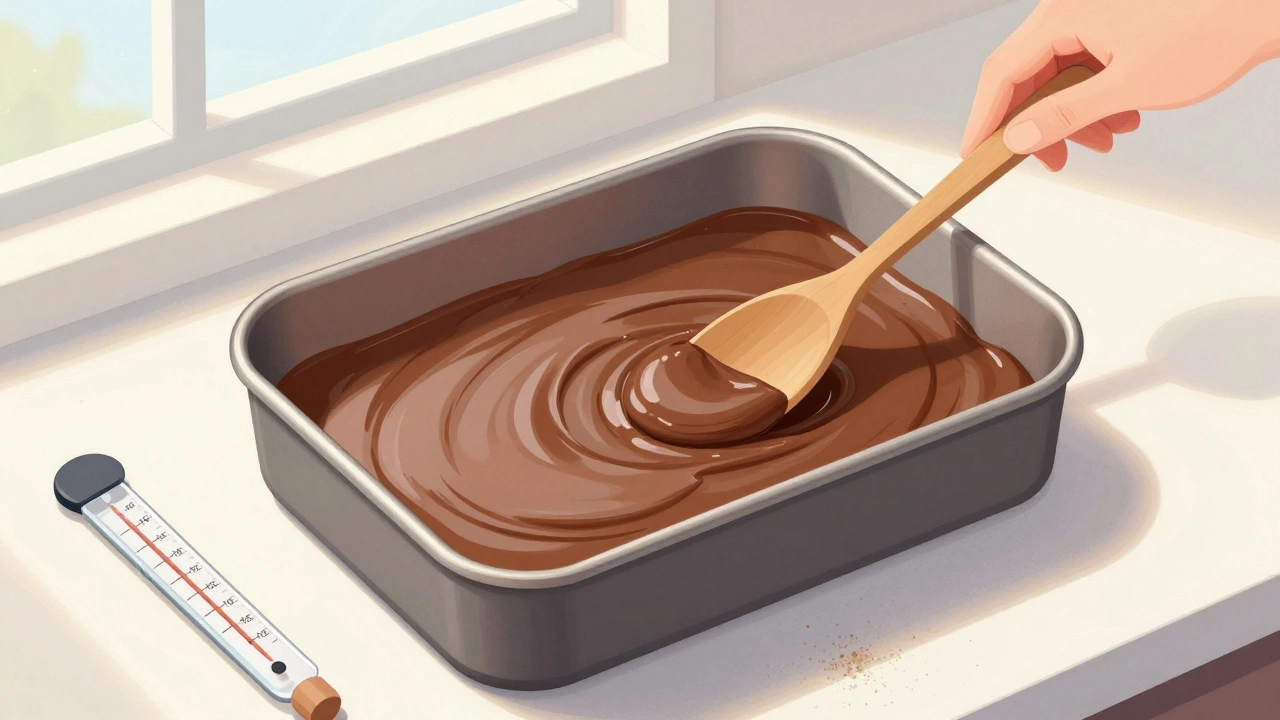
After removing the fudge from heat, let it cool to about 110°F before you start beating it. That’s when you add vanilla, chocolate chips, or nuts. If you start beating it while it’s still hot (say, 160°F), the sugar won’t form those tiny, smooth crystals. Instead, you’ll get large, grainy crystals. The fudge will be crumbly or rubbery.Here’s the best method:
- Pour the hot fudge into a greased pan.
- Let it sit undisturbed at room temperature for 1 to 2 hours.
- Once it’s cool to the touch (but not hard), use a wooden spoon to beat it for 3 to 5 minutes until it thickens and loses its shine.
- Then pour it into the pan and let it set completely-this takes another 2 hours.
Never put fudge in the fridge to speed this up. Cold air makes the sugar crystallize too fast. You’ll get a grainy texture. Room temperature cooling is the only way to get that melt-in-your-mouth smoothness.
Check Your Ingredients
Sometimes the problem isn’t technique-it’s what you’re using.- Sugar: Use granulated white sugar. Brown sugar has more moisture and can prevent setting. If you want a deeper flavor, use no more than 1/4 cup brown sugar in a standard recipe.
- Cream: Heavy cream (at least 36% fat) works best. Evaporated milk or half-and-half have too much water. They’ll dilute the syrup and make it harder to reach the right temperature.
- Butter: Use real butter, not margarine. Margarine has water and emulsifiers that interfere with sugar crystallization.
- Chocolate: If you’re adding chocolate chips, use baking chocolate or high-cocoa chocolate bars chopped finely. Milk chocolate chips have more milk solids and sugar, which can make fudge softer.
One real-world example: A baker in Brighton tried making fudge with oat milk because she thought it was "healthier." The fudge never set. Why? Oat milk is mostly water. It doesn’t concentrate like heavy cream. She added 10 extra minutes of cooking, but it still stayed sticky. Switching back to heavy cream fixed it in one batch.
Altitude Matters
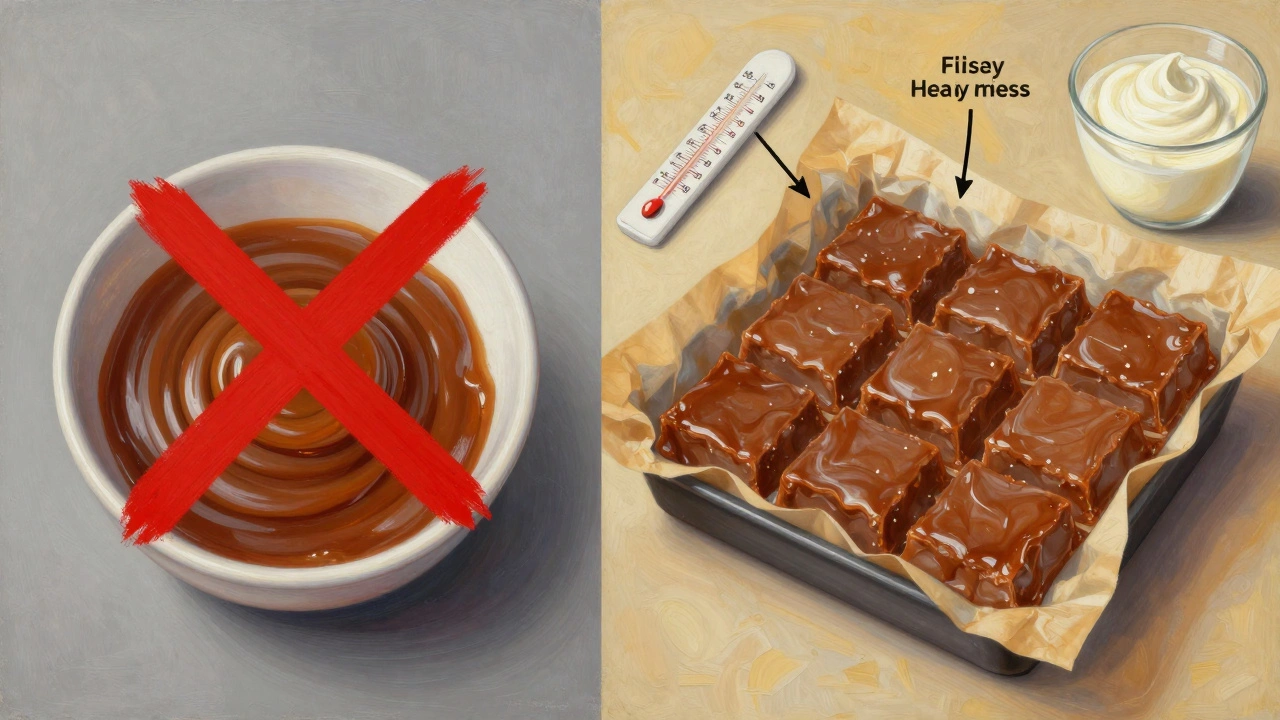
If you live above 1,000 feet, you need to adjust your temperature. Water boils at a lower temperature at higher elevations, which affects how sugar syrup behaves. For every 1,000 feet above sea level, reduce your target temperature by 2°F.For example:
- At 2,000 feet: Cook to 230°F
- At 5,000 feet: Cook to 224°F
If you’re unsure of your altitude, just cook to 232°F. That’s a safe middle ground for most home kitchens. But if you’ve tried everything and it still won’t set, altitude might be the hidden culprit.
What If It’s Already Too Soft?
You made the fudge. It’s cool. It’s still runny. Don’t throw it out. You can fix it.- Scrape the fudge back into a saucepan.
- Add 1/4 cup of heavy cream or water.
- Heat it gently over medium-low heat, stirring until melted.
- Bring it back to a boil, and cook to 234°F again.
- Let it cool, then beat as usual.
This works because you’re resetting the syrup. The extra liquid gives you room to boil off more water. You’ll end up with a second batch that sets perfectly.
One trick: If you don’t want to redo the whole batch, cut the soft fudge into small squares and roll them into truffles. Dust with cocoa powder or dip in melted chocolate. You’ll still get delicious chocolate treats-even if they’re not classic fudge.
Pro Tips for Perfect Fudge Every Time
- Use a heavy-bottomed saucepan. Thin pans heat unevenly and can scorch.
- Wipe the sides of the pot with a wet brush before boiling. Sugar crystals clinging to the sides can fall in and cause graininess.
- Don’t double the recipe. Larger batches heat unevenly. Make two smaller batches instead.
- Line your pan with parchment paper. It makes cutting and removing fudge effortless.
- Store fudge in an airtight container at room temperature. It lasts 2 weeks. No refrigeration needed.
Most people think fudge is finicky. But once you understand the science-temperature, timing, and technique-it becomes one of the easiest desserts to nail. You don’t need a professional kitchen. You just need a thermometer and patience.
Why does my fudge turn out grainy?
Grainy fudge happens when sugar crystals form too early or grow too large. This usually occurs if you stir the mixture after it starts boiling, or if sugar crystals stick to the sides of the pan and fall in. To prevent it, avoid stirring once the mixture boils, and wipe the pan sides with a wet brush before cooking. Also, make sure you cook it to the right temperature-234°F is the sweet spot.
Can I use condensed milk instead of cream?
No, sweetened condensed milk isn’t a direct substitute for heavy cream in traditional fudge. It contains added sugar and water, which changes the sugar-to-liquid ratio. Using it will make your fudge too sweet and soft. If you want to use condensed milk, look for a recipe specifically designed for it-those recipes use different cooking methods. Don’t swap it in blindly.
Does humidity affect fudge setting?
Yes. On humid days, the air holds more moisture, which can seep into the fudge as it cools and prevent it from hardening properly. If it’s raining or you live in a damp climate, try making fudge on a dry day. If you must make it in humidity, cook the syrup 1-2 degrees higher (up to 236°F) to burn off extra moisture. Store finished fudge in an airtight container with a silica gel packet to keep it firm.
How long should I beat the fudge?
Beat the fudge for 3 to 5 minutes after it cools to around 110°F. You’ll know it’s ready when it thickens, loses its glossy shine, and starts to look matte. If you stop too soon, it won’t set. If you beat too long, it can become dry or crumbly. Use a wooden spoon and keep stirring until the texture changes-that’s your signal.
Can I make fudge without a candy thermometer?
It’s possible, but not reliable. The cold water test is the only alternative: drop a small spoonful of syrup into a bowl of ice water. If it forms a soft, pliable ball that holds its shape but flattens when you remove it, you’ve reached the soft-ball stage. But this method is tricky, especially for beginners. A thermometer gives you exact control. For consistent results, use one.
Popular Posts

Do Potatoes Have Gluten? Exploring Gluten-Free Bakes
Feb, 19 2025
Top 10 Cake Flavors Everyone Loves for Birthdays
Jan, 1 2026