New York Cheesecake Density & Recipe Estimator
Not all cheesecakes are created equal. This tool helps you scale a classic "NY Style" recipe (dense, rich, heavy on yolks/cream) while ensuring you don't overmix or underbake.
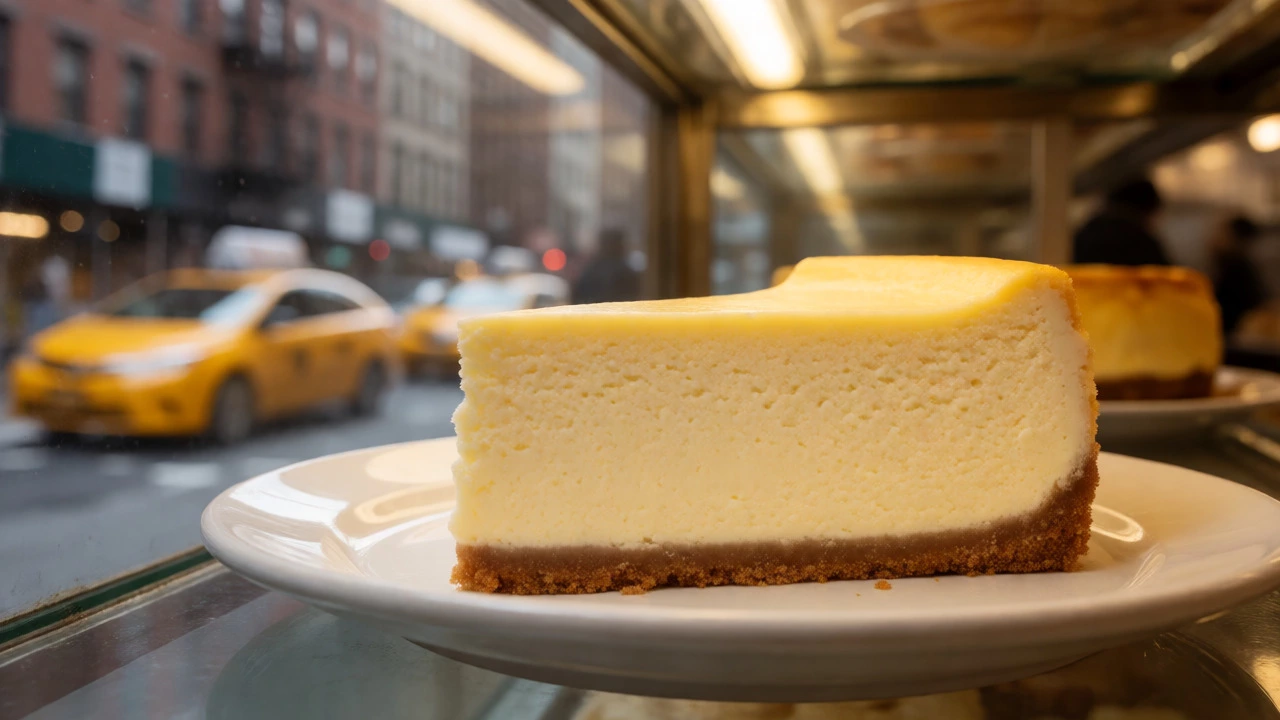
You’re standing in a bakery window on Manhattan’s Upper West Side, staring at a slice of yellow cake so dense it looks like it could sink a ship. You ask the person behind the counter, "What is this called?" They smile and say, "It’s just New York Cheesecake." But wait-is that actually its name, or is it just a description? If you’ve ever wondered why this specific style dominates menus from Times Square to suburban diners, you’re not alone. It’s the most famous cheesecake in America, but unlike the Tiramisu or the Black Forest Cake, it doesn’t have a unique proper noun attached to it. Its name is simply its origin.
The Short Answer: There Is No Special Name
Here is the twist that might disappoint you if you were hoping for a secret code word: the famous cheesecake in New York doesn’t have a catchy nickname like "The Big Apple Slice" or "Empire State Delight." It is universally known as New York Cheesecake. That’s it. The fame comes not from a proprietary title, but from a specific style of baking that originated in the city and became the gold standard for American desserts.
Why does this matter? Because when people search for "the famous New York cheesecake," they are usually looking for one of two things: either they want to know which restaurant serves the best version (often citing places like Junior’s or Lindy’s), or they want to understand what makes this cake different from the lighter, fluffier European versions. The answer lies in the density, the ingredients, and the history.
What Defines a "New York" Style?
If you’ve ever tried a Japanese cheesecake, you know it’s airy, almost like a soufflé. A New York cheesecake is the opposite. It is heavy, rich, and intensely creamy. So, what exactly goes into making it "New York"? It’s not just about where it was baked; it’s about the chemistry.
The defining characteristic is the addition of extra egg yolks and heavy cream (or sour cream) to the standard cheese batter. This creates a texture that is incredibly smooth and dense. Unlike other styles that might use whipped cream to lighten the load, New York style relies on the fat content of the dairy to provide richness. The crust is typically made from graham crackers, butter, and sugar, pressed firmly into the bottom of a springform pan. It’s sturdy enough to support the weight of the filling without crumbling under the pressure of your fork.
Think of it this way: if Italian ricotta cheesecake is a cloud, New York cheesecake is a brick of pure comfort. It sits on your plate with authority. You don’t eat it quickly; you savor it because every bite is substantial.
A Brief History: From Arnold Reuben to Modern Fame
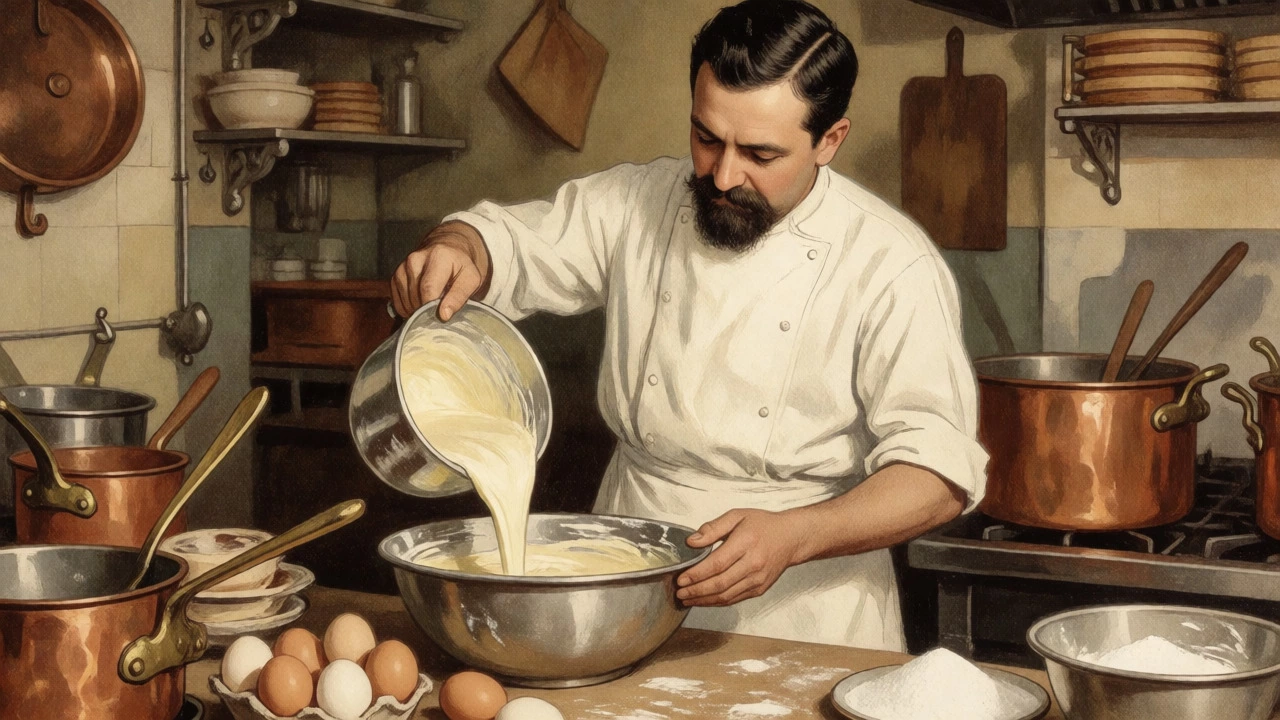
How did a simple cheese pie become an icon? The story often points to Arnold Reuben, the man who claimed to invent the Reuben sandwich. In the early 1920s, Reuben owned the Lindy Restaurant in New York City. He experimented with adding extra eggs and cream to his cheesecake batter, creating a richer, denser dessert that stood out from the competition. He reportedly served it at his restaurant, and word spread fast.
By the mid-20th century, New York Cheesecake had moved beyond high-end restaurants into diners everywhere. It became a staple of American comfort food. While some historians argue that similar dense cheesecakes existed before Reuben, he popularized the specific formulation that we recognize today. The name stuck because the style was synonymous with the city’s bold, unapologetic approach to food. It wasn’t subtle. It was big, rich, and memorable-just like the city itself.
The Great Debate: Baked vs. No-Bake
When people ask about the "famous" one, they are almost always referring to the baked variety. No-bake cheesecakes are delicious, sure, but they lack the caramelized top and the deep, cooked flavor profile that defines the New York style. The baking process is crucial. It involves a water bath (bain-marie) to ensure the center cooks evenly without cracking. This technique keeps the moisture in and prevents the surface from drying out too quickly.
Some modern bakeries try to skip the water bath, using low temperatures and long bake times instead. Does it work? Sometimes. But purists will tell you that skipping the water bath risks a dry texture. The goal is a custard-like interior that jiggles slightly when you shake the pan but sets firm after chilling overnight. Patience is the secret ingredient here. You cannot rush a New York Cheesecake.
Top Spots for Authentic New York Cheesecake
If you’re visiting New York and want to taste the original, there are three names that come up constantly in food guides and local conversations. Each offers a slightly different take on the classic formula.
| Bakery | Style | Signature Trait | Best For |
|---|---|---|---|
| Junior’s | Classic Baked | Extremely dense, no crust (traditional) | Purists who love intense cheese flavor |
| Eileen’s Special Cheesecake | Artisanal Baked | Unique flavors (e.g., pretzel crust), moist | Those wanting variety and gourmet touches |
| Lady M | Elegant Baked | Tall layers, delicate presentation | Fancy dinners and visual appeal |
Junior’s, founded in 1928, is arguably the most famous. Their traditional cheesecake has no crust, which surprises many first-timers. It’s all about the cheese. Eileen’s, located near Madison Square Garden, is beloved for its creative twists, like a chocolate chip cookie crust. Lady M offers a more refined, taller slice that feels luxurious rather than rustic.
Can You Make It at Home?
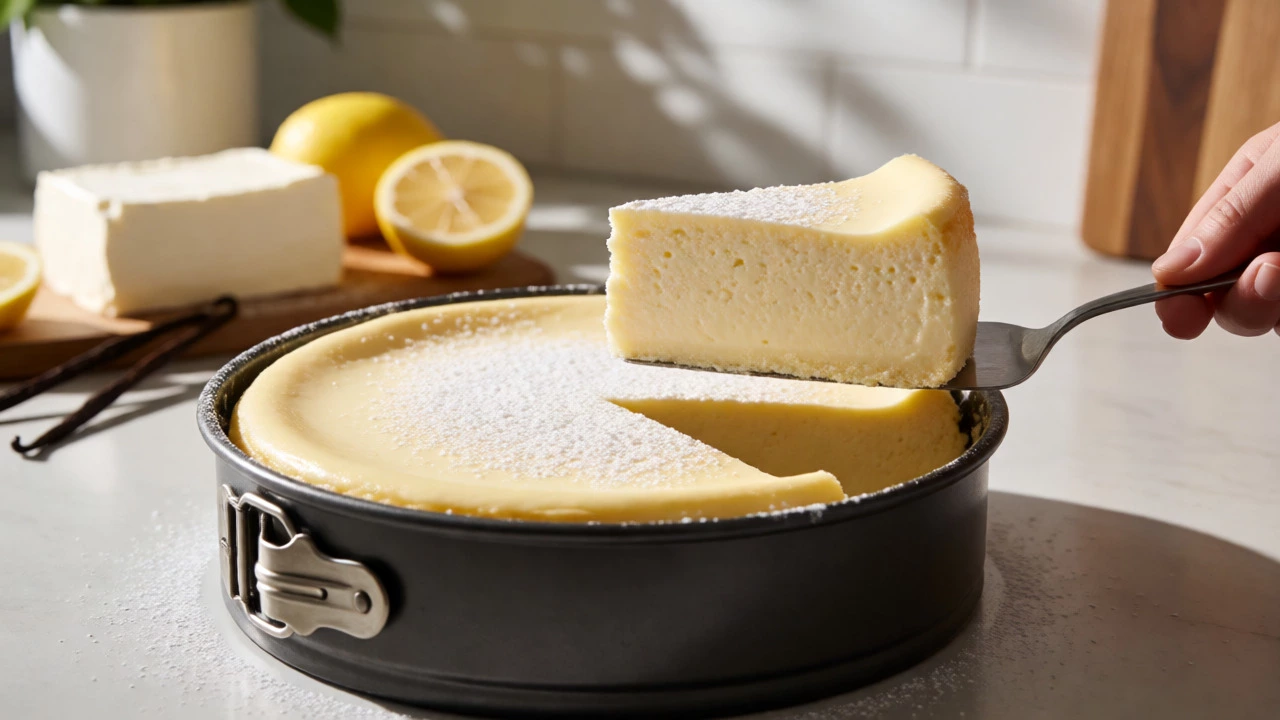
Yes, and you should. The beauty of New York Cheesecake is that it requires common ingredients. You need full-fat cream cheese (do not use reduced-fat; it won’t set right), sugar, eggs, vanilla extract, lemon juice, and heavy cream. The lemon juice is critical-it cuts through the richness and adds a subtle tang that balances the sweetness.
Here’s a quick checklist for success:
- Room Temperature Ingredients: Cold cream cheese leads to lumps. Let everything sit out for at least two hours.
- Don’t Overmix: Once you add the eggs, mix on low speed. Too much air causes cracks.
- Use a Water Bath: Wrap your springform pan in foil to keep water out, then place it in a larger pan filled with hot water.
- Chill Overnight: This is non-negotiable. The cake needs at least 8 hours in the fridge to set properly.
If you follow these steps, you’ll get that signature dense, creamy texture. It won’t be exactly like Junior’s, but it will be undeniably authentic.
Why It’s Not Just a Dessert, But a Cultural Icon
New York Cheesecake represents something bigger than food. It’s a symbol of indulgence in a fast-paced city. It’s the reward after a long day of walking miles in heels or sitting through endless meetings. The fact that it doesn’t have a fancy name makes it more accessible. It’s democratic. You can find it in a five-star hotel or a corner bodega. It belongs to everyone.
So, next time someone asks you, "What is the name of the famous cheesecake in New York?" you can tell them the truth: it’s just called New York Cheesecake. And that simplicity is exactly why it’s legendary.
Is there a specific brand name for New York Cheesecake?
No, there is no single brand name. "New York Cheesecake" refers to a style of cheesecake characterized by its density, richness, and use of heavy cream or sour cream. Specific bakeries like Junior’s or Lindy’s serve their own versions, but the general category remains unnamed beyond its geographic origin.
What makes New York Cheesecake different from regular cheesecake?
Regular cheesecake can vary widely, but New York style is distinctively denser and richer due to the addition of extra egg yolks and heavy cream. It also typically features a graham cracker crust and is baked slowly in a water bath to achieve a smooth, custard-like texture without cracks.
Does Junior’s Cheesecake have a crust?
The traditional Junior’s Cheesecake, founded in 1928, famously has no crust. It is served as a solid block of dense cheesecake. However, many other New York-style bakeries do include a graham cracker or cookie crust.
Why is my homemade New York Cheesecake cracking?
Cracking usually happens due to overmixing the batter (which incorporates too much air) or baking at too high a temperature. Using a water bath and cooling the cheesecake gradually in the oven with the door ajar helps prevent thermal shock and cracking.
Can I freeze New York Cheesecake?
Yes, New York Cheesecake freezes exceptionally well due to its high fat content. Wrap individual slices tightly in plastic wrap and aluminum foil, then store in an airtight container for up to 2 months. Thaw overnight in the refrigerator for best texture.
Popular Posts
King Cake vs Queen Cake: What’s the Real Difference?
Jul, 22 2025