
New York vs. Japanese Cheesecake Comparison Tool
Discover why these two styles represent opposite ends of the cheesecake spectrum. Click compare to see detailed differences.
🇺🇸 New York Style
The Dense Standard🇯🇵 Japanese Style
Cloud-Like SouffléVisual Comparison Chart
Quick Decision Guide
- Choose New York Style if: You want a classic, hearty dessert for dinner parties. It slices cleanly, freezes beautifully, and delivers that rich, tangy punch people expect from traditional cheesecake.
- Choose Japanese Style if: You're hosting brunch or afternoon tea and want to impress with visual drama. The jiggly dome is Instagram-worthy, and the lighter texture feels less indulgent despite being sweet.
Walk into any bakery in Brighton or New York City, and you’ll likely spot a slice of cheesecake sitting behind the glass. But if you ask five different people to describe their favorite version, you might get five completely different answers. Some want it dense, rich, and heavy with cream cheese. Others crave something light, airy, and almost jiggly like a soufflé. This confusion usually stems from one simple question: what are the two main types of cheesecake?
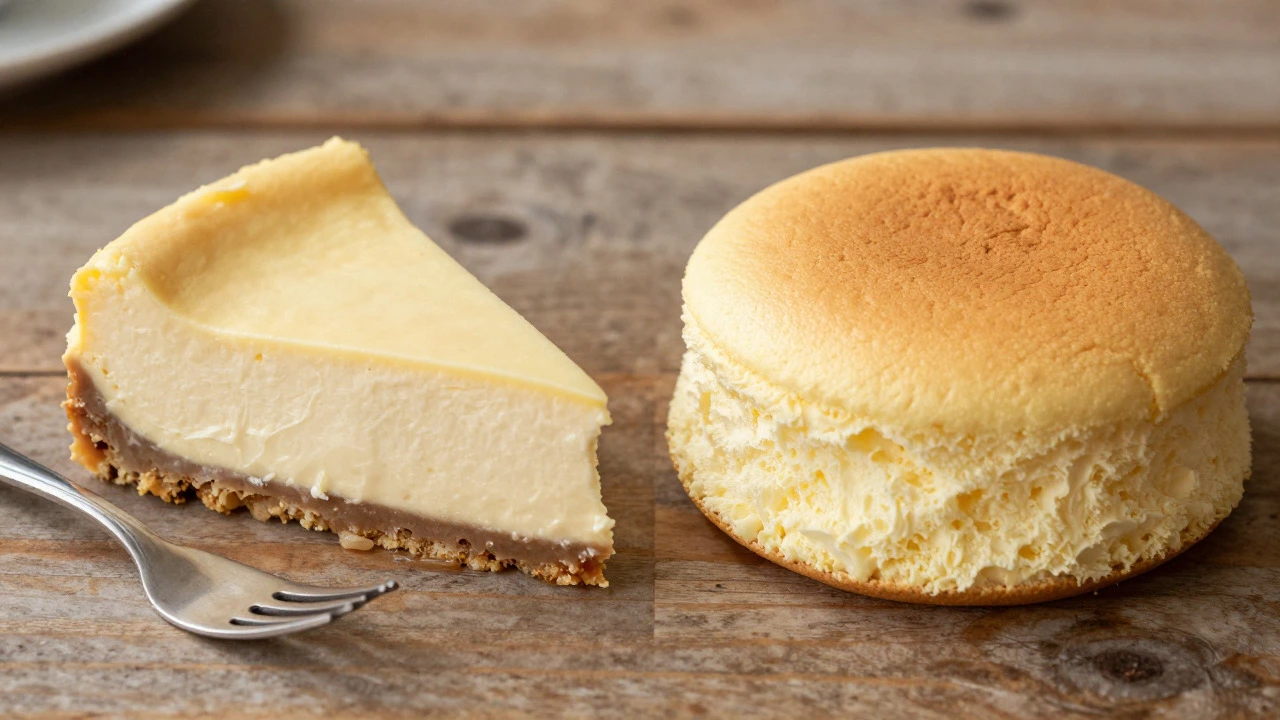
The short answer is that the global cheesecake landscape is dominated by two distinct styles: New York-style cheesecake and Japanese-style cheesecake. While there are regional variations everywhere from Greece to Russia, these two represent the polar opposites of texture, technique, and taste that define the dessert today. One is a dense, creamy brick of indulgence; the other is a delicate, cloud-like sponge.
The Dense Standard: New York-Style Cheesecake
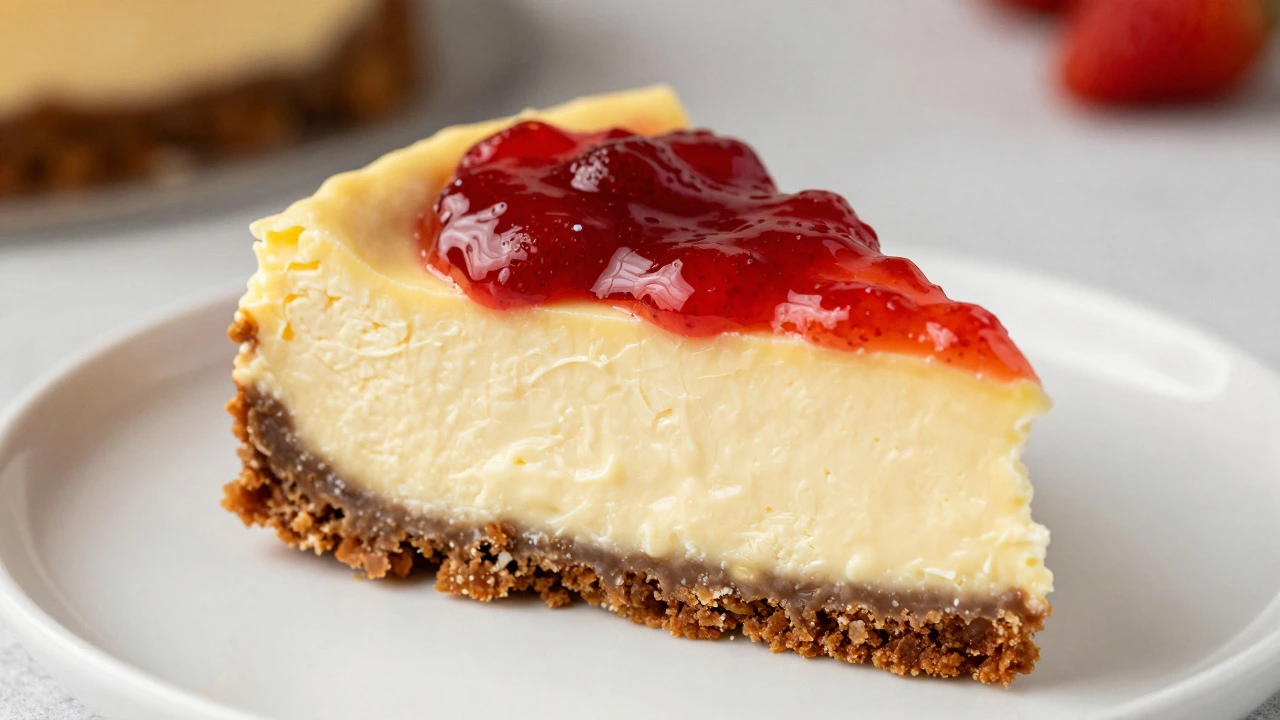
When most people in the United States think of "real" cheesecake, they are picturing the New York style. It’s the heavyweight champion of the dessert world. This version is famous for its intense richness, smooth texture, and substantial weight. If you’ve ever eaten a slice that felt like it required a fork and steady hand to consume, you were likely eating this type.
The secret to this density lies in the ingredients and the method. Unlike lighter versions, New York cheesecake relies heavily on full-fat cream cheese-specifically brands like Philadelphia, which became the industry standard. The recipe typically includes extra egg yolks (often skipping the whites) to add fat and structure without adding air. Sugar is mixed in thoroughly to dissolve crystals, ensuring that signature silky mouthfeel.
| Attribute | Detail |
|---|---|
| Texture | Dense, creamy, firm |
| Main Cheese | Full-fat cream cheese (e.g., Philadelphia) |
| Crust | Graham cracker or digestive biscuit base |
| Baking Method | Water bath (bain-marie) at low temperature |
| Serving Style | Often topped with fruit compote or chocolate |
The crust is another defining feature. Traditionally, it uses crushed graham crackers mixed with butter and sugar. In the UK, where graham crackers aren’t as common, bakers often substitute digestive biscuits, which provide a similar sweet, sandy crunch. The contrast between the sharp, tangy filling and the sweet, crunchy base is what makes this style so addictive.
Baking this cheesecake requires patience. Because the batter is so rich, it needs to be baked slowly in a water bath. This gentle heat prevents the surface from cracking-a common enemy of the perfect New York slice-and ensures the center sets evenly without curdling the eggs. You bake it until the edges are set but the center still has a slight wobble. Then, you let it cool slowly in the oven with the door ajar. Rushing this process is the fastest way to end up with cracks and a sunken middle.
The Airy Alternative: Japanese Soufflé Cheesecake
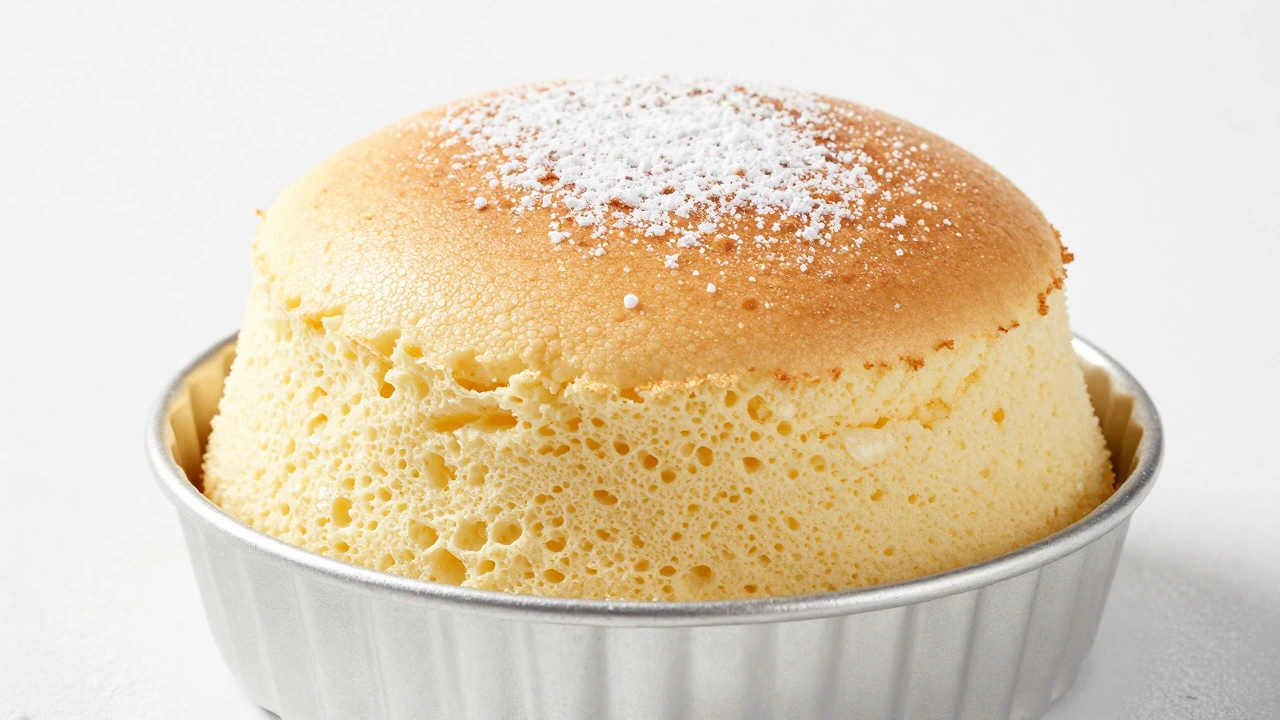
If New York cheesecake is the bodybuilder, Japanese cheesecake is the ballet dancer. Originating in Japan in the mid-20th century, this style took the concept of cheesecake and transformed it into something entirely different. It’s less of a pie and more of a hybrid between a cheesecake and a soufflé. The result is a cake that is incredibly light, fluffy, and melts in your mouth.
This style gained massive popularity globally thanks to social media, particularly TikTok and Instagram, where videos of the "jiggle test" went viral. The visual appeal is undeniable: a tall, golden-brown dome that trembles slightly when touched. But beyond the looks, the flavor profile is much subtler than its American counterpart. It’s less tangy and sweeter, with a delicate milky aroma.
The technique here is radically different. Instead of just mixing cream cheese with eggs, bakers separate the eggs. The whites are whipped into stiff peaks to create meringue, which is then gently folded into the cream cheese mixture. This incorporates air bubbles throughout the batter, giving the cake its rise and spongy texture. The cream cheese used is often softer, and sometimes mascarpone or sour cream is added to enhance the moisture and tenderness.
One major difference is the crust. Traditional Japanese cheesecake often skips the crust entirely. The focus is purely on the ethereal texture of the filling. When served, it’s usually presented plain or with a light dusting of powdered sugar. Heavy fruit toppings can weigh down the delicate structure, so they’re rarely used. The goal is to experience the pure, airy cheesecake flavor.
Baking Japanese cheesecake is tricky because it’s unstable. It rises high in the oven but can collapse quickly if cooled too fast or opened prematurely. Many recipes call for leaving the cake in the turned-off oven to cool gradually, similar to a soufflé. Even then, it will shrink slightly-that’s normal. The challenge is achieving the perfect balance: not too dense, not too flat, but perfectly jiggly.
Why These Two Styles Dominate
You might wonder why we focus on these two specifically when cheesecake exists in many forms. There’s Greek cheesecake, which uses feta or kefalotyri cheese and no crust. There’s Russian syrniki-style cheesecake, made with tvorog (cottage cheese). There’s even icebox cheesecake, which isn’t baked at all. So why do New York and Japanese styles stand out?
It comes down to availability and cultural influence. Cream cheese, the backbone of both styles, is widely available worldwide. New York cheesecake represents the classic Western interpretation of the dessert, rooted in Italian immigrant traditions in America. Japanese cheesecake represents the modern, innovative twist that appeals to those who find traditional cheesecake too heavy or rich.
These two styles also cover the full spectrum of texture preferences. If you like things rich and decadent, you lean toward New York. If you prefer light and airy, you choose Japanese. Most other variations fall somewhere in between or are niche specialties. For example, Philadelphia cheesecake is essentially a variation of New York style, just marketed differently. Bavarian cheesecake uses gelatin instead of eggs, making it a cold-set dessert, but it doesn’t have the same widespread recognition as the baked versions.
How to Choose Which One to Bake
Deciding which type to make depends on your skill level, your guests’ preferences, and the occasion. Here’s a quick guide to help you decide:
- Choose New York Style if: You’re hosting a dinner party where people expect a classic, hearty dessert. It’s great for slicing and serving alongside coffee or wine. It also freezes well, making it ideal for meal prep. However, be prepared for a longer baking and cooling process.
- Choose Japanese Style if: You want to impress with a visually stunning dessert. It’s perfect for brunch or afternoon tea. It’s lighter, so it feels less indulgent despite being sweet. Keep in mind that it’s best eaten fresh, within 24 hours, as it loses its fluffiness over time.
- Consider Your Equipment: New York cheesecake requires a springform pan and a roasting pan for the water bath. Japanese cheesecake also uses a springform pan but doesn’t need a water bath, though some recipes recommend it for even heating.
- Think About Dietary Restrictions: Both styles can be adapted. New York cheesecake can be made gluten-free by using almond flour for the crust. Japanese cheesecake is naturally gluten-free if you skip the cornstarch or use a GF alternative, and it’s easier to make vegan by substituting cashew cream for cream cheese.
Troubleshooting Common Issues
Whether you’re aiming for dense or fluffy, things can go wrong. Here’s how to fix the most common problems:
Cracks on Top (New York Style): This happens when the cake cooks too fast or cools too quickly. Ensure your oven temperature is accurate (an oven thermometer helps), use a water bath, and let the cake cool in the oven with the door cracked open for an hour before removing it.
Collapsing Center (Japanese Style): If the cake sinks dramatically after coming out of the oven, you may have underbaked it or opened the oven door too early. Whip your egg whites to stiff peaks, fold them gently to retain air, and let the cake cool in the turned-off oven. A slight shrinkage is normal; a total collapse means it needs more structure or careful handling.
Grainy Texture: This occurs when the cream cheese isn’t fully softened or the sugar isn’t dissolved. Always bring cream cheese to room temperature before mixing. Beat it thoroughly with sugar until smooth before adding eggs. Overmixing after adding eggs can incorporate too much air, leading to a porous texture in New York style.
Too Dense (Japanese Style): If your Japanese cheesecake turns out heavy, you didn’t whip enough air into the egg whites or folded too vigorously, deflating the meringue. Use clean, grease-free bowls for whipping whites, and fold with a spatula using a gentle cutting motion.
Final Thoughts on Cheesecake Diversity
Understanding the two main types of cheesecake gives you a framework for exploring the wider world of this dessert. Once you master the dense, creamy New York style and the airy, delicate Japanese style, you can experiment with flavors and variations. Try adding matcha powder to your Japanese cheesecake for a green tea twist. Or swirl raspberry jam into your New York cheesecake for a fruity contrast.
The beauty of cheesecake is its versatility. Whether you prefer the robust, tangy punch of cream cheese or the subtle, milky sweetness of a soufflé, there’s a version that suits your palate. Next time you’re at a bakery, look closely at the slice. Is it dense and firm? That’s New York. Is it tall and jiggly? That’s Japanese. Knowing the difference helps you appreciate the craftsmanship behind each bite.
What is the difference between New York and Japanese cheesecake?
The primary difference is texture and density. New York cheesecake is dense, rich, and creamy, made with full-fat cream cheese and baked in a water bath. Japanese cheesecake is light, airy, and fluffy, resembling a soufflé due to whipped egg whites being folded into the batter. New York style often has a crust, while Japanese style typically does not.
Which cheesecake is healthier?
Japanese cheesecake generally has fewer calories per slice because it contains more air and less dense cream cheese. However, both desserts are high in sugar and fat. If you're watching your intake, portion control is key regardless of the style.
Can I make Japanese cheesecake without a springform pan?
It’s difficult. The cake rises significantly and needs to be released easily to maintain its shape. A springform pan allows you to remove the sides without damaging the delicate structure. Using a regular cake pan may cause the cake to break when unmolding.
Why does my New York cheesecake crack?
Cracking is usually caused by rapid temperature changes or overmixing. To prevent it, bake in a water bath to ensure even, gentle heat, avoid opening the oven door during baking, and let the cheesecake cool slowly in the oven with the door slightly ajar.
Do I need a water bath for Japanese cheesecake?
Not always, but it helps. A water bath provides moist heat, which can prevent the top from drying out and cracking. However, many successful Japanese cheesecake recipes rely solely on low oven temperatures and gradual cooling to achieve the right texture.
What cheese is used in traditional Greek cheesecake?
Traditional Greek cheesecake uses feta cheese or kefalotyri, a hard aged cheese. It is much saltier and tangier than cream cheese-based varieties. It is often layered with phyllo dough rather than having a crumb crust.
Popular Posts
How to Order a Cake from Costco - Step‑by‑Step Guide
Oct, 10 2025

What Are the Downsides of Vegan Desserts?
Nov, 15 2025