Macaron Definition: What It Really Is, Where It Comes From, and Why It Costs So Much
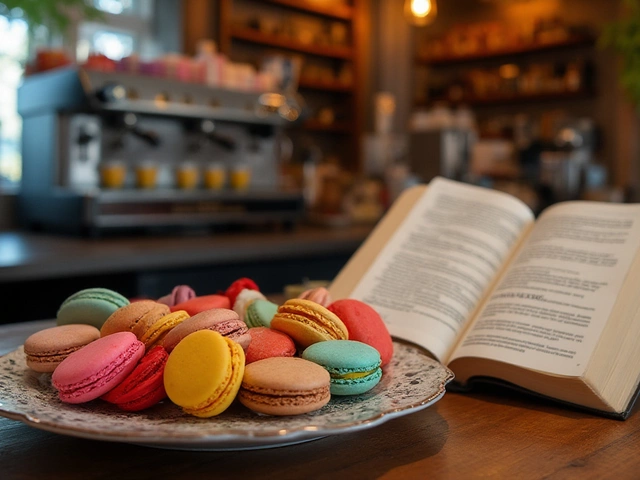
When you hear macaron, a delicate French pastry made of almond flour, egg whites, and sugar, with a creamy filling sandwiched between two crisp shells. Also known as macaroon, it’s not the coconut-heavy cookie you might think of—it’s a colorful, airy, and surprisingly fragile treat that takes skill to get right. The word itself comes from the Italian macarone or the French macaron, and in France, it’s not just dessert—it’s art.
What makes a true macaron isn’t just the ingredients—it’s the technique. The shells need to have a smooth top, a slight ruffle called the foot, and a soft center that gives way when you bite into it. Too much mixing and they’ll spread flat. Too little and they’ll crack. It’s a balance that even experienced bakers struggle with. And that’s why you pay so much for them. A single macaron isn’t just sugar and almonds—it’s hours of precision, temperature control, and patience. You’re paying for consistency, not just flavor.
Related to this is the macaron pronunciation, a French word said as "mah-kah-ROHN," not "mack-uh-ron". Get it wrong and a Parisian baker might raise an eyebrow. Then there’s the macaron cost, which can range from $2 to $5 each in the UK, depending on the bakery, flavor, and whether it’s handmade or mass-produced. Why so expensive? Almond flour alone costs more than regular flour. Egg whites need to be aged and whipped to perfection. Fillings like ganache or fruit curd are made in small batches. And let’s not forget the labor—each one is piped, dried, baked, and filled by hand.
People often confuse macarons with macaroons, but they’re not the same. Macaroons are dense, chewy, coconut-based balls, usually sold in bulk and eaten as snacks. Macarons are elegant, delicate, and meant to be savored slowly. They’re not for your lunchbox—they’re for celebrations, gifts, or that quiet moment when you want something beautiful to taste as good as it looks.
And if you’ve ever wondered why some macarons taste like cardboard or fall apart in your hands, it’s usually because they were rushed, stored wrong, or made with cheap ingredients. Authentic ones need time to rest after baking so the filling softens the shell just enough. They’re not meant to be eaten right out of the oven. That’s why you’ll find guides on how to store them, how long they last, and why buying in bulk doesn’t always save you money.
Below, you’ll find real answers to the questions people actually ask: How much do macarons cost in 2025? What’s the difference between French and Italian versions? Can you make them without a mixer? Why do some taste like almonds and others like lavender? You’ll see what works, what doesn’t, and what’s just hype. No fluff. Just the facts you need to understand—or maybe even bake—these little wonders yourself.

What Does the Word Macarons Mean? Origin, Spelling, and Common Misunderstandings
Macarons are delicate French almond cookies, not coconut treats. Learn the real meaning behind the word, why people confuse them with macaroons, and what makes a true macaron.
View MorePopular Posts


Can You Simply Pick Up a Costco Birthday Cake?
Nov, 29 2024