Cannoli & Italian Dessert Knowledge Quiz
How Well Do You Know Cannoli?
Think you know the difference between a cannolo and a cannelloni? Or why we say "cannoli" instead of "cannolis"? Take this quick quiz to find out!
Loading question...
Quiz Complete!
0/5
You’re at an Italian restaurant, scanning the menu. You see cannoli listed right next to tiramisu and panna cotta. You order it because it sounds fancy, but when it arrives-a crisp tube filled with white cream-you pause. What exactly is this thing? And why does everyone call it a "cannolo" if you ordered two?
The confusion is real. Many people mix up cannoli with other creamy Italian desserts, or they mispronounce the name so badly that waiters wince. But understanding what cannoli actually means unlocks a deeper appreciation for one of Italy’s most iconic sweets. It’s not just a snack; it’s a piece of history wrapped in fried dough.
The Literal Translation: From Pipe to Pastry
Let’s start with the name itself, because it’s the biggest clue to what you’re eating. The word Cannoli comes from the Italian word cannolu, which is the plural form of cannolo. In English, this translates directly to "little pipes" or "small tubes."
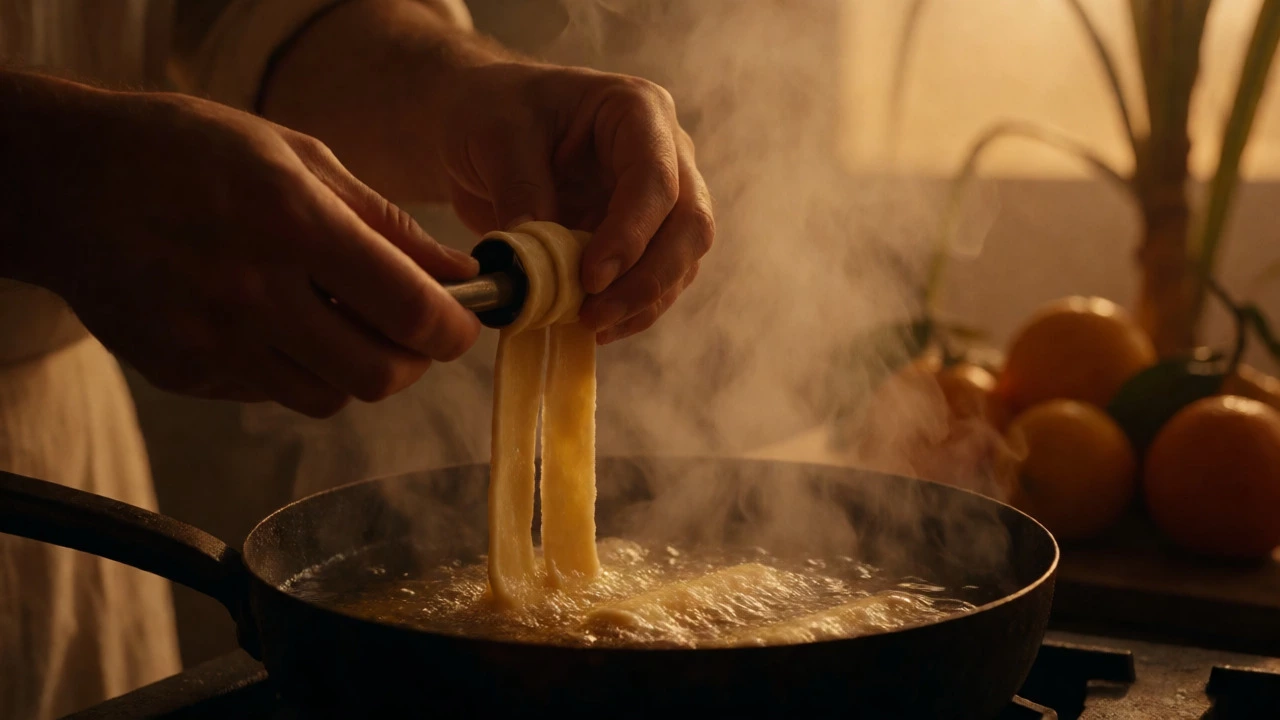
Why pipes? Because historically, the dough was wrapped around small metal rods-literally pipes-before being fried. Once cooked, the rod was removed, leaving behind a hollow tube ready to be filled. If you’ve ever made biscotti or rolled cookies, think of it as the opposite: instead of baking a solid shape, you create a shell.
Here’s a grammar trap that catches almost every non-Italian speaker: In Italian, singular is cannolo (one pipe) and plural is cannoli (many pipes). Saying "two cannolis" is like saying "two pizzas" in English-it works colloquially, but purists will correct you instantly. When you order, say "I’ll have two cannoli," and you’ll sound like you know your stuff.
Sicilian Roots: More Than Just Dessert
Cannoli aren’t just popular in Italy; they are deeply tied to Sicily, the island region off the toe of Italy’s boot. Most food historians trace the origins back to the Arab rule of Sicily between the 9th and 11th centuries. The Arabs brought sugar cane, citrus fruits, and advanced confectionery techniques to the island, blending them with local ingredients like sheep’s milk ricotta.
There’s also a religious angle. Traditionally, cannoli were eaten during Carnival season, before Lent began. Since Lent forbids rich foods, bakers used up their supply of eggs, sugar, and fat by frying these indulgent shells. Today, you can find them year-round, but the spirit of celebration remains. If you visit Palermo or Catania, you’ll see street vendors selling fresh cannoli at every corner, often dusted with powdered sugar or candied fruit.
Anatomy of a Cannolo: Shell, Filling, and Garnish
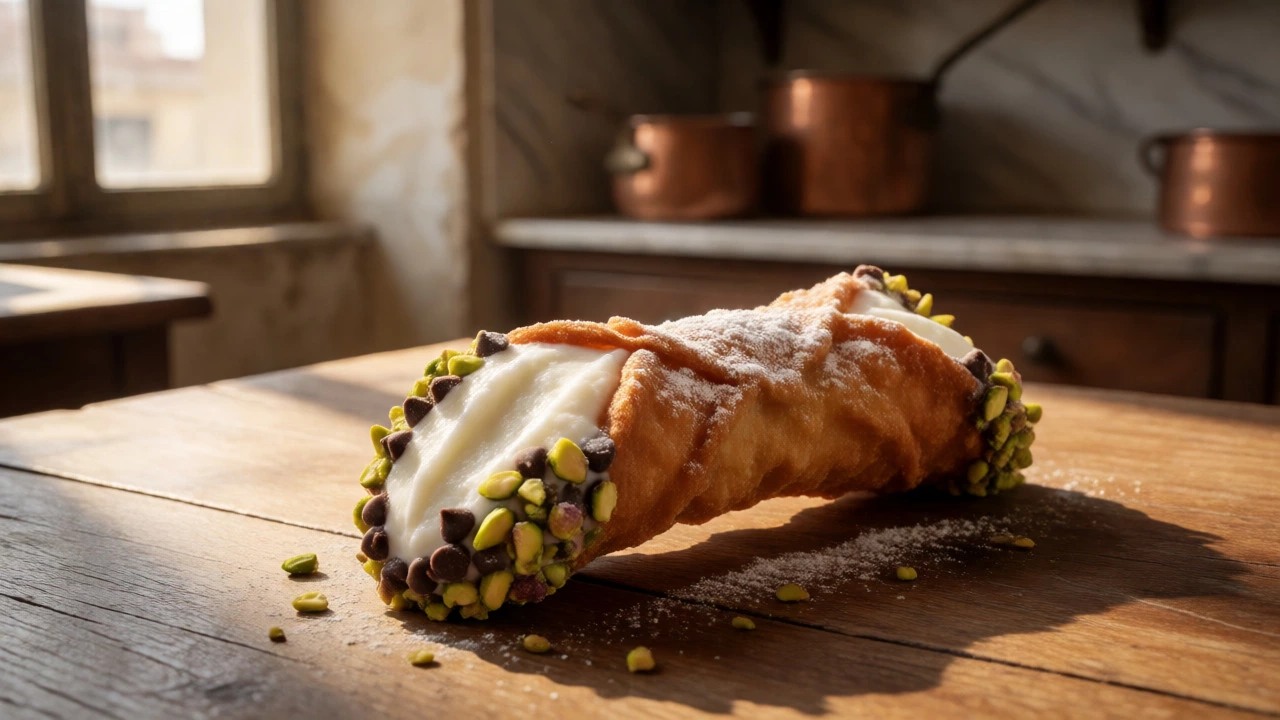
A proper cannolo has three distinct parts, and each plays a critical role. If any part fails, the whole experience collapses-literally, if the shell gets soggy too fast.
- The Shell: This is a deep-fried pastry tube made from flour, wine (often Marsala), vinegar, and lard or butter. It must be crispy. If it bends without snapping, it’s stale.
- The Filling: Traditionally, this is sweetened Ricotta, specifically sheep’s milk ricotta from Sicily. Cow’s milk ricotta is common outside Italy, but it’s wetter and less flavorful. Authentic fillings are strained through cheesecloth to remove excess whey, ensuring a thick, creamy texture.
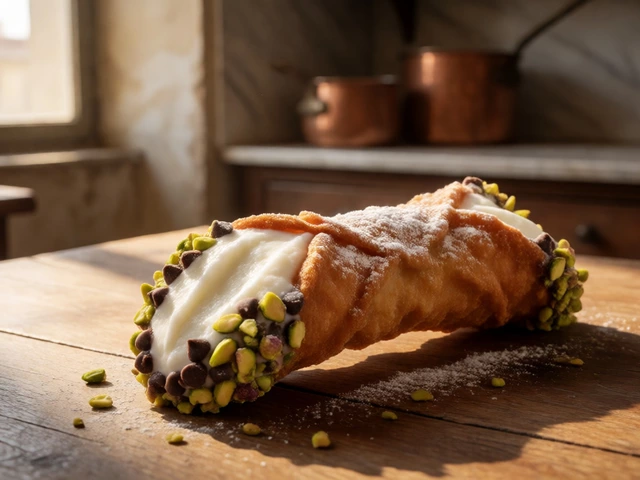
- The Garnish: Ends are dipped in chopped pistachios, dark chocolate chips, or candied orange peel. Powdered sugar is dusted on top just before serving.
The key to quality? Freshness. A good baker fills the shells only minutes before serving. Why? Because moisture from the ricotta softens the fried shell rapidly. If you buy pre-filled cannoli from a supermarket shelf, expect a softer, chewier bite-not the crisp crunch of a freshly made one.
Cannoli vs. Tiramisu: Which Creamy Italian Classic Wins?
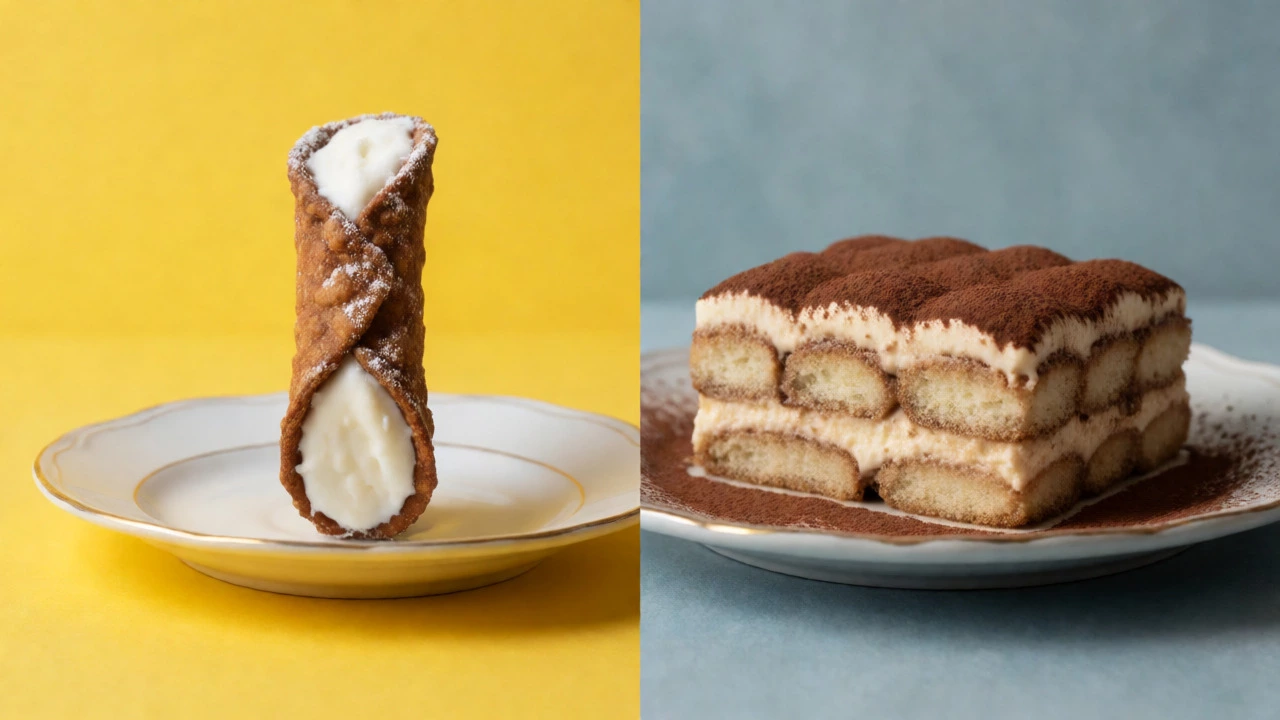
Since you mentioned tiramisu, let’s clear up the rivalry. Both are creamy, both are Italian, and both are beloved worldwide. But they are fundamentally different experiences.
| Feature | Cannoli | Tiramisu |
|---|---|---|
| Origin | Sicily (South) | Veneto/Friuli (North) |
| Main Ingredient | Ricotta Cheese | Mascarpone Cheese |
| Texture | Crispy shell, creamy center | Soft, layered sponge |
| Flavor Profile | Nutty, citrusy, mild sweetness | Coffee, cocoa, boozy richness |
| Preparation | Fried dough, assembled last-minute | Assembled ahead, needs chilling |
If you want something textural and handheld, go for cannoli. If you prefer a spoonable, coffee-infused cake-like dessert, pick tiramisu. Neither is better-they’re just different tools for different cravings.
How to Eat a Cannolo Without Making a Mess
Eating a cannolo can be tricky. The filling oozes out, the shell cracks, and powdered sugar ends up on your shirt. Here’s how pros do it:
- Hold it horizontally: Don’t tilt it vertically. Keep the tube parallel to the table.
- Bite from the side: Take a bite near the middle of the shell, not the end. This prevents the filling from shooting out the open end.
- Use a fork if needed: If the shell is very fragile, place it on a plate and cut it into bite-sized pieces with a knife and fork.
- Pair with strong coffee: The sweetness of the ricotta balances perfectly with an espresso or ristretto. Avoid milky coffees; they dilute the flavor contrast.
In Sicily, you’ll often see locals dipping the cannolo briefly into espresso. This adds bitterness and moisture, enhancing the nutty notes of the pistachio garnish.
Common Mistakes When Ordering or Making Cannoli
Whether you’re buying or baking, avoid these pitfalls:
- Using low-fat ricotta: Fat carries flavor. Low-fat versions taste watery and bland.
- Skipping the straining step: Unstrained ricotta makes the filling runny, leading to a soggy shell.
- Adding vanilla extract: Traditional recipes use cinnamon, orange zest, or chocolate chips for aroma. Vanilla is a modern addition that masks the delicate ricotta taste.
- Storing filled cannoli overnight: As mentioned, the shell loses its crunch. Store shells and filling separately, then assemble right before serving.
If you’re making them at home, use Marsala wine in the dough. It adds depth and helps the shell stay crisp longer than water or milk would.
Is cannoli healthy?
Cannoli are high in calories and saturated fat due to the fried shell and full-fat ricotta. However, ricotta provides protein and calcium. They are best enjoyed as an occasional treat rather than a daily snack. One medium cannolo contains roughly 250-350 calories depending on size and garnish.
Can I make cannoli gluten-free?
Yes, but it requires care. Use a gluten-free flour blend with xanthan gum to mimic the elasticity of wheat dough. Fry the shells until deeply golden to ensure crispness, as GF shells tend to be more brittle. Ensure all other ingredients, especially chocolate chips, are certified gluten-free.
What is the difference between cannoli and cannelloni?
They sound similar but are completely different. Cannoli are sweet fried pastry tubes filled with ricotta. Cannelloni are large pasta tubes stuffed with meat or cheese and baked in tomato sauce. Cannoli are dessert; cannelloni are a main course.
Why are cannoli sometimes called "Sicilian cigars"?
This nickname refers to their cylindrical shape, resembling a cigar. Some older recipes even shaped the dough slightly tapered at one end. It’s a visual descriptor rather than a formal name, but you might hear it in traditional bakeries.
Do authentic cannoli contain chocolate chips?
It depends on the region. In Palermo, you’ll often find mini chocolate chips mixed into the ricotta. In other areas, chocolate is reserved for the exterior garnish. Both styles are considered authentic within their local contexts.
Popular Posts
What Fruit is Not Gluten-Free in Your Cakes?
Mar, 7 2025
Discover the World's Most Beloved Cake Recipes
Nov, 11 2024