English Fudge Temperature Checker
Adjust Your Syrup Temperature
Drag the slider to simulate your candy thermometer reading and see what happens to your fudge.
Result Prediction
Too Cool
Your mixture hasn't reached the necessary temperature yet. There is too much water remaining. If you stop here, your fudge will remain a sticky liquid and will not set.
Walk into any British charity shop or village fête in the UK, and you’ll likely spot a tin of soft, crumbly sweets wrapped in greaseproof paper. They’re labeled "fudge," but if you’ve only ever eaten the dense, glossy confection from North America, you might be confused. Is it candy? Is it chocolate? Why does it taste like sweetened butter?
The short answer is that English fudge is not made with milk powder or condensed milk, which are staples in American recipes. Instead, it’s a simple emulsion of sugar, butter, and water, cooked to a precise temperature and then beaten until it crystallizes into a creamy texture. If you’ve ever wondered why your homemade version turned out hard as a rock or grainy like sand, the secret lies entirely in these three core components and how they interact.
The Three Pillars of Traditional English Fudge
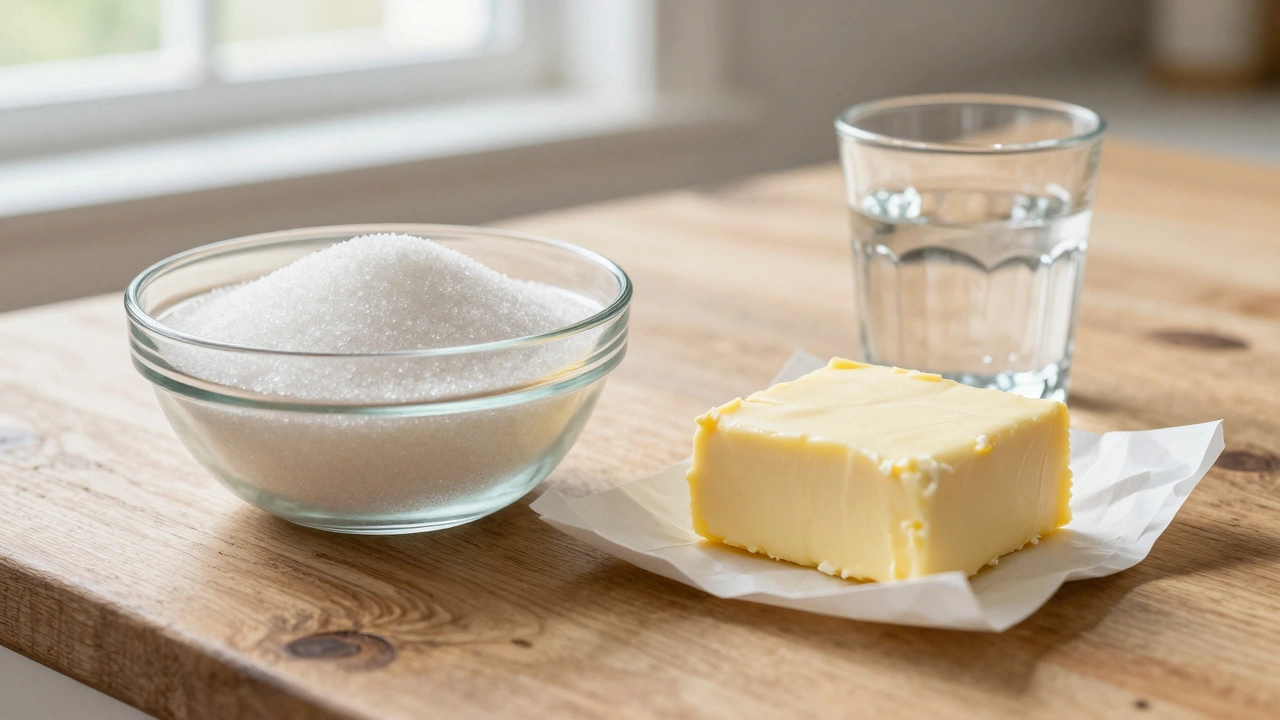
To understand what makes this treat unique, we need to break down its anatomy. Unlike many other candies that rely on complex chemical reactions with acids or enzymes, traditional English fudge relies on basic physics: solubility and crystallization. Here are the non-negotiable ingredients.
- Sugar: Specifically caster sugar (fine granulated sugar). This provides the structure. Without enough sugar, the fudge won’t set; too much, and it becomes brittle.
- Butter: Unsalted butter is standard. It adds richness, prevents large sugar crystals from forming (which keeps the texture smooth), and contributes to that signature melt-in-the-mouth feel.
- Water: Yes, just plain water. It acts as the solvent to dissolve the sugar initially. As the mixture boils, the water evaporates, concentrating the sugar solution.
That’s it. No eggs, no flour, no dairy solids beyond the fat in the butter. Some variations add vanilla extract for flavor, but purists argue that true English fudge should taste purely of caramelized sugar and creaminess. If you see a recipe calling for milk powder, you’re looking at an American-style fudge, which is essentially a different product altogether.
Why Temperature Matters More Than You Think
You can have the best ingredients in the world, but if you don’t manage the heat, you won’t get fudge. You’ll get syrup, or you’ll get rock candy. The magic happens at a specific stage called the "soft-ball stage."
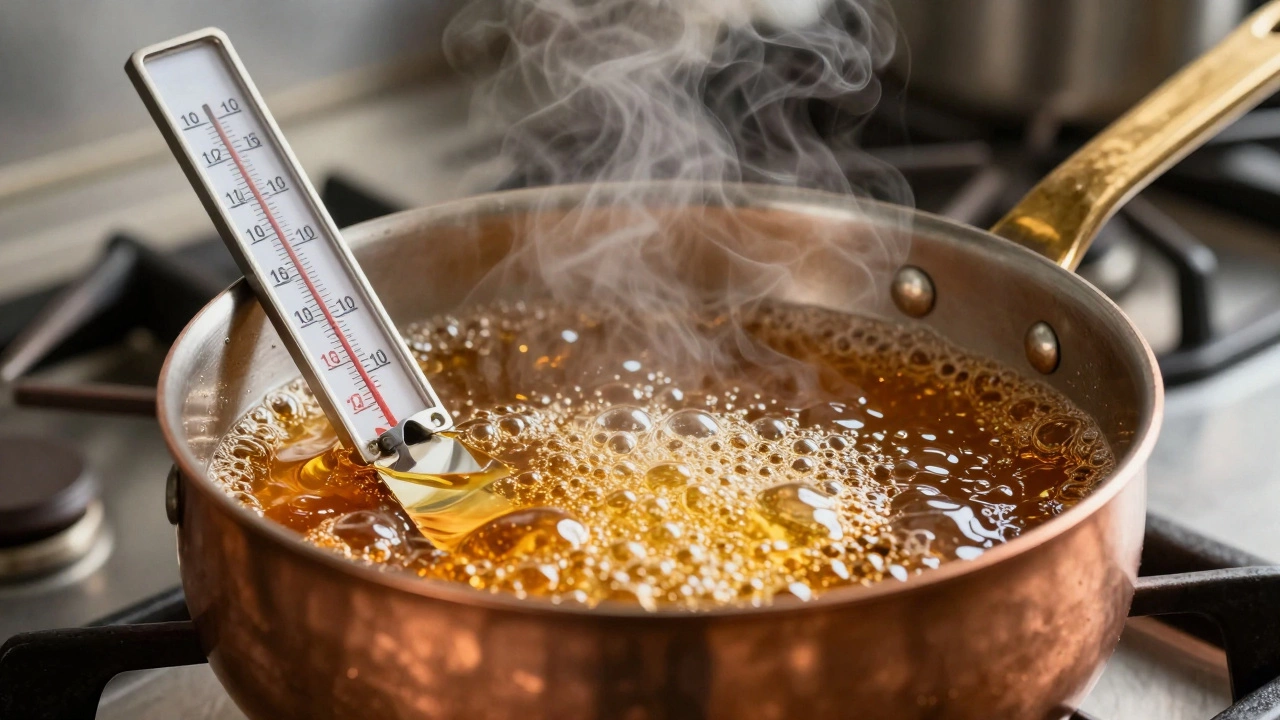
In cooking terms, this means heating the sugar-water-butter mixture to between 112°C and 116°C (234°F-240°F). At this temperature, when you drop a small amount of the syrup into cold water, it forms a soft ball that flattens when you press it. This isn’t just old-fashioned wisdom; it’s chemistry. At lower temperatures, there’s too much water left, and the fudge stays sticky. At higher temperatures, you lose too much water, and the result is hard and glassy.
If you don’t have a candy thermometer, you can use the cold water test, but it requires practice. Dip a metal spoon into ice water, then stir a tiny bit of your hot syrup into the water. If it forms a pliable ball, you’re ready to remove it from the heat. If it dissolves, keep cooking. If it forms a hard lump that doesn’t flatten, you’ve gone too far-start over.
The Secret Step: Beating the Mixture
Once you hit the right temperature, the real work begins. Many beginners make the mistake of thinking the cooking process alone creates the texture. It doesn’t. The texture comes from agitation.
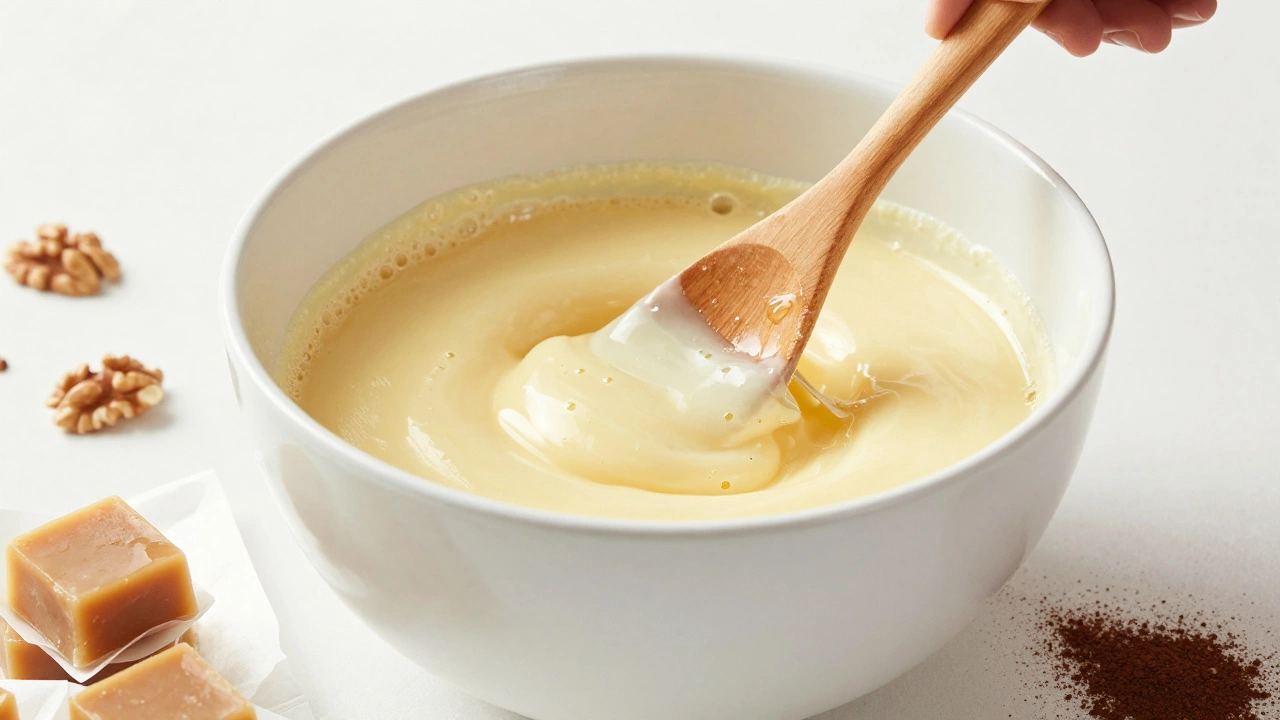
After removing the pan from the heat, you must beat the mixture continuously. This encourages the formation of millions of tiny sugar crystals instead of a few large ones. Large crystals create a gritty mouthfeel; tiny crystals create creaminess. You’ll notice the mixture changing color from translucent golden to opaque pale yellow or white. This is the point where air is being incorporated into the sugar matrix.
Keep beating until the mixture thickens and starts to pull away from the sides of the bowl. This usually takes about 5 to 10 minutes by hand. If you’re using an electric mixer, it will happen faster, but watch closely-over-beating can make the fudge dry and crumbly rather than soft and creamy.
Common Add-Ins and Variations
While the base recipe is strict, British bakers love to experiment once they master the fundamentals. These additions don’t change the core structure but do alter the flavor profile and sometimes the setting time.
| Variation | Key Ingredient Added | Effect on Texture/Flavor |
|---|---|---|
| Vanilla Fudge | Pure vanilla extract | Classic aroma; no significant texture change |
| Chocolate Fudge | Cocoa powder or melted dark chocolate | Darker color; richer flavor; slightly firmer set |
| Nut Fudge | Chopped walnuts or pecans | Adds crunch; ensure nuts are toasted first |
| Fruit Fudge | Jam or fruit puree (folded in at end) | Swirled appearance; adds moisture; cut quickly before fully set |
Note that adding liquid ingredients like jam or liqueur after the beating stage can soften the final product. This is great for immediate enjoyment but reduces shelf life. For gifts or storage, stick to dry add-ins like nuts or cocoa powder.
Troubleshooting Your First Batch
Even experienced cooks mess up fudge occasionally. Here’s how to identify common issues and fix them next time.
- Grainy Texture: This usually means sugar crystals formed too early. Ensure your saucepan is clean and free of dust before starting. Also, avoid stirring the mixture while it’s boiling-only stir to dissolve sugar at the beginning. Stirring during boiling promotes premature crystallization.
- Too Hard: You likely cooked it past the soft-ball stage. Next time, check the temperature earlier. Unfortunately, hard fudge can’t be easily fixed, but you can crumble it into ice cream or oatmeal.
- Too Soft/Sticky: Not enough water evaporated. Cook it longer next time. In humid environments, fudge sets slower, so let it rest longer before cutting.
- Separated/Oily: The butter may have broken away from the sugar syrup. This happens if the mixture cools too slowly or is beaten insufficiently. Ensure you beat vigorously once off the heat.
Storage and Shelf Life
Properly made English fudge has a surprisingly long shelf life due to its low moisture content. Store it in an airtight container at room temperature, layered between sheets of parchment paper to prevent sticking. It will stay fresh for up to two weeks. For longer storage, wrap individual pieces tightly in plastic wrap and freeze for up to three months. Thaw at room temperature to maintain texture.
Avoid refrigerating fudge unless your kitchen is extremely warm. Cold temperatures can cause condensation when the fudge is brought back to room temperature, leading to a sticky surface.
Can I use brown sugar instead of caster sugar for English fudge?
Yes, but it changes the flavor and color significantly. Brown sugar contains molasses, which adds a deeper, caramel-like taste and a darker hue. However, because brown sugar retains more moisture, you may need to cook the mixture slightly longer to reach the correct consistency. Start with half caster and half brown sugar for a balanced result.
Why does my fudge turn white instead of staying golden?
This is normal and desired. The whitening occurs during the beating stage as air is incorporated and tiny sugar crystals form. The initial golden syrup transforms into an opaque, creamy paste. If it stays transparent, you haven’t beaten it enough. Keep mixing until it loses its gloss and thickens.
Do I need a candy thermometer to make fudge?
It’s highly recommended for beginners, but not strictly necessary. The cold water test is a reliable alternative if practiced correctly. However, thermometers eliminate guesswork and reduce the risk of ruining the batch. Digital instant-read thermometers are affordable and easy to use.
Can I make English fudge without butter?
Not traditionally. Butter plays a crucial role in preventing large crystal formation and providing richness. Vegan alternatives exist using coconut oil or vegan butter, but the texture and melting point differ. Expect a firmer, less creamy result. Adjust expectations accordingly.
How do I know when my fudge is ready to cut?
Let the fudge cool completely at room temperature, usually 1-2 hours. It should feel firm to the touch but still yield slightly under pressure. Cut with a sharp knife dipped in hot water for clean slices. Wipe the knife between cuts to avoid dragging the soft surface.
Popular Posts


What Brazil Inherited from Italy: Tiramisu's Journey
Feb, 18 2025