
Cheesecake Comparison Tool
Which cheesecake is right for you?
Select a cheesecake type to see a detailed comparison of key characteristics, textures, and best uses.
Baked Cheesecake
Key Characteristics:
- Requires oven baking
- Uses eggs as binding agent
- Traditional New York style
- Thick, dense texture
- Crust is baked with the cake
Texture & Flavor
Texture:
Dense, custard-like, sliceable. Holds its shape well with a slightly jiggly center when properly baked.
Flavor:
Rich, buttery, bold cream cheese flavor. Better with tart toppings like raspberry coulis.
Preparation & Time
Baking Time:
45-60 minutes at 325°F (160°C)
Cooling & Setting:
Needs 4-6 hours to fully set after baking
Storage:
Keeps for 3-4 days in refrigerator
When to Choose
Best For:
- Parties and gatherings where presentation matters
- When you want a classic, rich dessert
- When you can use an oven and have time for cooling
- When you need something that travels well
Common Mistakes
Top Mistakes:
- Not using a water bath (causes cracks)
- Overbaking (leads to grainy texture)
- Opening oven door too early
- Not cooling slowly after baking
Continental Cheesecake
Key Characteristics:
- No oven required
- Uses gelatin and whipped cream for structure
- European style (France, Italy)
- Light, creamy texture
- Often served in small portions
Texture & Flavor
Texture:
Light, airy, almost mousse-like. Melts in your mouth, doesn't hold its shape as well as baked.
Flavor:
Subtler cream cheese flavor, more refreshing. Better with fresh berries or light fruit toppings.
Preparation & Time
Preparation Time:
30-45 minutes
Chilling Time:
6-8 hours (overnight recommended)
Storage:
Keeps for 2-3 days in refrigerator
When to Choose
Best For:
- Warm weather or summer gatherings
- When you don't want to use the oven
- Quick dessert preparation
- When you want something light after a heavy meal
Common Mistakes
Top Mistakes:
- Not chilling long enough
- Over-mixing the whipped cream
- Using too little gelatin
- Not using stiffly whipped cream
Quick Tip: Continental cheesecakes are easier for beginners as they don't require oven precision, while baked cheesecakes require a water bath to prevent cracking.
Ever taken a bite of cheesecake and wondered why one version feels rich and dense, while another is light, creamy, and almost mousse-like? It’s not just the toppings or the crust-it’s the whole method behind how it’s made. The difference between a baked cheesecake and a continental cheesecake comes down to technique, texture, and tradition. One is a classic American staple; the other, a European favorite with roots in France and Italy. And no, they’re not interchangeable.
What Is a Baked Cheesecake?
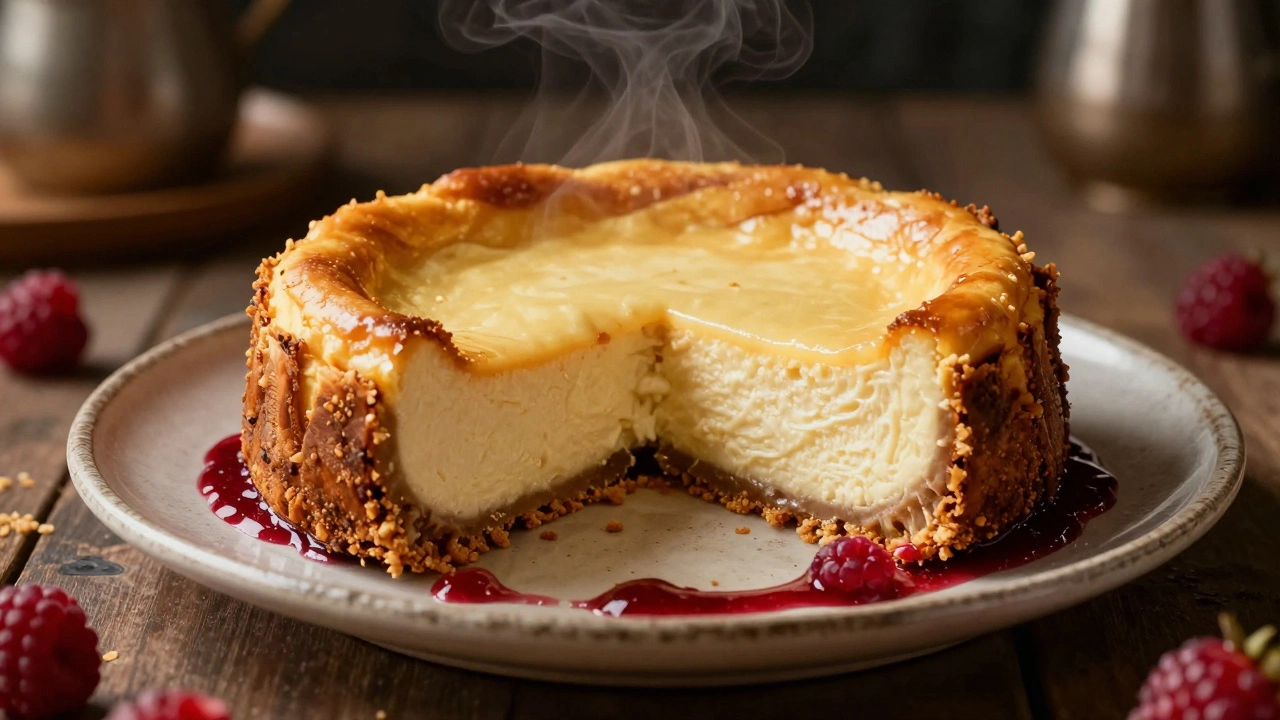
A baked cheesecake is what most people picture when they think of the dessert: a thick, firm slice with a graham cracker crust, often topped with fruit or chocolate. It’s the kind you find in New York delis, family potlucks, or bakery windows in Brighton. The base is simple-cream cheese, sugar, eggs, and sometimes sour cream or heavy cream. But the magic happens in the oven.
When you bake it, the eggs coagulate. The mixture sets slowly, creating a dense, custard-like structure. The edges get slightly golden, the center jiggles like gelatin when you shake the pan, and then it firms up as it cools. This is why baked cheesecakes hold their shape so well. They’re sliceable, stackable, and travel fine.
Most baked cheesecakes use a water bath-also called a bain-marie-to keep the heat gentle. Without it, the top cracks, and the texture turns grainy. You’ll often see a crack or two on top of a home-baked version, and that’s normal. It doesn’t mean it’s ruined. It just means you didn’t use a water bath, or you baked it a minute too long.
Popular styles include New York cheesecake (extra cream cheese, no flour), Chicago-style (thicker crust, sometimes with a layer of chocolate), and Japanese soufflé cheesecake (fluffy, airy, baked at low heat). But they’re all baked. All rely on heat to transform liquid into solid.
What Is a Continental Cheesecake?
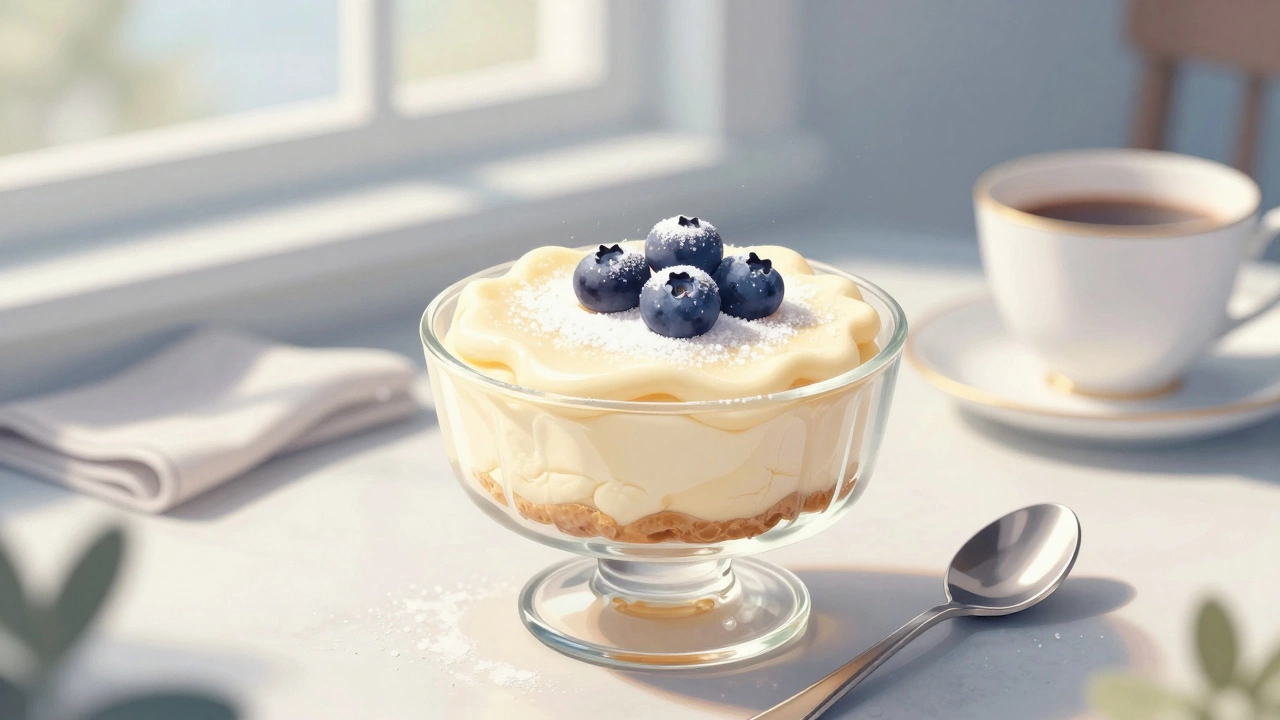
Now, picture this: a cheesecake that doesn’t need an oven. No eggs baked into the mix. No crust that’s toasted in the oven. Instead, it’s chilled for hours, sometimes overnight, until it firms up. That’s a continental cheesecake.
It’s also called a no-bake cheesecake, but that’s not quite right. Continental isn’t just about skipping the oven-it’s about the ingredients. Instead of eggs, it uses whipped cream, gelatin, or sometimes mascarpone. The cream cheese is softened and mixed with sugar, then folded into stiffly whipped cream. Gelatin is added to help it hold its shape in the fridge.
This version is lighter. Softer. Almost like a cloud. It doesn’t slice as cleanly as a baked one, and it’s more delicate. You’ll find it served in small portions on dessert trays in European cafés, especially in France, Italy, and the UK. It’s often topped with fresh berries, a drizzle of caramel, or a dusting of powdered sugar.
It’s not a “cheat” version of baked cheesecake. It’s its own thing. In Italy, they call it cheesecake alla crema. In France, it’s tarte au fromage blanc-sometimes made with fromage blanc or quark instead of cream cheese. The texture is silkier, the flavor more subtle. It’s not meant to be heavy. It’s meant to be refreshing.
Texture: Dense vs. Delicate
If you’ve ever cut into a baked cheesecake and felt resistance-like you’re slicing through a firm custard-you know what I mean. It has body. It clings to the fork. A continental cheesecake? It gives. It melts. It doesn’t demand attention with weight; it invites you in with lightness.
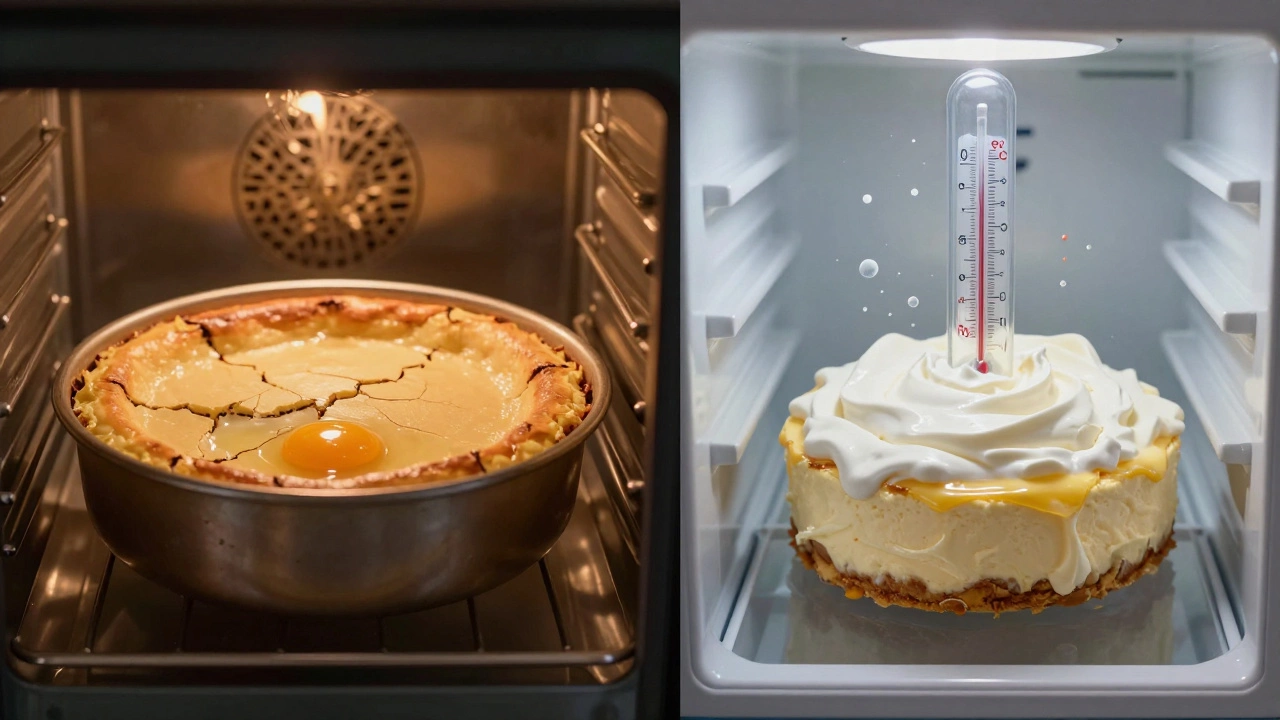
Here’s the science: eggs set at around 70°C (158°F). That’s why baked cheesecakes get their structure from heat. Continental cheesecakes use gelatin, which sets at fridge temperatures (around 5°C/41°F). That’s why they need refrigeration to firm up. No heat, no coagulation-just cold and time.
That’s also why you can’t swap one for the other in recipes. If you try to bake a continental cheesecake, it’ll collapse. The whipped cream will break, the gelatin won’t hold, and you’ll end up with a soupy mess. If you try to chill a baked cheesecake recipe without baking it? It’ll stay runny. No eggs, no structure.
Flavor Profile: Rich vs. Refreshing
Baked cheesecakes are bold. They’re buttery. They taste like cream cheese-unapologetically. The sugar balances it, but the dairy is front and center. That’s why they pair well with tart toppings like raspberry coulis or lemon zest.
Continental cheesecakes are subtler. Because they’re lighter and often use whipped cream or fromage blanc, the flavor is cleaner. Less tangy, less dense. You taste the cream more than the cheese. That’s why they’re perfect for spring and summer. They don’t weigh you down.
Try this: have both side by side. Take a bite of each. The baked one lingers. The continental one disappears. One feels like comfort. The other feels like elegance.
When to Choose Which?
Here’s a quick guide:
- Choose a baked cheesecake if you want something that holds up at parties, can be made ahead and stored for days, or if you love that classic, rich, New York-style bite.
- Choose a continental cheesecake if you’re serving it in warm weather, want something quick to make (no oven needed), or prefer a lighter dessert that doesn’t feel heavy after dinner.
Also, consider dietary needs. Baked cheesecakes have more eggs and dairy fat. Continental versions can be made with low-fat cream cheese or even dairy-free cream cheese and coconut whipped cream. That flexibility makes continental a favorite for modern kitchens.
Common Mistakes to Avoid
If you’ve tried making either and it didn’t turn out right, here’s what probably went wrong:
- Baked cheesecake cracked? You didn’t use a water bath, or you overbaked it. Take it out when the center still jiggles slightly. It’ll finish setting as it cools.
- Continental cheesecake too soft? You didn’t chill it long enough. It needs at least 6 hours, but overnight is best. Also, check your gelatin-use powdered, not sheet, if you’re new to this. It’s easier to measure.
- Grainy texture in baked? You overmixed the batter after adding the eggs. Mix just until combined. Overmixing traps air and leads to a grainy finish.
- Separation in continental? Your whipped cream wasn’t stiff enough. Whip it until it holds peaks, then gently fold it in. Don’t stir.
Regional Variations You Should Try
Don’t think these are the only two styles. Around the world, cheesecake takes on new forms:
- Japan: Soufflé cheesecake-baked, but with extra egg whites whipped in. It’s airy, almost like a sponge cake with cheese.
- Sweden: Uses quark cheese and a shortbread crust. Served with lingonberry jam.
- Italy: Ricotta cheesecake-lighter, grainier, often flavored with orange zest. Sometimes baked, sometimes chilled.
- Germany: Uses quark or cottage cheese. Often has a nutty crust and is baked with a custard layer.
But if you’re starting out, stick with the two main types: baked for tradition, continental for ease and elegance.
Final Thought: It’s Not About Better-It’s About Different
There’s no right answer. One isn’t superior. It’s like asking whether you prefer bread or cake. Both are delicious. Both have their place.
If you’re baking for a holiday dinner, go with baked. It’s the showstopper. If you’re making dessert after a long day and don’t want to turn on the oven? Go continental. It’s quiet, simple, and still feels special.
Try both this weekend. Taste the difference. Then decide which one you’ll make again.
Can you bake a continental cheesecake?
No, you shouldn’t bake a continental cheesecake. It’s made with whipped cream and gelatin, which break down under heat. Baking it will cause the mixture to separate, deflate, and become watery. Continental cheesecakes are designed to set in the fridge, not the oven.
Is a no-bake cheesecake the same as a continental cheesecake?
Almost, but not always. In the UK and Europe, "continental cheesecake" usually refers to a specific style using whipped cream, gelatin, and cream cheese, often with a delicate texture. "No-bake" is a broader term that can include recipes using condensed milk, pudding mix, or even yogurt. So all continental cheesecakes are no-bake, but not all no-bake cheesecakes are continental.
Why does my baked cheesecake crack on top?
Cracks happen when the cheesecake overbakes or cools too quickly. The surface dries out and pulls away as it contracts. To prevent this, use a water bath, avoid opening the oven door while baking, and let it cool slowly in the oven with the door slightly ajar after turning it off.
Can I substitute cream cheese with ricotta in a continental cheesecake?
Yes, but it changes the texture. Ricotta is grainier and less smooth than cream cheese. You’ll need to strain it overnight to remove excess moisture, and the result will be lighter and more rustic. It’s common in Italian versions, but not the same as a classic continental style.
Which one is easier for beginners to make?
Continental cheesecake is easier for beginners. No oven temperature control, no water bath, no worrying about cracking. Just mix, chill, and serve. Baked cheesecake requires more precision, but it’s still manageable with a water bath and patience.
If you’re new to cheesecakes, start with the continental version. It’s forgiving, fast, and delicious. Once you’re comfortable, try baking one. You’ll understand why both exist-and why you might end up loving them for different reasons.
Popular Posts

King Cake vs Queen Cake: What’s the Real Difference?
Jul, 22 2025

Why Vinegar is Essential in Pavlova Recipes
Mar, 24 2025