Baking Texture Predictor
Will it be Cakey or Fudgy?
Adjust the parameters to see how they affect the final resultThe Prediction
Adjust the sliders to see your result.
Quick Takeaways
- Cakes rely on air and leavening agents to stay fluffy.
- Brownies focus on a high fat-to-flour ratio for a dense, fudgy feel.
- The mixing method determines whether you get a 'cakey' or 'fudgy' result.
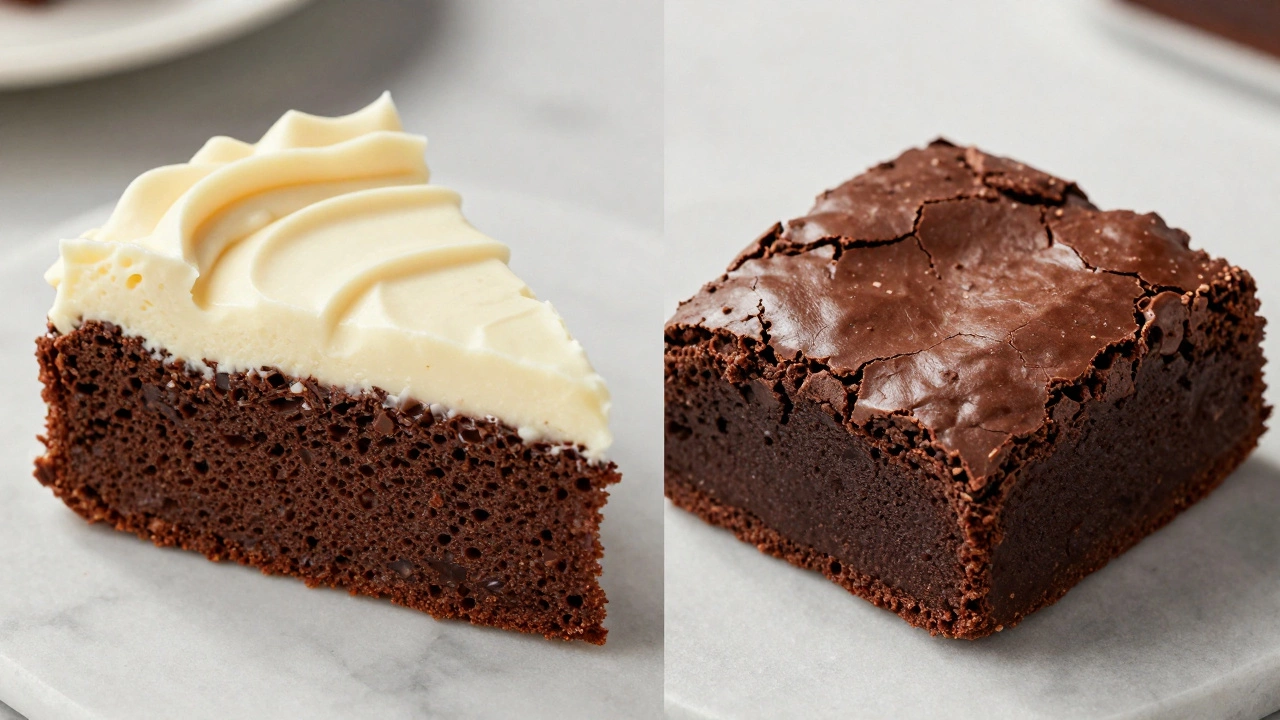
- Cakes are typically frosted; brownies are usually served plain or with a dusting of sugar.
To understand the divide, we first need to look at the central players. Brownies is a square-cut chocolate baked treat that sits somewhere between a chocolate cake and a fudge brownie. Unlike a traditional sponge, they don't aim for height. Instead, they aim for intensity. When you bake a brownie, you aren't trying to create a cloud; you're trying to create a concentrated piece of chocolate candy that happens to be baked.
On the flip side, Cake is a sweet baked food made from a batter of flour, sugar, and eggs, typically characterized by a light, porous crumb structure. Whether it is a classic Victoria sponge or a rich chocolate gateau, the goal is always volume and softness. If a brownie is a heavy blanket, a cake is a silk sheet.
The Science of the Crumb: Flour and Fat
The biggest difference comes down to the brownies vs cakes battle of ratios. In a cake, flour is a primary structural component. You use a significant amount of it to build a network of gluten that traps air bubbles. This is why cakes rise and stay upright. If you used the amount of flour found in a cake recipe for a batch of brownies, you would end up with something that tastes like a dry, chocolatey bread.
Brownies flip this script. They use much less flour and much more fat (usually from butter or oil). When you have more fat than flour, the gluten cannot form a strong structure. Instead of trapping air, the batter stays dense. This is where the magic of the "fudgy" texture comes from. The fat coats the flour particles, preventing them from bonding, which results in that melt-in-your-mouth quality. If you've ever had a brownie that felt like a piece of fudge, it's because the fat-to-flour ratio was skewed heavily toward the fat.
Leavening Agents: The Air Gap
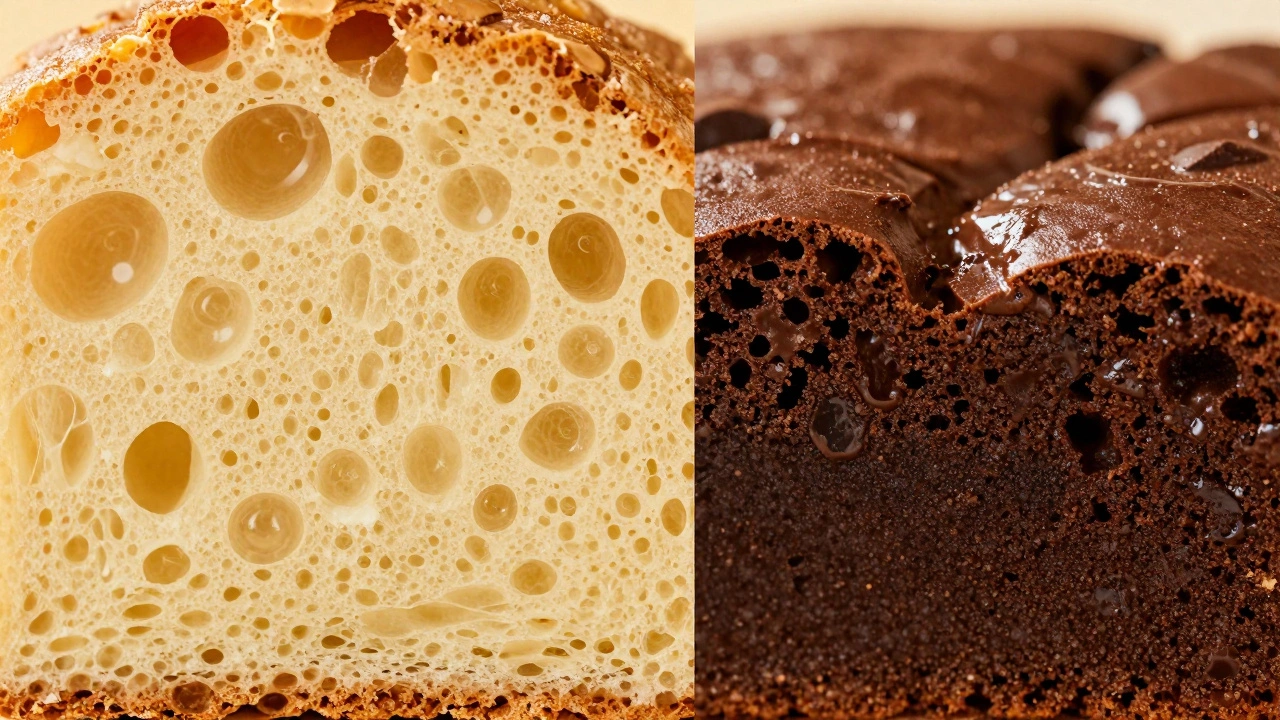
If you check a cake recipe, you will almost always see Baking Powder or Baking Soda. These are chemical leaveners that produce carbon dioxide gas when they hit liquid and heat. This gas pushes the batter upward, creating those tiny holes called "pores" that make a cake feel light. Without these, your cake would be a hard, flat disk.
Traditional brownies often skip the leavening agents entirely. Some recipes might add a pinch of baking powder to create a "cakey brownie," but a true, dense brownie relies on the air whipped into the eggs or simply the steam from the butter. By removing the leavener, you remove the air. This keeps the brownie compact and heavy. Imagine the difference between a marshmallow and a piece of taffy; that is essentially the difference between a cake's aeration and a brownie's density.
| Feature | Brownies | Cakes |
|---|---|---|
| Primary Texture | Dense, Fudgy, Chewy | Light, Airy, Spongy |
| Flour Content | Low | High |
| Fat Content | Very High | Moderate |
| Leavening (Baking Powder) | Minimal or None | Essential |
| Common Finish | Plain or Powdered Sugar | Frosting or Glaze |
Mixing Methods and Their Impact
How you treat the batter is just as important as what goes into it. In cake baking, there is a lot of focus on "creaming" the butter and sugar. This process beats air into the fat, creating a stable foam that supports the weight of the flour. If you overmix a cake, you develop too much gluten, and the cake becomes tough and bread-like.
With brownies, the goal is often the opposite. Many bakers use the "melted butter" method. By melting the butter and whisking it with sugar and chocolate, you create a dense emulsion. You typically fold in the flour just until it disappears. If you beat a brownie batter as much as you would a cake batter, you would introduce too much air, and your brownie would end up tasting like a piece of chocolate cake-which is exactly what we are trying to avoid.
The Role of Chocolate: Cocoa vs. Melted Bars
While both can be chocolatey, they handle the ingredient differently. Most cakes use Cocoa Powder to provide flavor without adding extra fat or moisture. Cocoa powder is a dry ingredient that integrates easily into a fluffy batter. Because it doesn't add weight, the cake can stay light while still tasting deeply chocolaty.
High-end brownies often rely on Melted Chocolate or chocolate chips. Melted chocolate introduces cocoa butter, which is a saturated fat. This fat contributes directly to the richness and the "chew" of the brownie. When you use a bar of chocolate instead of powder, you are adding more solids and fats that weigh down the structure, pushing it further away from the cake category and closer to the confectionery category.
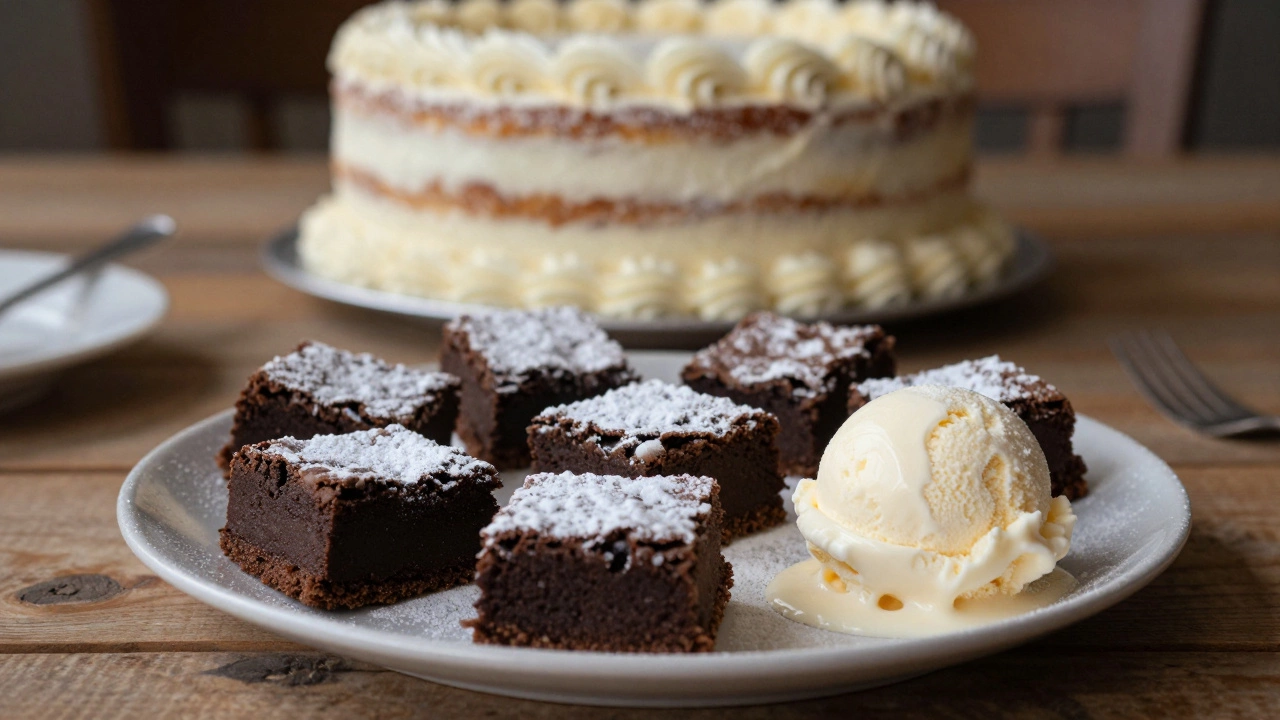
Serving and Presentation
The final difference is how we eat them. Cakes are usually the centerpieces of a celebration. They are stacked, layered with fillings, and covered in Buttercream or ganache. This is because cakes are designed to be a balance of flavor and texture; the frosting adds a creamy contrast to the spongy crumb.
Brownies are a handheld treat. They are designed to be rich enough to stand on their own. While you might see a brownie with a scoop of vanilla ice cream, they rarely require frosting. The top of a perfect brownie often has that signature "crackly crust," which is a result of the sugar dissolving and migrating to the surface during baking. A cake with a crackly top is usually considered a failure; a brownie without one is considered a missed opportunity.
Can a brownie be "cakey"?
Yes. A "cakey brownie" happens when the recipe uses more flour and a leavening agent like baking powder. This creates a texture that is lighter and more porous, sitting right in the middle of a traditional brownie and a chocolate cake.
Why do some brownies have a shiny, crackly top?
The shiny crust is created when the sugar is fully dissolved into the butter and eggs, forming a thin, meringue-like layer on top as the brownie bakes. This usually happens when you whisk the sugar and eggs thoroughly before adding the dry ingredients.
Which one has more calories?
Generally, brownies are more calorie-dense. Because they have a higher ratio of butter and chocolate and less air/water than a cake, they pack more energy into a smaller volume.
Do brownies use the same flour as cakes?
Most use all-purpose flour. However, some cake recipes use cake flour, which has less protein, to make the cake even softer. Brownies almost always stick to all-purpose flour to maintain a bit of chewiness.
Can I turn a cake mix into brownies?
You can, but it requires changing the ratios. By adding extra melted butter or chocolate and reducing the water or milk called for in the cake mix, you can force the batter to be denser and more like a brownie.
Next Steps for Your Baking
If you are looking to experiment, try a side-by-side test. Take a standard chocolate cake recipe and a brownie recipe. Notice how the brownie batter is almost like a thick paste, while the cake batter is more like a pourable liquid. If you want a more fudgy result, try using brown butter (beurre noisette) in your brownies to add a nutty depth and extra richness.
For those who can't decide, the "Brookies" trend is the perfect solution. By layering brownie batter on the bottom and cookie dough on top, you get a hybrid that combines a chewy, dense base with a crisp, sugary finish. It is the ultimate way to bridge the gap between different types of baked sweets.
Popular Posts

Why Am I Suddenly Gluten Intolerant?
Apr, 6 2025