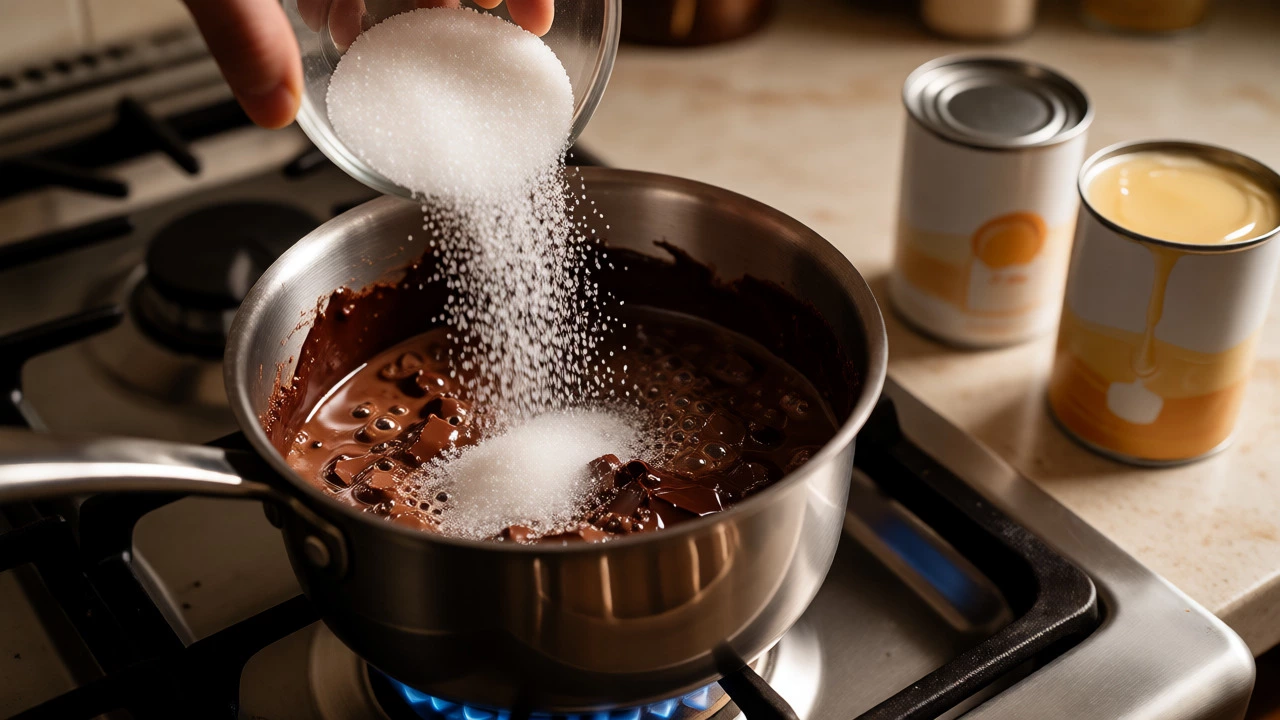
Fudge Milk Substitution Calculator
Don't ruin your fudge! Enter how much Sweetened Condensed Milk your recipe calls for, and we'll tell you exactly how much Evaporated Milk and Sugar to use instead.
| Condensed Milk Needed | Use Evaporated Milk | Add Granulated Sugar |
|---|---|---|
| 1 Cup (8 oz) | 1 Cup (8 oz) | ¾ Cup |
| ½ Cup (4 oz) | ½ Cup (4 oz) | 6 Tbsp |
| 1 Can (14 oz) | 1¼ Cups + 2 Tbsp | 1 Cup + 1 Tbsp |
You’re halfway through making your favorite chocolate fudge, the sugar is boiling, and then it hits you: you’re out of sweetened condensed milk. Panic sets in. You stare at the tin of evaporated milk on your shelf and wonder if they’re basically the same thing. Spoiler alert: they are not. Using one for the other without adjustments will likely turn your dreamy, creamy fudge into a grainy, watery mess or a rock-hard brick.
But don’t throw out your ingredients just yet. With a few simple tweaks, you can absolutely rescue your batch. The key difference lies in sugar content and water ratio. Sweetened condensed milk is essentially evaporated milk with about 40-45% sugar added and most of the water removed. Evaporated milk is just milk with about 60% of its water removed-no sugar. If you swap them directly, you lose all that sweetness and change the crystallization process that makes fudge set properly.
The Chemistry of Why They Aren’t Interchangeable
To understand why this swap matters, you have to look at what happens inside the pot. Fudge relies on precise sugar crystallization. When you boil sugar and milk together, the concentration of solids determines whether you get smooth crystals or large, gritty ones. Sweetened Condensed Milk is a dairy product made by removing water from whole milk and adding sugar. This high sugar-to-milk ratio creates a viscous liquid that inhibits large crystal formation, leading to that signature smooth texture.
Evaporated Milk is unsweetened concentrated milk with about 60% of the water removed. It has a similar consistency to heavy cream but lacks the preservative power and structural integrity provided by the massive amount of dissolved sugar found in condensed milk. If you use plain evaporated milk in a standard fudge recipe, you’ll end up with a mixture that doesn’t thicken correctly because there isn’t enough solid mass to form the fudge matrix.
How to Make the Swap Successfully
If you’re determined to use what’s in your pantry, you need to replicate the properties of condensed milk. You can’t just pour evaporated milk into the pot. You must add sugar separately and adjust the cooking time. Here is the golden rule: for every 1 cup (8 oz) of sweetened condensed milk called for in your recipe, substitute it with 1 cup of evaporated milk plus ¾ cup of granulated white sugar.
This substitution works best in cooked fudge recipes where you boil the mixture to a specific temperature (usually 234°F-240°F, known as the soft-ball stage). In no-bake or microwave fudge recipes, this swap is riskier because those methods rely on the pre-dissolved state of the sugar in condensed milk to melt evenly. If you try this in a microwave, stir constantly to prevent scorching.
| Feature | Evaporated Milk | Sweetened Condensed Milk |
|---|---|---|
| Sugar Content | None added | ~45% by weight |
| Water Content | ~74% | ~27% |
| Taste Profile | Creamy, slightly caramelized, unsweetened | Very sweet, thick, syrupy |
| Best For | Savory dishes, soups, unsweetened desserts | Fudge, pies, ice cream bases, drinks |
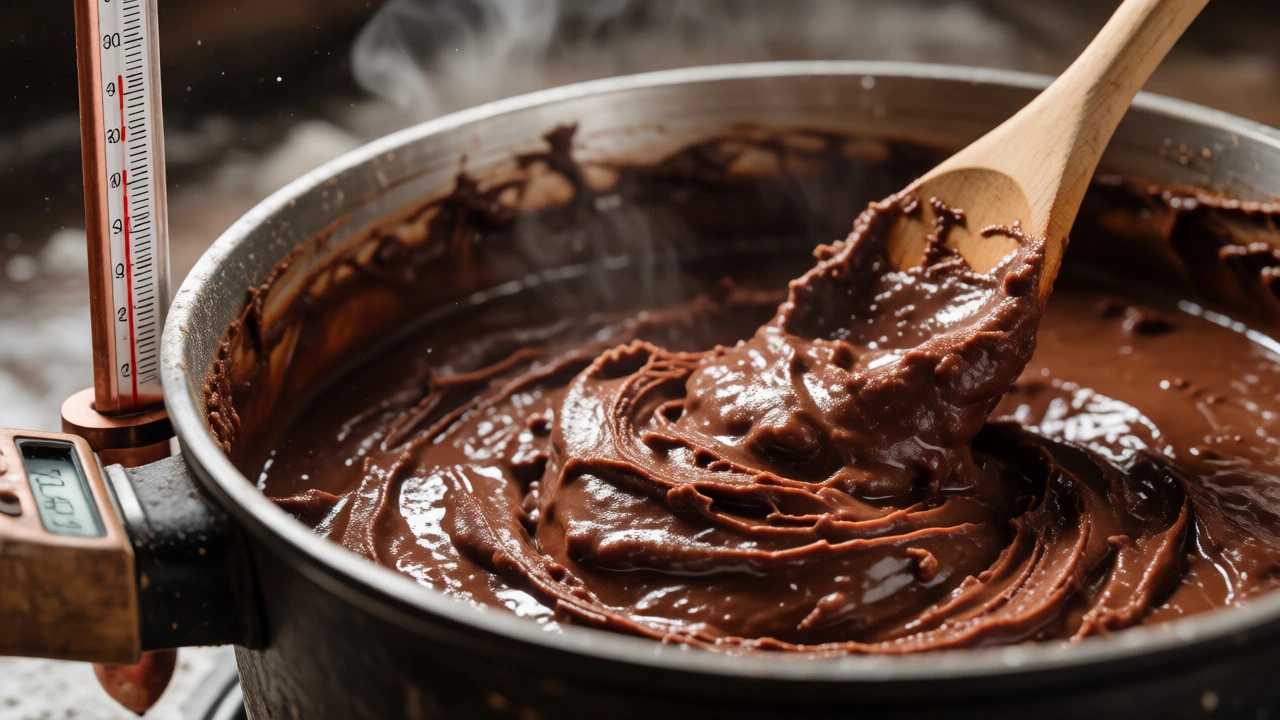
Step-by-Step Guide for Fudge Rescue
Let’s say your recipe calls for 1 can (14 oz) of condensed milk. Here is exactly how to handle it using evaporated milk:
- Measure your substitute: Pour 1 cup (8 oz) of evaporated milk into a measuring cup. Add ¾ cup of granulated sugar. Stir until the sugar is mostly dissolved. Don’t worry if it looks grainy; it will dissolve during cooking.
- Combine with other ingredients: Add this mixture to your saucepan along with the butter and any other fats specified in the recipe. Note that because you’ve added extra volume via the sugar, your total liquid volume might be slightly higher than intended. Keep an eye on the boiling point.
- Cook to temperature: Bring the mixture to a boil over medium heat. Stir gently until the sugar dissolves completely. Once it starts bubbling vigorously, stop stirring to avoid premature crystallization. Attach a candy thermometer. Cook until the mixture reaches 238°F (soft-ball stage).
- Beat the fudge: Remove from heat and let it cool slightly before beating it vigorously until it loses its gloss and becomes matte. This step is crucial for texture, regardless of which milk you used.
When Not to Make the Swap
There are scenarios where this substitution fails spectacularly. First, check your recipe type. If you are making quick-set fudge that uses marshmallow fluff or melted chocolate chips as the primary setting agents, you might get away with using evaporated milk alone, but it will taste bland. You’d still need to add powdered sugar to balance the flavor and thickness.
Second, consider dietary needs. Some people confuse Condensed Milk with milk that has been thickened by reduction only, often called "unsweetened condensed milk" or "evaporated milk" depending on the region. In the UK, "condensed milk" almost always implies sweetened. If you buy a tin labeled simply "Condensed Milk" in Europe, check the label for sugar content. If it says "Unsweetened," it is effectively evaporated milk, and you must add sugar.
Third, beware of low-fat versions. Low-fat evaporated milk has a different protein structure and less fat to coat the sugar crystals. This can lead to a chewier, less tender fudge. Full-fat evaporated milk mimics the richness of condensed milk much better.
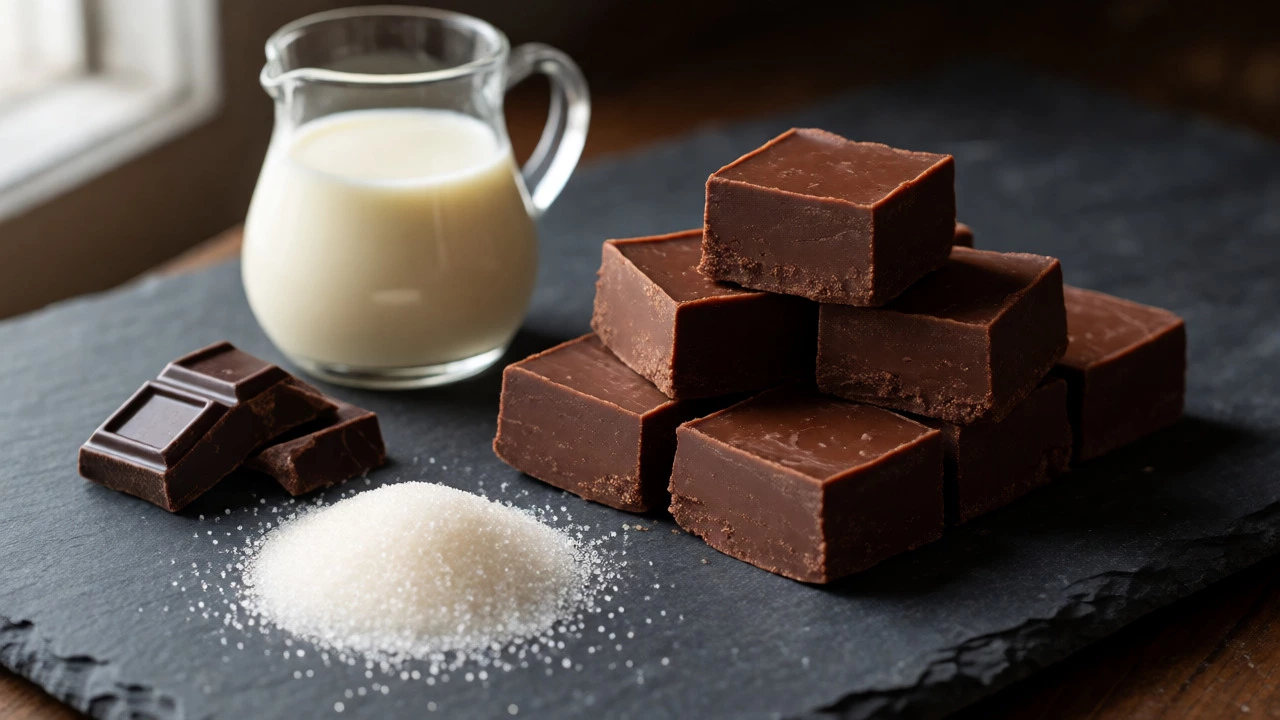
Alternative Substitutes if You Have Neither
If you don’t have evaporated milk either, don’t despair. You can make a quick homemade version of condensed milk right on your stove. Combine 1 cup of whole milk with ¾ cup of sugar in a saucepan. Simmer over low heat for about 30-45 minutes, stirring occasionally, until the mixture reduces by half and turns slightly golden. This takes longer than buying a tin, but it works perfectly for fudge.
Another option is coconut milk. Full-fat canned coconut milk has a high fat content and natural sugars. While it won’t taste like dairy, it creates a delicious vegan-friendly fudge base. You’ll still need to add sugar, though, because coconut milk isn’t sweet enough on its own to set fudge properly. Use 1 cup of full-fat coconut milk plus 1 cup of sugar for a richer, tropical twist.
Troubleshooting Common Fudge Failures
Even with the right milk, fudge can go wrong. Here’s how to diagnose issues related to milk substitutions:
- Grainy Texture: This usually means sugar crystals formed too early. Did you stir while the mixture was boiling? Stop stirring once it boils. Also, ensure your substitute sugar was fully dissolved before the mixture reached a rolling boil.
- Too Soft/Won’t Set: You likely undercooked it. Because evaporated milk + sugar adds more water than condensed milk initially, you might need to cook it 1-2 minutes longer to reach the correct temperature. Trust your thermometer, not the clock.
- Rock Hard: You overcooked it. The extra sugar in the substitute can burn quickly if the heat is too high. Reduce heat as soon as the mixture begins to bubble.
Remember, baking is science, but it’s also forgiving. A slight variation in moisture content rarely ruins a batch if you monitor the temperature closely. The goal is to drive off enough water so the sugar concentrates and forms small crystals upon cooling. Whether you use condensed milk straight from the can or build your own from evaporated milk and sugar, hitting that 234°F-240°F range is your ticket to success.
Is evaporated milk the same as condensed milk?
No, they are different products. Evaporated milk is unsweetened milk with 60% of the water removed. Condensed milk is sweetened milk with water removed and significant sugar added. They cannot be swapped 1:1 without adjusting sugar levels.
What happens if I use evaporated milk instead of condensed milk in fudge?
If you use evaporated milk without adding extra sugar, your fudge will be very bland and may not set properly due to lack of solids. If you add the correct amount of sugar (approx. ¾ cup per cup of milk), it can work well, provided you cook it to the correct temperature.
Can I use fresh milk instead of condensed milk?
You can, but you must reduce it significantly. Fresh milk contains too much water. To mimic condensed milk, simmer 1 cup of fresh milk with ¾ cup of sugar for 30-45 minutes until reduced by half. Direct substitution will result in a runny, unsetting fudge.
Does the type of sugar matter when substituting?
Granulated white sugar is best for replicating condensed milk because it dissolves predictably. Brown sugar adds molasses flavor and moisture, which can alter the setting time and color of your fudge. Powdered sugar is difficult to incorporate without lumps unless mixed with the milk first.
Why did my fudge turn out grainy after using the substitute?
Graininess usually comes from stirring the mixture while it was boiling, which encourages large crystal formation. Alternatively, the sugar may not have fully dissolved before the mixture reached a high temperature. Ensure the sugar is dissolved over low heat before bringing it to a boil, then do not stir during the boiling phase.
Popular Posts

Why Am I Suddenly Gluten Intolerant?
Apr, 6 2025