
Macaron Freshness & Storage Calculator
Enter details to see how long your macarons will stay fresh.
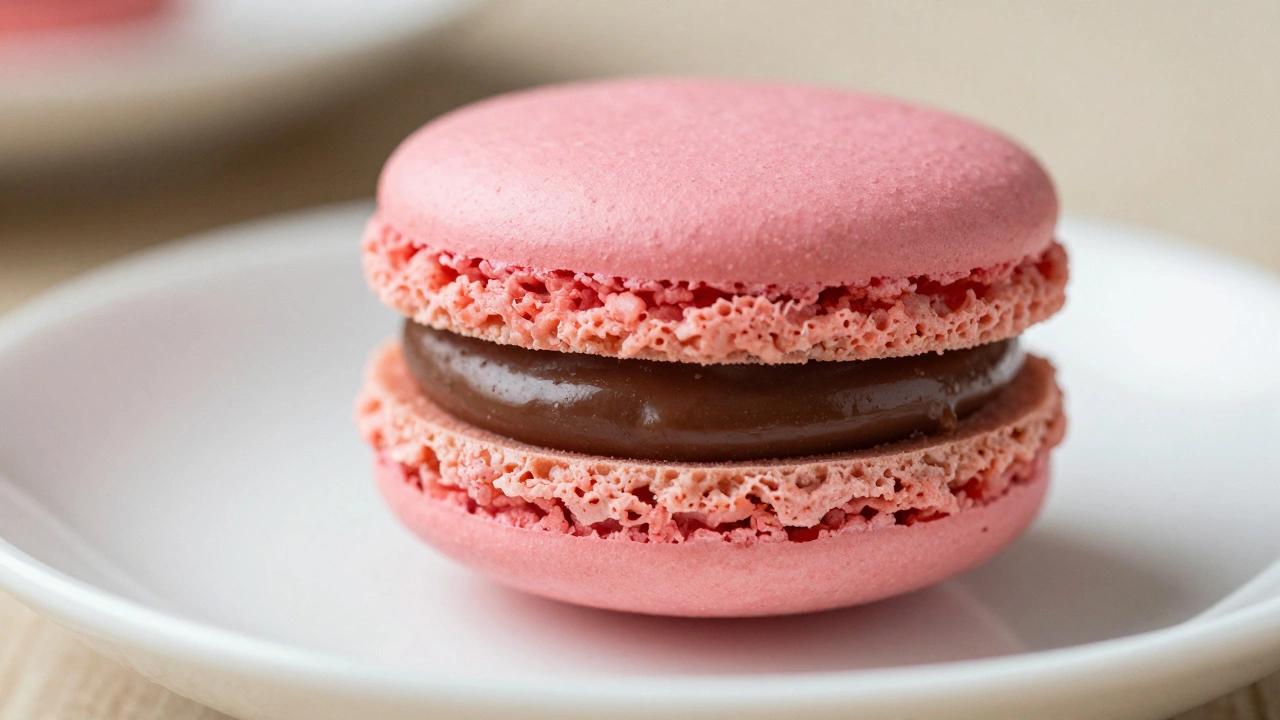
That moment you bite into a perfect macaron, with its crisp shell and chewy center, is pure joy. But if you’ve ever left one sitting on the counter for too long, you know that joy can quickly turn into disappointment. The shell gets soggy, the filling dries out, or worse, it just tastes stale. So, the big question remains: how long do these delicate French treats actually last?
The short answer is that macarons are best eaten within 2 to 3 days of being made or purchased. However, their actual lifespan depends heavily on what’s inside them. A macaron filled with buttercream can hang in there longer than one stuffed with fresh fruit or whipped cream. Understanding this timeline isn’t just about avoiding waste; it’s about ensuring you get the best texture and flavor every single time.
The Golden Window: When Are Macarons at Their Peak?
To truly appreciate a macaron, you need to eat it at its peak. This isn’t just about taste; it’s about texture. A fresh macaron has a specific mouthfeel: a thin, crackly crust that gives way to a soft, moist interior. This balance changes rapidly after baking.
Most professional bakers agree that the "golden window" for eating a macaron is between 24 hours and 3 days after assembly. Why wait 24 hours? Because macarons undergo a process called "maturation." During this time, moisture from the filling migrates into the dry cookie shell. This softens the shell slightly, creating that signature chewy texture. If you eat them straight out of the oven (once cooled), they’ll be too hard and dry. Wait more than three days, and the shell starts to lose its structure, becoming gummy or crumbling unevenly.
- Day 1-2: The ideal time. The shells have softened just enough, and the filling is vibrant and fresh.
- Day 3: Still very good, especially if stored correctly. The texture might be slightly softer, but the flavor remains strong.
- Day 4-5: Acceptable for sturdy fillings like ganache or jam, but the shell may start to feel dense or sticky.
- Day 6+: Risk zone. Texture degrades significantly, and flavors begin to meld together unpleasantly.
How Filling Type Dictates Shelf Life
Not all macarons are created equal when it comes to longevity. The filling acts as both a preservative and a perishable component. You need to look at the ingredients inside to judge how much time you have.
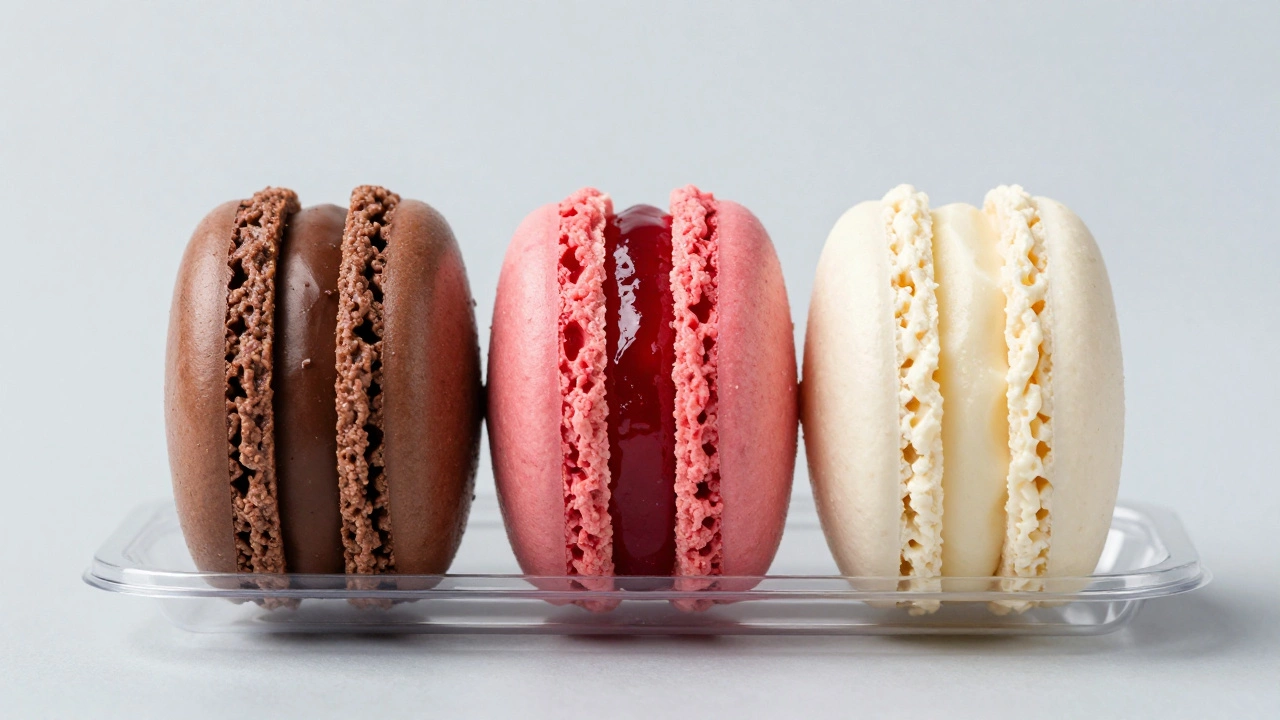
Ganache and Buttercream Fillings: These are the workhorses of the macaron world. Chocolate ganache, salted caramel, and stable buttercreams are low-moisture and high-fat. They don’t spoil easily and help keep the shell moist without making it soggy. Macarons with these fillings can often last up to 5 days in the fridge before showing signs of age.
Fruit Curds and Jams: Lemon curd, raspberry jam, or passion fruit filling adds acidity and moisture. While delicious, the higher water content means the shell absorbs moisture faster. These macarons are best eaten within 2 to 3 days. After that, the bottom of the shell might become translucent and mushy.
Fresh Cream and Mousse: Whipped cream, pastry cream, or mousse-based fillings are highly perishable. They require constant refrigeration and should be consumed within 24 to 48 hours. Even then, the texture of the shell will suffer because cream releases water over time, leading to a soggy base.
| Filling Type | Best By | Storage Requirement | Risk Factor |
|---|---|---|---|
| Chocolate Ganache | 5 Days | Refrigerated | Low |
| Salted Caramel | 5 Days | Refrigerated | Low |
| Berry Jam | 3 Days | Refrigerated | Medium |
| Lemon Curd | 3 Days | Refrigerated | Medium |
| Whipped Cream | 2 Days | Refrigerated | High |
| Fresh Fruit Slices | 24 Hours | Refrigerated | Very High |
The Right Way to Store Macarons
Storing macarons incorrectly is the fastest way to ruin them. Air, humidity, and temperature fluctuations are your enemies. Here is exactly how to keep them fresh.
Airtight is Non-Negotiable: Always store macarons in an airtight container. A simple Tupperware box or a plastic bag with the air squeezed out works well. Exposure to air causes the shells to dry out and become brittle. It also allows odors from other foods in your fridge to seep into the delicate almond meringue.
Refrigeration vs. Counter: In most climates, especially if it’s warm or humid, the refrigerator is the safest bet. Keep them in the fridge at around 4°C (39°F). This slows down bacterial growth in dairy-based fillings and preserves the structure of the shell. However, avoid freezing them unless you plan to eat them weeks later (see below).
The Temperature Shock Rule: Never eat a cold macaron straight from the fridge. The cold hardens the filling and makes the shell feel tough. Take them out 15 to 30 minutes before serving. Let them come to room temperature. This restores the creamy texture of the filling and the tender chew of the shell.
Can You Freeze Macarons?
If you’ve bought a large batch or baked too many, freezing is a viable option. Macarons freeze surprisingly well because their low-moisture shell doesn’t develop ice crystals as badly as bread or cake would.
To freeze them properly, wrap each macaron individually in plastic wrap, then place them in a freezer-safe airtight container. This double-layer protection prevents freezer burn and odor absorption. They can last up to 1 month in the freezer.
When you’re ready to eat them, don’t thaw them on the counter. Move them from the freezer to the refrigerator overnight. Then, let them sit at room temperature for 30 minutes before eating. This slow thawing process helps maintain the structural integrity of the shell.
Signs Your Macarons Have Gone Bad
Sometimes, despite your best efforts, macarons go bad. How do you know if it’s safe to eat? Look for these clear signs.
Texture Changes: If the shell feels excessively sticky, slimy, or crumbles into dust rather than bending slightly, it’s past its prime. A soggy bottom that leaves a wet residue on your fingers indicates moisture migration has gone too far.
Off Smells: Macarons should smell like almonds, vanilla, chocolate, or fruit. If you detect a sour, yeasty, or metallic smell, throw them away. This usually happens with dairy-based fillings that have spoiled.
Mold: While rare due to the low sugar and egg white environment, mold can appear on fruit-filled macarons left out too long. If you see any fuzzy spots, discard the entire batch immediately.
Extending Freshness: Pro Tips
If you want to squeeze every last bit of quality out of your macarons, try these tricks.
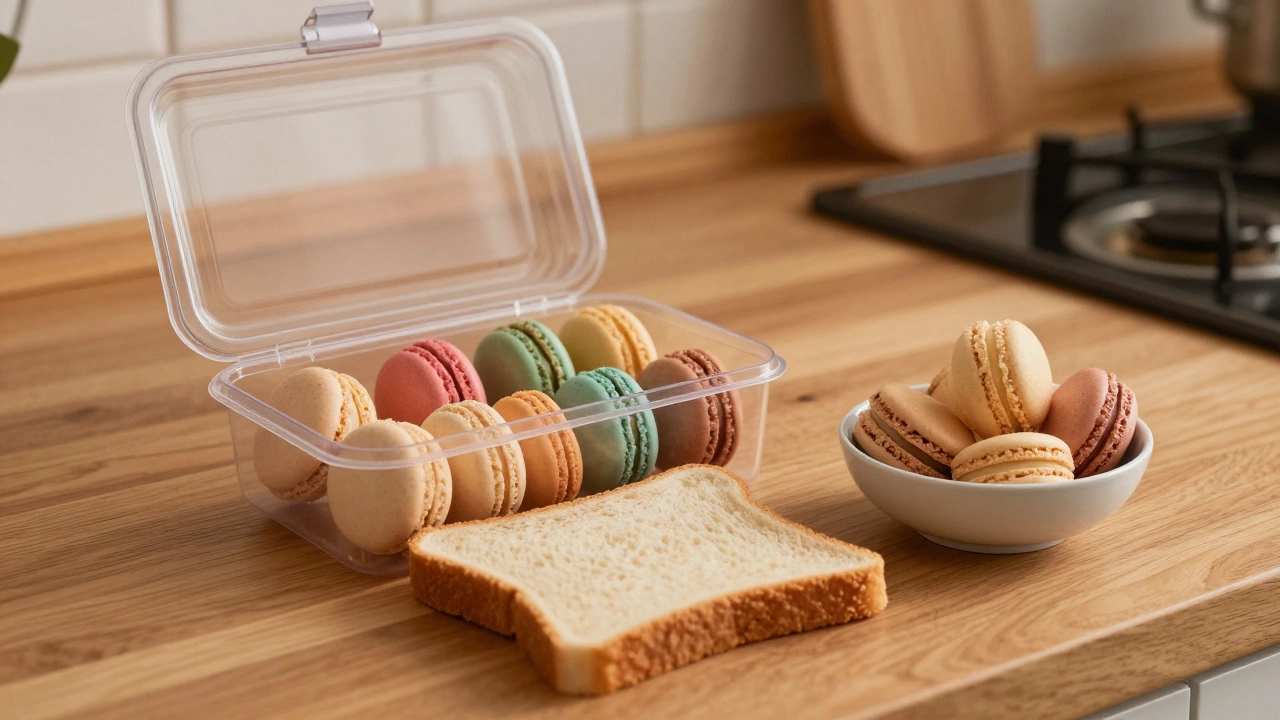
Add a Slice of Bread: Place a slice of plain white bread in the bottom of your airtight container, underneath the macarons. The bread will absorb excess moisture from the air, keeping the shells crisp. Check the bread every day; if it gets hard, replace it.
Separate Strong Flavors: Don’t mix mint macarons with vanilla ones in the same container. Strong aromas transfer easily through the porous shells. Group similar flavors together to prevent flavor contamination.
Buy Local: If you’re purchasing macarons, buy them from a bakery that makes them daily. Avoid pre-packaged macarons from supermarkets that have been sitting on shelves for weeks. The difference in texture is night and day.
Can I leave macarons out at room temperature?
It depends on the climate and the filling. In cool, dry environments, macarons with ganache or jam fillings can stay out for 1-2 days. However, in warm or humid weather, or if the filling contains dairy like buttercream or cream cheese, they must be refrigerated to prevent spoilage and sogginess.
Why do my macarons get soggy so fast?
Sogginess is usually caused by high moisture content in the filling or improper storage. Fillings like lemon curd or fresh fruit release water over time. Additionally, storing macarons in a non-airtight container allows humidity from the fridge or air to penetrate the shell. Always use an airtight container and allow fillings to set completely before assembling.
How long do homemade macarons last compared to store-bought?
Homemade macarons often last shorter because they lack the preservatives sometimes found in commercial products. Typically, homemade macarons are best within 2-3 days. Store-bought macarons from artisanal bakeries follow similar timelines, while mass-produced supermarket macarons may last longer due to additives but often sacrifice texture and flavor quality.
Is it safe to eat macarons after a week?
Generally, no. After a week, even if they haven't visibly spoiled, the texture will be poor, and the risk of bacterial growth in dairy-based fillings increases. For safety and enjoyment, stick to the 3-5 day window for sturdy fillings and 2 days for perishable ones.
Do macarons need to be refrigerated overnight?
Yes, especially if they contain dairy or fruit. Refrigeration helps the filling set and stabilizes the shell. It also extends their shelf life. Just remember to take them out 30 minutes before eating so they reach room temperature for the best texture.
Popular Posts
Is a Brownie a Cake? Exploring the Delicious Debate
Nov, 24 2024