Macaron Tower Planner & Cost Estimator
Configure Your Tower
Planning Summary
Visual Tier Distribution
- Stability Check: Good
- Best For: General Events
- Prep Time: Allow 24 hours resting before assembly.
Ready to Plan?
Enter your details to calculate the perfect macaron tower size and cost.
Picture this: you’ve just finished baking hundreds of perfect French macarons, which are delicate almond meringue cookies with a chewy center and smooth shell. They are vibrant, glossy, and ready for their big debut. Now comes the tricky part-building that stunning vertical display everyone posts on social media. You look at your stackable plastic rings or wooden tiers and wonder exactly how many treats fit before the structure becomes unstable or looks sparse.
The short answer is that it depends entirely on the size of your macarons and the diameter of your tower. A standard 4-tier tower usually holds between 120 and 160 macarons if you are using the classic 1-inch (2.5 cm) size. However, if you switch to mini macarons, that number can skyrocket to over 300. Getting the count right isn’t just about aesthetics; it’s about structural integrity and budget management. No one wants a wobbly dessert table or a surprise shortage of sweets for guests.
Understanding Macaron Sizes and Their Impact on Count
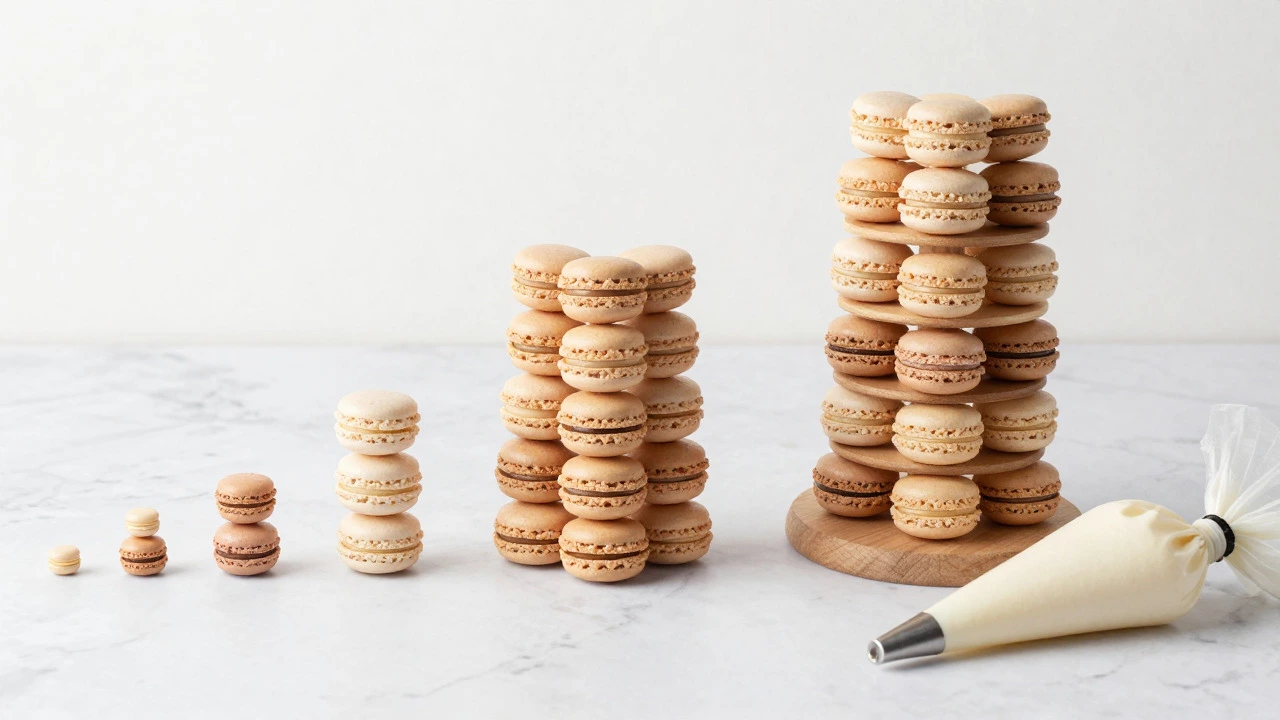
Before you start stacking, you need to understand that not all macarons are created equal. The size of the cookie dictates everything from the batter yield to the final visual impact. In professional bakeries and serious home kitchens, we generally categorize them into three main sizes: mini, standard, and jumbo.
Mini macarons are typically around 0.75 inches (2 cm) in diameter. These are popular for large events like weddings because they offer a bite-sized option that feels elegant without being too heavy. Because they are small, you can fit significantly more of them on each tier. A single ring might hold 20-25 minis compared to only 8-10 standard ones. This means your total count for a full tower will be much higher, but the individual cost per unit is lower.
Standard macarons are the classic size you see in most Parisian patisseries. They measure about 1 to 1.25 inches (2.5 to 3 cm). This is the sweet spot for flavor balance-the ratio of crisp shell to creamy filling is optimized here. When planning a tower, this is the default assumption unless specified otherwise. Most online tutorials and template charts assume this size.
Jumbo macarons run 1.5 inches (4 cm) or larger. These are statement pieces. They look impressive but take up a lot of space. A jumbo macaron tower will have far fewer units, often looking more like an art installation than a buffet. They are risky for beginners because the larger surface area makes them more prone to cracking during transport and stacking.
| Size Type | Diameter | Approx. Per Tier (12") | Best Use Case |
|---|---|---|---|
| Mini | 0.75 inches (2 cm) | 20-25 | Weddings, Large Parties |
| Standard | 1.25 inches (3 cm) | 8-12 | Showers, Corporate Events |
| Jumbo | 1.5+ inches (4 cm) | 4-6 | Centerpieces, Small Gatherings |
Tier Dimensions and Capacity Calculations
Now let’s talk about the hardware. Macaron towers come in various configurations, but the most common are 3-tier and 4-tier stands. The capacity of each tier depends on its diameter. Most commercial towers have tiers that decrease in size as they go up, creating a pyramid shape. This is crucial for stability. If you try to put a wide base under a narrow top, the whole thing tips over.
A typical 4-tier tower has diameters ranging from 16 inches at the bottom to 8 inches at the top. Let’s break down the math for a standard 1.25-inch macaron. On the largest 16-inch tier, you can fit roughly 20-24 macarons if you arrange them in concentric circles. The next tier down, say 12 inches, fits about 12-16. The third tier (10 inches) holds 8-10, and the top tier (8 inches) takes 4-6. Add those up, and you get a total of approximately 44 to 56 macarons for a *single* layer of height. But wait-most people stack macarons vertically within the rings to maximize space. If you use clear acrylic rings that allow for two or three layers high, multiply those numbers accordingly.
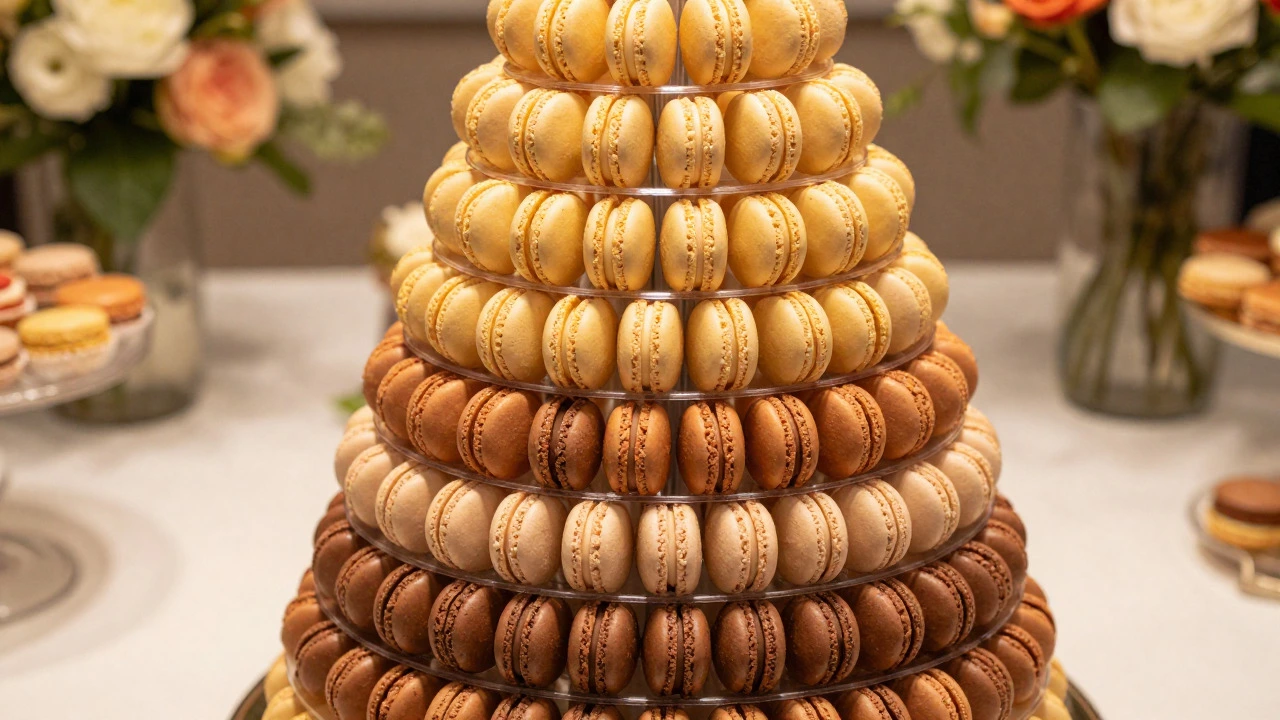
For a fully loaded 4-tier tower with double-layer stacking of standard macarons, you are looking at 120 to 160 pieces. If you are using mini macarons, that same physical space can accommodate nearly double the amount, pushing the count toward 300. It’s important to measure your specific stand. Don’t rely on generic estimates if you are ordering ingredients for a precise event. Measure the inner diameter of each ring and do a dry run with empty shells to see how many actually fit without touching too tightly.
Structural Integrity: Keeping Your Tower Standing
Beauty is nothing if your tower collapses five minutes after you set it on the table. Structural integrity is the silent killer of dessert displays. Macarons are surprisingly heavy when you have hundreds of them. The bottom tier bears the weight of everything above it, plus the weight of the stand itself.
First, ensure your stand is sturdy. Cheap plastic stands often warp under pressure. Look for weighted bases or metal frames. If you are building a DIY tower using cake boards and pillars, make sure the pillars are centered and secured with frosting or non-slip pads. Second, consider the humidity. Macarons absorb moisture from the air, which can soften the shells. Soft shells are slippery. Slippery macarons slide off the tiers. Keep the tower in a cool, dry place until serving time.
Another pro tip: stagger your stacking. Don’t just pile them directly on top of each other in a straight column. Offset them slightly so they interlock like bricks. This distributes the weight more evenly and prevents a single point of failure. Also, avoid overfilling the top tiers. The higher up you go, the less stable the structure becomes. Leave some breathing room at the very top to prevent tipping.
Budgeting and Yield Estimates
Let’s get practical. How much does it cost to fill a tower? This depends on your ingredient costs and labor. For a standard 120-piece tower, you’ll need approximately 1.5 to 2 pounds of almond flour and an equivalent amount of powdered sugar, plus dozens of egg whites. At wholesale prices, the raw material cost might be $30-$50. But add in the time for piping, resting, baking, making ganache or buttercream fillings, and assembling, and the value skyrockets.
If you are buying pre-made macarons from a bakery, expect to pay between $2.50 and $4.00 per piece depending on the location and complexity of flavors. A 120-piece tower could easily cost $300 to $480. Mini macarons might be cheaper per unit ($1.50-$2.00), but since you need more of them, the total bill remains similar. Always order 10% extra for breakage and last-minute additions. It’s better to have leftovers than a half-empty tower.
Visual Appeal and Color Strategy
A macaron tower is a visual centerpiece. The arrangement matters as much as the quantity. Randomly scattering colors can look chaotic. Instead, plan a color gradient. Start with dark shades at the bottom and transition to lighter hues at the top. Or group by flavor families-berries together, citrus together, chocolate together. This creates a pleasing rhythm for the eye.
Consider the background. A white tower against a white tablecloth disappears. Use contrasting linens or place the tower on a textured surface like wood or marble. Lighting also plays a huge role. Harsh overhead lights create shadows that hide the glossiness of the shells. Soft, diffused lighting highlights the smooth finish and vibrant colors. Take photos from multiple angles before guests arrive to capture the best shots.
Common Mistakes to Avoid
I’ve seen plenty of disasters. Here are the top pitfalls to watch out for:
- Ignoring the Feet: Macarons have little feet (the ruffled edge at the bottom). If these are broken, the macaron sits unevenly. Uneven macarons cause instability. Inspect every shell before stacking.
- Overfilling: Too much filling causes leakage. Leaking filling makes the next macaron stick. Sticky macarons pull apart when you try to adjust them, ruining the look. Pipe the filling sparingly and evenly.
- Rushing the Assembly: Let the filled macarons rest in the fridge for at least 24 hours before stacking. This allows the flavors to meld and the structure to firm up. Freshly assembled macarons are fragile.
- Wrong Stand Choice: Using a stand designed for cupcakes for macarons is a mistake. Cupcake stands have holes that macarons fall through. Ensure your stand has solid shelves or rings specifically designed for flat cookies.
FAQs About Macaron Towers
How many macarons do I need for a wedding reception?
For a wedding, a general rule of thumb is 10-15% of your guest count if macarons are the only dessert. If you have a full cake cutting ceremony followed by a dessert table, aim for 5-10%. For 100 guests, that’s 50-100 macarons. Remember to account for dietary restrictions and children who may eat less.
Can I build a macaron tower ahead of time?
Yes, but with caution. Assemble the tower no more than 2-3 hours before the event. Humidity and temperature changes can affect the shells. Store the tower in a cool, dry place away from direct sunlight. If the weather is humid, consider keeping the tower refrigerated until the last minute, then letting it come to room temperature briefly before serving.
What is the best type of stand for a macaron tower?
Acrylic or glass stands with removable rings are ideal because they are easy to clean and provide a modern look. Wooden stands offer a rustic charm but require careful cleaning to avoid absorbing oils from the filling. Ensure the stand has a weighted base for stability. Avoid stands with open grids unless the macarons are large enough not to slip through.
How do I transport a macaron tower safely?
Transport the tower disassembled if possible. Stack the macarons in their respective rings, secure the rings with elastic bands or tape, and place them in a flat box with non-slip mats. Reassemble the tower at the venue. If you must transport it assembled, drive slowly, avoid sudden stops, and keep the car climate-controlled. Place the tower on a flat, stable surface immediately upon arrival.
Are mini macarons better for towers than standard ones?
Mini macarons are often preferred for large events because they create a denser, more visually impressive tower with more variety. They are also easier for guests to grab and eat quickly. Standard macarons are better for smaller gatherings where quality and flavor intensity are prioritized over quantity. Minis are less likely to crack during handling due to their smaller size.