
Macaron Cost Calculator
At this price point, making them at home saves significant money even with a moderate failure rate. Consider the time investment (~4 hours) versus the financial savings.
Have you ever stared at a box of colorful almond cookies and wondered if the price tag was a typo? You are not alone. When you ask how much do 20 macarons cost, the answer isn't just a single number. It swings wildly depending on whether you pick them up from a high-end Parisian patisserie, order them from a local artisan baker, or decide to crack open your own oven.
The short answer is that 20 store-bought macarons will typically set you back between $40 and $100. If you make them yourself, the cost drops dramatically to around $15 to $25. But why such a huge gap? Let's break down exactly where that money goes, so you can decide if buying is worth it or if you should start baking.
The Retail Price: What You Pay at the Counter
When you buy macarons in a shop, you aren't just paying for flour, sugar, and almonds. You are paying for expertise, presentation, and overhead. In major cities like New York, London, or Los Angeles, the standard price per macaron usually ranges from $2.50 to $5.00 each.
If you calculate this for a batch of 20:
- Budget-friendly bakeries: Around $2.00 - $2.50 per unit = $40 - $50 total.
- Mid-range artisan shops: Around $3.00 - $4.00 per unit = $60 - $80 total.
- Premium luxury brands: $5.00+ per unit = $100+ total.
Brands like Ladurée or Pierre Hermé often charge more because they use specific techniques and premium ingredients, plus their brand name carries weight. A box of 20 from these establishments can easily exceed $100. For most local specialty bakers, however, $60 is a safe average expectation for a dozen-plus order.
The Hidden Costs Behind the Price Tag
Why are these little sandwiches so expensive compared to regular cookies? It comes down to three main factors: ingredient quality, labor intensity, and waste.
Almond Flour is a key ingredient in macarons that must be finely ground and sifted to achieve the smooth texture required for the shells. Unlike regular cookie dough, macaron batter requires precision. The ratio of egg whites, powdered sugar, and almond flour must be exact. If the humidity is too high, the shells won't form the signature "feet" (the ruffled edge at the bottom). If the batter is over-mixed, they spread too thin. This leads to a high failure rate for beginners, which professional bakers factor into their pricing.
Then there is the filling. High-quality macarons use ganache made with real dark chocolate, buttercream infused with fresh fruit purees, or curds made with actual citrus juice. Cheap versions might use artificial flavorings, but those rarely command the higher prices. Finally, consider the packaging. Those beautiful boxes and tissue paper add to the final cost, but they also preserve the delicate structure of the cookies during transport.
Making Them at Home: The Real Cost Analysis
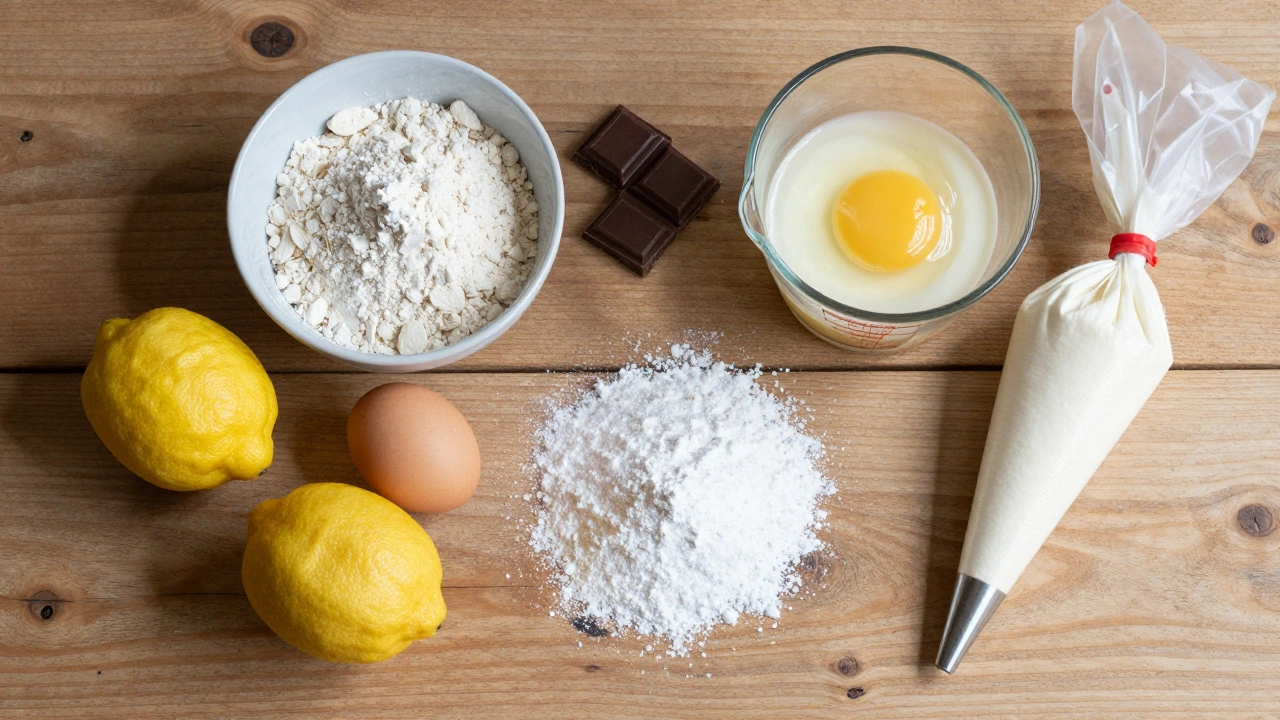
If you want to save money, making macarons at home is the way to go. But does it actually save as much as you think? Let's look at the grocery bill for enough ingredients to make 20 macarons (which means 40 shells).
You will need roughly:
- Egg Whites: About 3-4 large eggs ($0.50 - $1.00)
- Almond Flour: Approximately 1 cup ($3.00 - $5.00 for a small bag)
- Powdered Sugar: Approximately 1.5 cups ($1.00 - $2.00)
- Filling Ingredients: Butter, chocolate, or fruit ($3.00 - $6.00)
- Food Coloring: Minimal amount ($0.50)
Total estimated cost: $8.00 to $14.50.
Compared to spending $60 at a bakery, you save about 75%. However, you must account for the time investment. Making macarons is not a quick task. It involves whipping meringue, folding batter gently, letting the shells dry for 30-60 minutes, baking, cooling, piping fillings, and then-crucially-letting them rest in the fridge for 24 hours to mature. This aging process allows the flavors to meld and the texture to soften. Without it, they taste dry and separate.
Homemade vs. Store-Bought: Which Is Better?
Deciding whether to bake or buy depends on your priorities: time, consistency, or budget.
| Factor | Store-Bought | Homemade |
|---|---|---|
| Cost | $40 - $100 | $8 - $15 |
| Time Required | 5 minutes (shopping) | 3-4 hours + 24hr resting |
| Consistency | High (professional quality) | Variable (depends on skill) |
| Customization | Limited to menu options | Unlimited flavors/colors |
| Shelf Life | 3-5 days | Up to 1 week (if stored properly) |
If you are hosting a party and need perfect, uniform cookies with zero stress, buying is the smarter choice. The risk of a failed batch ruining your event is real. On the other hand, if you enjoy baking challenges and want to impress guests with unique flavor combinations like lavender-honey or matcha-white chocolate, homemade wins on creativity and cost.
Tips to Save Money Without Sacrificing Quality
You don't have to choose between spending $100 or struggling through a kitchen disaster. Here are some middle-ground strategies.
Buy Semi-Homemade Kits: Some online retailers sell macaron shell kits with pre-measured almond flour and sugar mixes. You still provide the egg whites and do the mixing, but it reduces the chance of measurement errors. These kits usually cost around $15-$20 for enough supplies to make 20-30 macarons.
Look for Local Bakeries on Social Media: Many home-based bakers sell macarons on Instagram or Facebook. They often have lower overhead than brick-and-mortar shops and may offer better prices, sometimes around $2.00 per piece. Always check reviews to ensure food safety standards are met.
Master the Technique Once: The biggest cost in homemade macarons is wasted ingredients from failed attempts. Invest time in watching tutorial videos from reputable sources before you start baking. Understanding the "macaronage" technique (folding the batter) is the difference between success and a lumpy mess.
Storage and Shelf Life Impact
Whether you buy or make them, proper storage affects value. Macarons are hygroscopic, meaning they absorb moisture from the air. If left out, they become soggy. If refrigerated incorrectly, they can develop condensation and lose their crisp shell.
Store them in an airtight container at room temperature for up to 3 days. For longer storage, keep them in the refrigerator for up to a week. Bring them to room temperature before eating for the best texture. Freezing is also an option; macarons freeze beautifully for up to a month. Just thaw them in the fridge overnight. Knowing this helps you plan ahead-you can buy or make a larger batch (like 40 or 50) and freeze half, effectively lowering the per-unit cost over time.
Are macarons gluten-free?
Yes, traditional macarons are naturally gluten-free because they are made with almond flour, egg whites, and sugar, rather than wheat flour. However, if you buy them from a bakery that also handles wheat products, there is a risk of cross-contamination. Always ask the baker about their kitchen practices if you have celiac disease or severe gluten sensitivity.
Why are French macarons so expensive?
The high price reflects the skill required, the premium ingredients like fine almond flour and real chocolate, and the high waste rate during production. Professional bakers often discard imperfect shells to maintain quality, which increases the cost of the final product.
Can I make macarons without an oven?
No, traditional macarons require precise low-temperature baking in an oven to form the crust and feet while keeping the center chewy. Air fryers can sometimes work with careful temperature control, but results are inconsistent. There is no reliable no-bake method for authentic macarons.
What is the difference between macarons and macaroons?
Macarons are smooth, round, sandwich cookies made from almond flour. Macaroons are coconut-based cookies that are rougher in texture and often dipped in chocolate. They are completely different desserts with different ingredients and origins.
How long do macarons last in the fridge?
Properly stored in an airtight container, macarons can last up to one week in the refrigerator. For best flavor and texture, let them sit at room temperature for 15-30 minutes before eating. They can also be frozen for up to a month.
Popular Posts

Macarons in Brazil: A Sweet Exploration
Mar, 23 2025

Mastering Fudge: Why Rainy Days Can Ruin Your Recipe
Oct, 10 2024
Why Brownies Turn Hard After Baking
Nov, 8 2025