
Meringue vs. Pavlova Decision Tool
Not sure which treat to bake? Answer these three questions to find the perfect match for your occasion.
Quick Takeaways
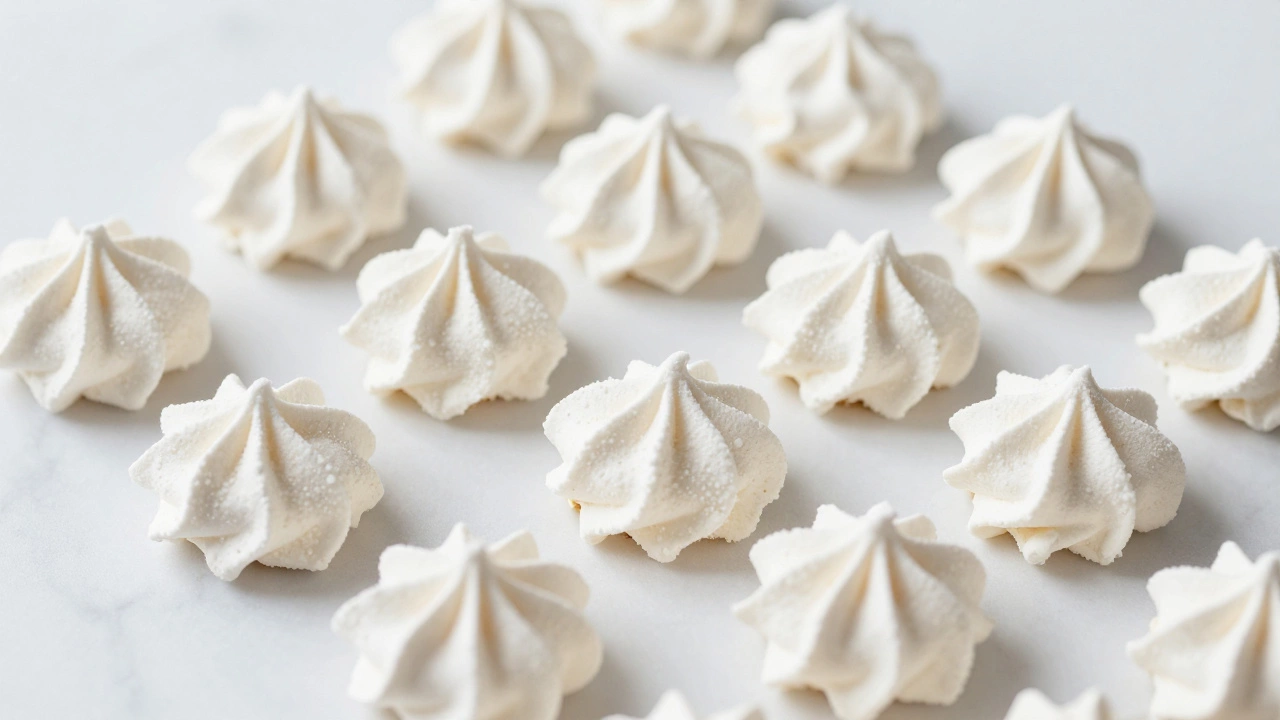
- Meringues are generally smaller, crispier, and can be either airy or dense.
- Pavlova is a specific type of meringue cake with a crisp shell and a soft, custard-like center.
- The main difference lies in the addition of cornstarch and vinegar to the Pavlova batter.
- Meringues are often used as components (like in pies), while Pavlova is a standalone centerpiece.
The Core Identity of Meringues
To understand the difference, we first have to look at the foundation. Meringue is a type of dessert or topping made from a mixture of whipped egg whites and sugar. At its most basic, it is an emulsion of air and protein. When you beat egg whites, you're unfolding proteins and trapping air bubbles. When you add sugar, you stabilize those bubbles, creating a foam that can be baked into a variety of textures.
Depending on how you handle the sugar and heat, you get three distinct styles. The French meringue is the most common; you just beat raw sugar into whipped whites. It's light but unstable, often used as a topping for lemon meringue pie. Then there's the Swiss meringue, where you heat the sugar and whites over a double boiler before whipping. This creates a dense, glossy finish perfect for buttercream. Finally, the Italian meringue involves pouring hot sugar syrup into the whites, resulting in the most stable version used by professional pastry chefs.
Standard meringues are baked at low temperatures for a long time. This removes the moisture slowly, leaving you with a dry, brittle structure that snaps when you bite into it. They are essentially "sugar sculptures"-delicious, but they don't have a heart.
What Exactly is a Pavlova?
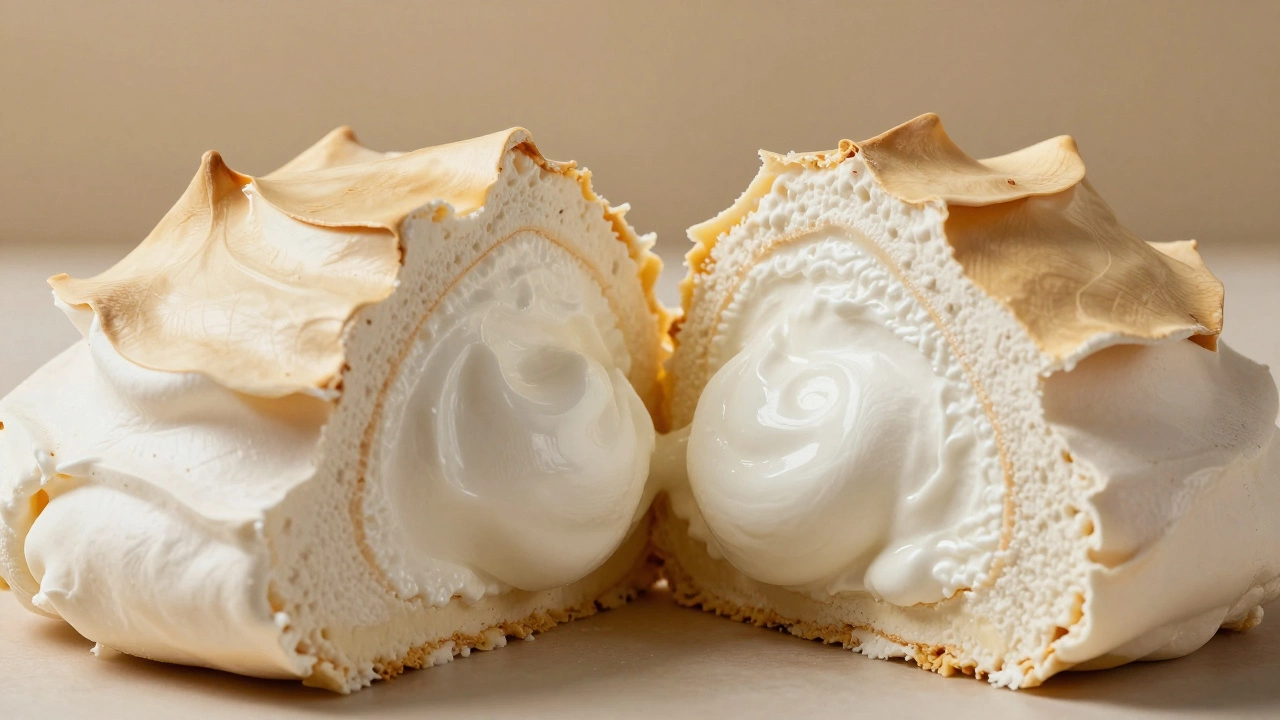
If a meringue is the building block, a Pavlova is the architectural masterpiece. Named after the Russian ballerina Anna Pavlova, this dessert is a meringue-based cake known for its contrasting textures: a crunchy outer crust and a soft, marshmallow-like interior.
A pavlova recipe differs from a standard meringue because of two critical additives: an acid (usually white vinegar or lemon juice) and a stabilizer (cornstarch). These ingredients change the chemistry of the egg foam. The acid helps stabilize the egg proteins, while the cornstarch interferes with the protein bonding, preventing the dessert from becoming completely dry. This is why a Pavlova feels like a cloud inside, whereas a regular meringue feels like a cracker.
Baking a Pavlova is more of a balancing act. You start with a higher temperature to set the outer crust quickly, then drop the heat significantly to dry the outside without overcooking the center. If you bake it too long, you've just made a giant, flat meringue. If you don't bake it long enough, the center collapses into a gooey mess.
Breaking Down the Technical Differences
When you're standing in the kitchen, the difference comes down to a few specific metrics: the ingredients, the bake time, and the final mouthfeel.
| Feature | Standard Meringue | Pavlova |
|---|---|---|
| Texture | Uniformly crisp, airy, or chewy | Crisp shell, marshmallow center |
| Key Ingredients | Egg whites, Sugar | Egg whites, Sugar, Vinegar, Cornstarch |
| Bake Style | Low and slow (drying) | High start, then low (setting and drying) |
| Common Use | Cookies, pie toppings, decorations | Centerpiece cake with fruit/cream |
| Stability | Very stable once dried | Fragile; absorbs moisture quickly |
The Chemistry of the "Marshmallow" Center
You might wonder why cornstarch is the magic ingredient here. In a regular meringue, the proteins in the egg white bond tightly together as water evaporates, creating a rigid, glassy structure. However, when you add Cornstarch, it acts as a barrier. It prevents the proteins from bonding too closely, which traps more moisture in the center of the cake.
The vinegar plays a similar role by adjusting the pH level. This prevents the egg proteins from over-coagulating, which keeps the foam stable and prevents the Pavlova from "weeping"-that annoying layer of syrup that sometimes forms between the meringue and the cream. Without these two additives, you simply cannot achieve that signature contrast of textures.
How to Serve and Pair Them
Because they have different textures, they require different pairings. Meringues are often served on their own as light cookies or used as a base for a tart. Because they are so sweet, they pair well with something bitter, like a dark chocolate drizzle or a tart raspberry coulis.
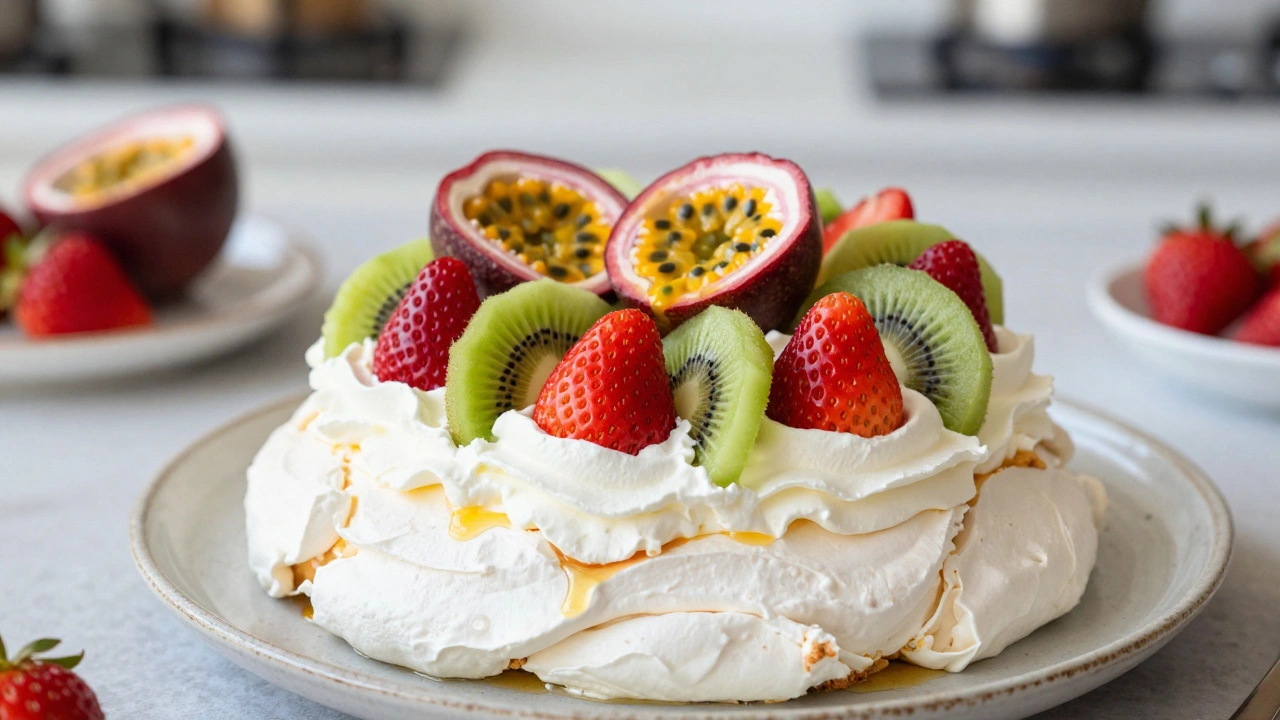
Pavlova, however, is an incomplete dish without toppings. Because the base is so sweet and the center is so soft, it needs acidity and creaminess to balance it out. The classic approach is a thick layer of Whipped Cream-which adds fat to cut through the sugar-and fresh, tart fruits like passion fruit, kiwi, or strawberries. The goal is to create a flavor profile that moves from crunchy to creamy to tart in a single bite.
Common Pitfalls to Avoid
Whether you're aiming for a crisp meringue or a fluffy Pavlova, there are a few laws of physics you can't ignore. First, your equipment must be spotless. Any trace of fat or oil-even a tiny speck of egg yolk-will prevent your egg whites from reaching full volume. If the proteins can't trap air, your dessert will stay flat.
Another common mistake is adding sugar too quickly. If you dump a cup of sugar into your whites all at once, the weight of the sugar can collapse the air bubbles you've worked so hard to create. Always add sugar one tablespoon at a time, allowing it to dissolve into the foam before adding more. This ensures a smooth, glossy finish without any gritty crystals.
Finally, beware of humidity. Meringues are hygroscopic, meaning they suck moisture out of the air. If you bake a Pavlova on a rainy day, the crust will soften almost immediately. For the best results, bake on a dry day and only add the cream and fruit right before serving to prevent the base from softening too early.
Can I use a Pavlova recipe to make meringue cookies?
Not really. If you use a Pavlova recipe (with cornstarch and vinegar) to make small cookies, they will likely be too soft or have a strange, starchy taste. For crisp cookies, stick to a traditional French or Swiss meringue recipe that only uses egg whites and sugar.
Why did my Pavlova collapse in the middle?
This usually happens for two reasons: under-beating the egg whites or an abrupt temperature change. If the meringue wasn't whipped to stiff peaks, it lacks the structure to hold its weight. Also, if you open the oven door too often or take the cake out while it's still scorching hot, the sudden cool air can cause it to shrink and crack.
Does the type of sugar matter for these desserts?
Yes. Caster sugar (superfine sugar) is the gold standard because it dissolves quickly. If you use coarse granulated sugar, you might find tiny crystals in your final product, or the meringue may weep more easily because the sugar didn't fully integrate into the egg proteins.
Can I make a vegan version of either?
You can use Aquafaba (the liquid from a can of chickpeas) as a replacement for egg whites. It mimics the protein structure of eggs remarkably well. While it takes longer to whip, you can achieve a similar crispness for meringues and a decent fluffiness for Pavlova, though the stability is slightly lower.
How long do meringues and Pavlovas last?
Dry meringues can last for weeks in an airtight container. However, once a Pavlova is topped with cream and fruit, it must be eaten within a few hours. The moisture from the cream will slowly dissolve the sugar shell, turning your crisp cake into a soft, soggy sponge if left in the fridge overnight.
What to Try Next
Now that you've mastered the difference between these two, you might want to explore more complex egg-based desserts. Try your hand at making Macarons, which use a specialized "macaronage" technique to fold the meringue into almond flour. Or, if you're looking for something less sweet, look into a Baked Alaska, which combines a cake base, ice cream, and a toasted meringue topping for a theatrical finish.
Popular Posts

Level 5 Vegan: What It Means and Why It Matters
Jul, 24 2025
What Makes a Brownie Taste Like Cake?
Jun, 3 2025