Cheesecake Portion & Nutrition Planner
Adjust the recipe below to fit your party size. This tool scales the "Copycat" recipe proportions and estimates nutritional impact per slice.
Serving Settings
Scaling Results
| Ingredient | Amount Required |
|---|---|
| Cream Cheese (Brick) | 24 oz |
| Graham Crackers | 2 cups |
| Sugar | 1 cup |
| Eggs | 3 large |
| Sour Cream | 1/2 cup |
| Melted Butter (for crust) | 1/3 cup |
| Vanilla Extract | 1 tsp |
Nutritional Reality Check
Estimated Calories per Slice:
This includes the rich filling and crust. Protein comes primarily from cheese and eggs.
Troubleshooting Tip
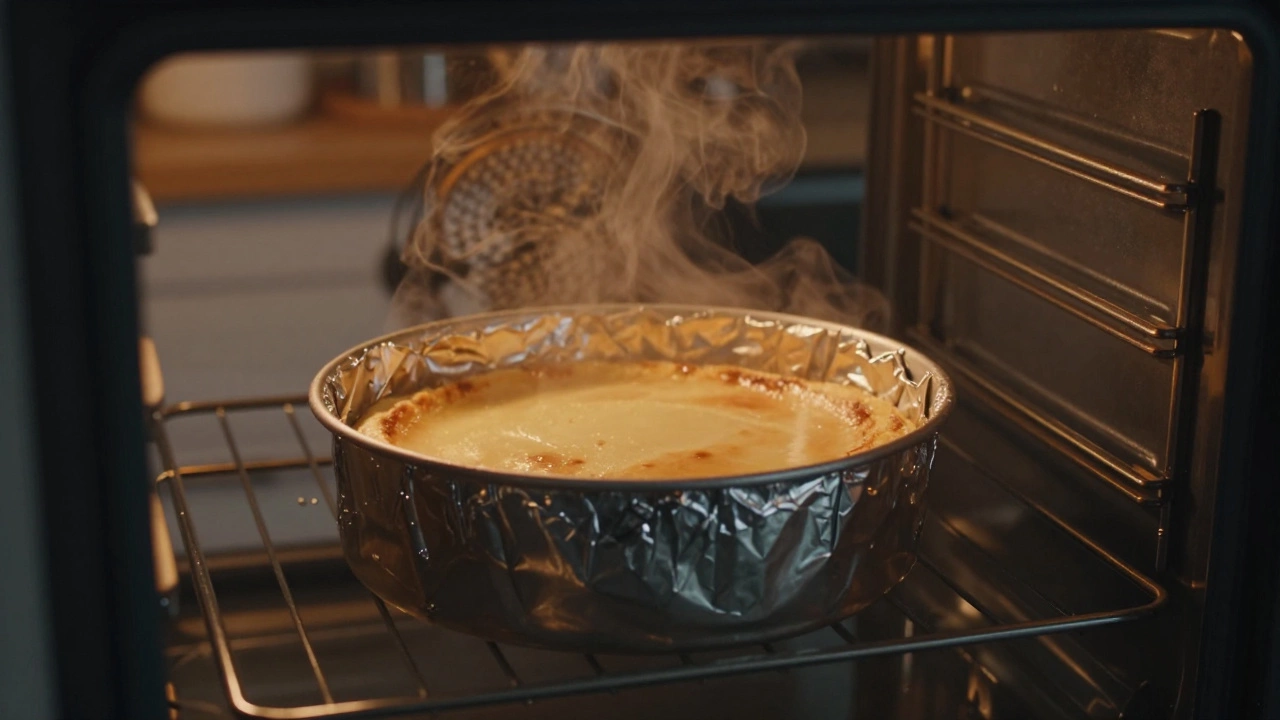
Using a water bath prevents cracks. Ensure foil wrapping is tight!
The Mystery Behind That Rich Slice
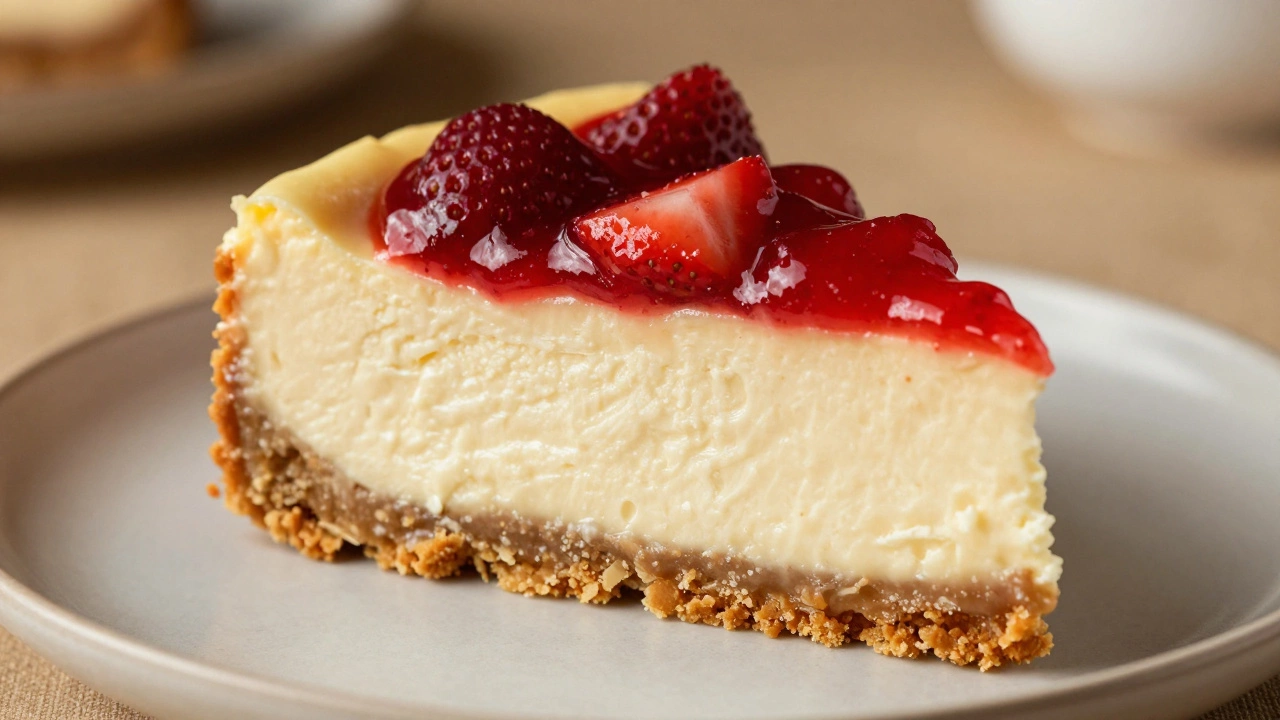
You might have taken a bite at a restaurant or spotted a photo online and wondered what makes that specific dessert so distinct. Olive Garden Cheesecake is a dense, creamy New York-style dessert topped with fresh fruit compote, famously served at the American Italian-themed restaurant chain. For many home bakers living outside the United States, recreating this specific flavor profile feels like solving a puzzle. The combination of a crumbly base, a silky filling, and a tart fruit topping creates a balance that standard supermarket cheesecakes often miss.
If you are trying to figure out exactly what goes into it, you aren't alone. People ask this question because they suspect there are secret tricks beyond basic cream cheese and sugar. The reality is that the magic lies in specific ratios and preparation methods rather than obscure ingredients. We will break down every component, from the crust to the glaze, so you can make it right in your own kitchen.
Breaking Down the Core Components
Understanding the recipe requires looking at the three main layers separately. Each part plays a role in texture and flavor stability. If you change one element, the whole dynamic shifts. Here is what actually holds the structure together.
1. The Graham Cracker Crust
Few desserts stand without a solid foundation. The base for this dessert uses crushed graham crackers bound with melted butter and sugar. While some fancy places use cookie dough or shortbread, this specific style relies on the honeyed crunch of graham crackers. Graham Cracker Crust is a sweet, buttery base made from crushed biscuits and melted butter that provides texture contrast to soft fillings. The ratio usually involves two parts crumbs to one part fat. You press this into the pan tightly before baking. If you skip pre-baking the crust, it often turns soggy when the filling hits it. A quick 5-minute bake sets the fats and seals the surface, preventing sogginess during the main baking phase.
2. The Dense, Silky Filling
The center of the operation is the custard. Unlike lighter mousse cakes, this version leans towards a heavier, denser consistency similar to traditional New York styles. Key players here are full-fat cream cheese, heavy cream, and eggs. Some bakers swear by adding sour cream to cut through the sweetness and add tang. Cream Cheese is a fresh, unripened cheese made from cream and milk curds serving as the primary structural fat in cheesecakes. Using room temperature cheese is non-negotiable. Cold lumps won't blend smoothly, leading to a gritty texture. The recipe typically calls for mixing until completely smooth before adding eggs. Overmixing after adding eggs introduces too much air, causing cracks on top. Slow stirring preserves that dense, hotel-quality look.
3. The Signature Fruit Topping
You cannot talk about this dessert without mentioning the red layer on top. It is almost always a strawberry variation. This isn't just raw sliced fruit; it involves a reduction. Cooks simmer strawberries with sugar and lemon juice to create a glossy compote. This sauce adds acidity that balances the rich dairy below. Some versions use a dusting of powdered sugar for visual appeal, but the syrup itself defines the flavor profile.
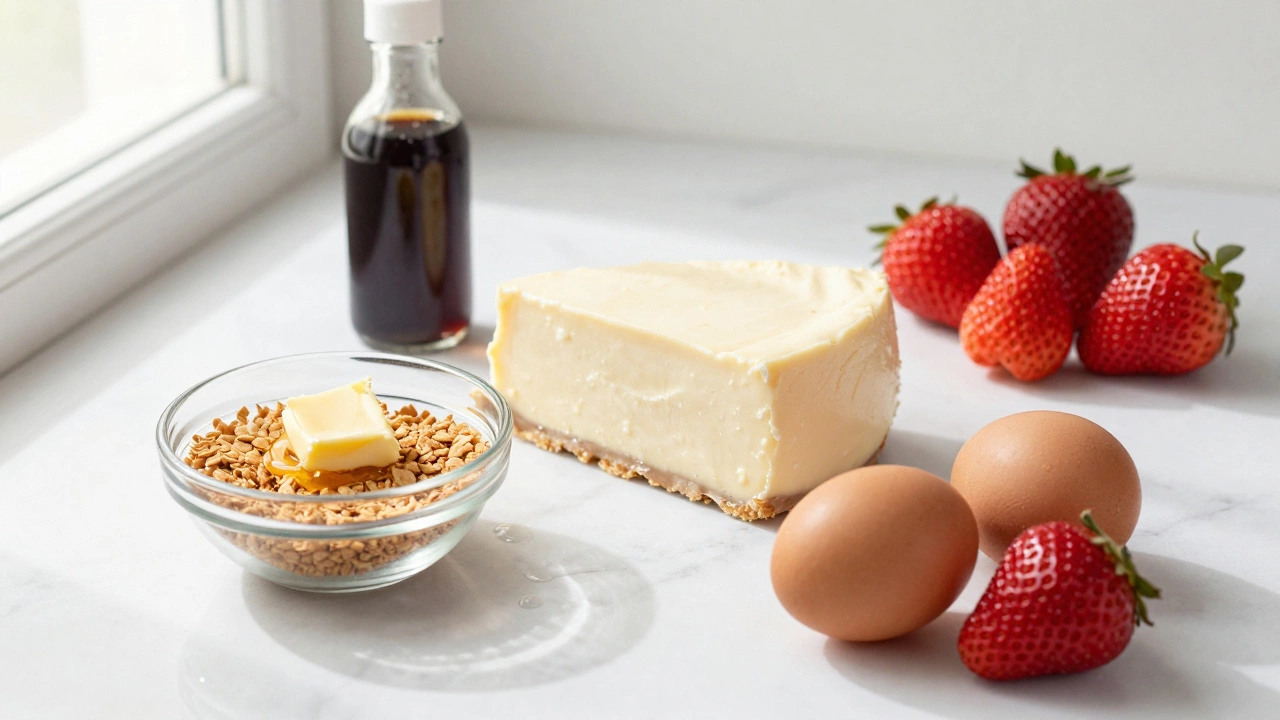
| Ingredient | Purpose | Substitute |
|---|---|---|
| Cream Cheese | Provides thickness and tang | Mascarpone (slightly sweeter) |
| Sour Cream | Adds richness and prevents dryness | Crème Fraîche |
| Graham Crackers | Crunchy, honey-sweet base | Biscuits/Digestive Cookies |
| Vanilla Extract | Enhances overall sweetness | Vanilla Bean Paste |
Nutritional Realities and Portion Sizes
Being transparent about what you eat matters. A standard slice of a restaurant-sized cheesecake packs significant energy. Based on available data from similar New York-style preparations, a single wedge often contains over 400 to 600 calories. The high count comes from the dense concentration of cheese and sugar in the filling. Nutritional Calorie Content is a measure of the energy value found in a specific portion of food calculated using grams of protein, carbohydrates, and fat. If you track macros, note the fat content is considerable due to the cream cheese and heavy whipping cream used in the batter. Protein levels are moderate, coming primarily from the eggs and dairy. Carbohydrates come from both the added sugars in the filling and the crust components. Knowing these numbers helps you plan balanced meals around your indulgence.
How to Make It at Home
Recreating this classic tastes better when you control the quality of ingredients. Grocery store tub cheese works, but blocks of brick cream cheese yield superior results. Tub products contain stabilizers and thickeners that can alter the texture when baked. Follow these logical steps to ensure success.
- Prepare the Pan: Line the bottom of a springform pan with parchment paper. Wrap the outside with heavy-duty foil to protect against water leaking in during baking.
- Mix the Base: Crush graham crackers in a bag with a rolling pin. Combine with melted butter and brown sugar until it resembles wet sand. Press firmly into the pan.
- Blend the Filling: Beat softened cream cheese and sugar until smooth. Add sour cream and vanilla, scraping the bowl sides constantly.
- Combine Eggs Gently: Add eggs one at a time on low speed. Stop mixing as soon as the last egg disappears into the batter.
- Water Bath Bake: Place the springform pan inside a larger roasting pan filled with hot water. This gentle heat prevents the edges from cooking faster than the center, avoiding cracks.
- Cool Slowly: Turn off the oven and crack the door open. Let the cake cool inside the oven for an hour. Then refrigerate for at least 8 hours.
Troubleshooting Common Issues
Even experienced bakers face hurdles. If your dessert looks wrong, check these potential causes first.
- Cracks on Top: Usually caused by overbaking or cooling too quickly. Reduce oven temperature slightly and allow it to cool gradually in the turned-off oven.
- Sunken Center: This means the cake wasn't fully set. Bake for a few more minutes until the edges are set but the center jiggles like gelatin.
- Soggy Bottom: Did you press the crust hard enough? Or did the water bath leak? Check your foil wrapping tightness next time.
- Separation in Sauce: If the strawberry topping separates, add a pinch of cornstarch to thicken the juices while simmering.
Frequently Asked Questions
Is Olive Garden cheesecake gluten free?
The traditional version uses a graham cracker crust, which contains wheat flour. However, you can easily substitute gluten-free graham crackers or crushed cookies to make the entire dessert safe for celiacs, ensuring the filling ingredients remain cross-contamination free.
Does the cheesecake require special equipment?
The most critical tool is a springform pan, which allows you to remove the ring without breaking the delicate cake structure. A water bath setup also helps achieve the smooth texture without professional ovens.
Can I freeze leftover slices?
Yes, cheesecakes freeze very well. Wrap individual slices tightly in plastic wrap and place them in an airtight container. Thaw them slowly in the fridge overnight before serving.
What type of strawberries work best for the topping?
Fresh whole strawberries provide the best chunky texture for garnish, while cooked berries make the sauce. Frozen strawberries work fine for the sauce but may result in a runnier liquid texture compared to fresh varieties.
Why does the recipe call for a slow cool-down?
Rapid temperature changes cause the proteins in the egg and cheese to contract quickly, pulling the structure apart and causing cracks. Cooling in the oven allows the internal structure to stabilize safely.