
Pavlova Cracking: Why It Happens and How to Fix It
When you bake a pavlova, a crisp-on-the-outside, marshmallow-soft-on-the-inside meringue dessert named after the Russian ballerina Anna Pavlova. Also known as meringue cake, it’s prized for its delicate texture—but cracking is one of the most frustrating things that can go wrong. It’s not always a sign you messed up. Even experienced bakers see cracks, and often, the taste is still perfect. The real question isn’t whether it cracked—it’s why, and how to stop it from happening again.
Cracking usually comes down to three things: oven temperature, how fast the pavlova dries out during baking, and egg white preparation, including how stiff the peaks are and whether sugar is fully dissolved. If your oven is too hot, the outside sets too fast while the inside is still expanding. That pressure forces the surface to split. If your egg whites weren’t whipped to the right stiffness, or if the sugar didn’t melt completely into the whites, the structure becomes weak and uneven. That’s when cracks show up—or worse, the whole thing collapses.
Here’s what actually works: bake your pavlova low and slow—around 100°C (210°F)—for at least an hour and a half. Turn the oven off when it’s done and leave the pavlova inside to cool completely. That slow cooldown lets the inside catch up with the outside without stress. Make sure your sugar is superfine and whisked in gradually until the mixture looks glossy and holds stiff, shiny peaks. No grainy texture. No lumps. And don’t open the oven door until it’s time to turn it off. Even a quick peek can cause a temperature drop that triggers cracking.
Some people swear by adding vinegar or cornstarch to stabilize the meringue. A teaspoon of white vinegar or a tablespoon of cornflour can help, but they’re not magic fixes. The real key is patience and control. If your pavlova cracks, don’t toss it. Top it with whipped cream and fresh berries anyway. No one will notice the cracks—they’ll just taste the cloud-like sweetness.
You’ll find posts here that dig into the science behind why sugar behaves the way it does in meringues, how humidity affects your bake, and why some recipes call for room-temperature eggs while others don’t. We’ve got troubleshooting guides for when your pavlova turns chewy, sticky, or collapses. And yes—we cover the difference between Australian and New Zealand styles too. Whether you’re making one for a birthday or just trying to get it right after three failed attempts, this collection gives you the practical fixes, not just theory.
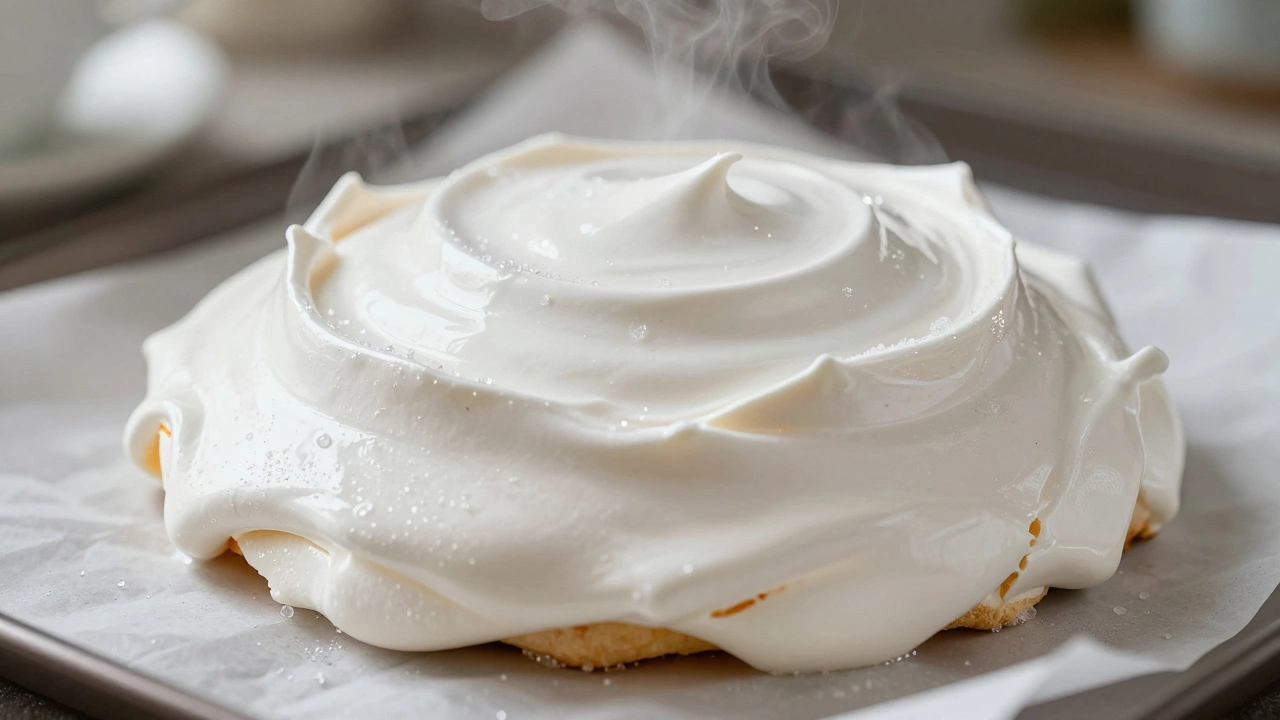
How to Stop Pavlova Cracking: Simple Fixes for Perfect Meringue
Learn why pavlova cracks and how to fix it with simple, proven techniques-temperature control, slow cooling, cornstarch, and fresh eggs. Say goodbye to cracked meringue and bake a perfect pavlova every time.
View MorePopular Posts
Why Eggs Matter in Cheesecake Recipes
Mar, 20 2025
How Long Does a Brownie's Effect Last?
May, 27 2025
Are Marshmallows Vegan? Find Out the Truth
Oct, 14 2025