Perfect Pavlova: How to Get the Crisp Shell and Marshmallow Center Every Time
When you think of a perfect pavlova, a light, airy meringue-based dessert with a crisp shell and chewy center, often topped with whipped cream and fresh fruit. Also known as meringue cake, it’s the kind of dessert that looks fancy but doesn’t need to be hard to make—if you know the basics. It’s not just sugar and egg whites. It’s about control: temperature, timing, and patience. Too much heat and it cracks. Too little and it stays sticky. Too soon to open the oven and it collapses. This isn’t magic—it’s science you can master.
What makes a pavlova, a dessert that originated in Australia or New Zealand (debate still rages) and became a global favorite for holidays and celebrations. Also known as meringue nest, it’s built on the same principle as a meringue but with a twist: cornstarch or vinegar added to stabilize the egg whites and create that signature soft center. The sugar isn’t just sweetener—it’s the structure. Granulated sugar dissolves slowly, forming a hard shell. Powdered sugar? Too fast. It turns the whole thing gummy. And don’t even think about skipping the cream of tartar or lemon juice. They help the egg whites hold air without collapsing. The oven temperature is everything. Most recipes say 300°F, but the real trick is turning it off early and letting the pavlova cool inside. That’s how you get the marshmallow inside without drying it out. A 2-hour cool-down in a turned-off oven? Non-negotiable. Skip it, and you’ll end up with a flat, sticky mess.
And the toppings? They’re not an afterthought. Fresh berries, whipped cream, and a dusting of powdered sugar aren’t just decoration—they balance the sweetness and add texture. A perfectly made pavlova should crack when you press it lightly, then give way to a pillowy center. It’s not supposed to be crunchy all the way through. That’s a meringue cookie. This? This is dessert theater.
You’ll find posts here that cut through the noise. No vague advice like "whip until stiff peaks." We show you exactly when to stop, how to test if your sugar dissolved, and why your pavlova stuck to the parchment (and how to fix it). You’ll see what happens when you skip the vinegar, why humidity ruins your day, and how to save a slightly underbaked one. Whether you’re making it for Christmas, a birthday, or just because you crave something light and sweet, the right technique turns this from intimidating to easy.
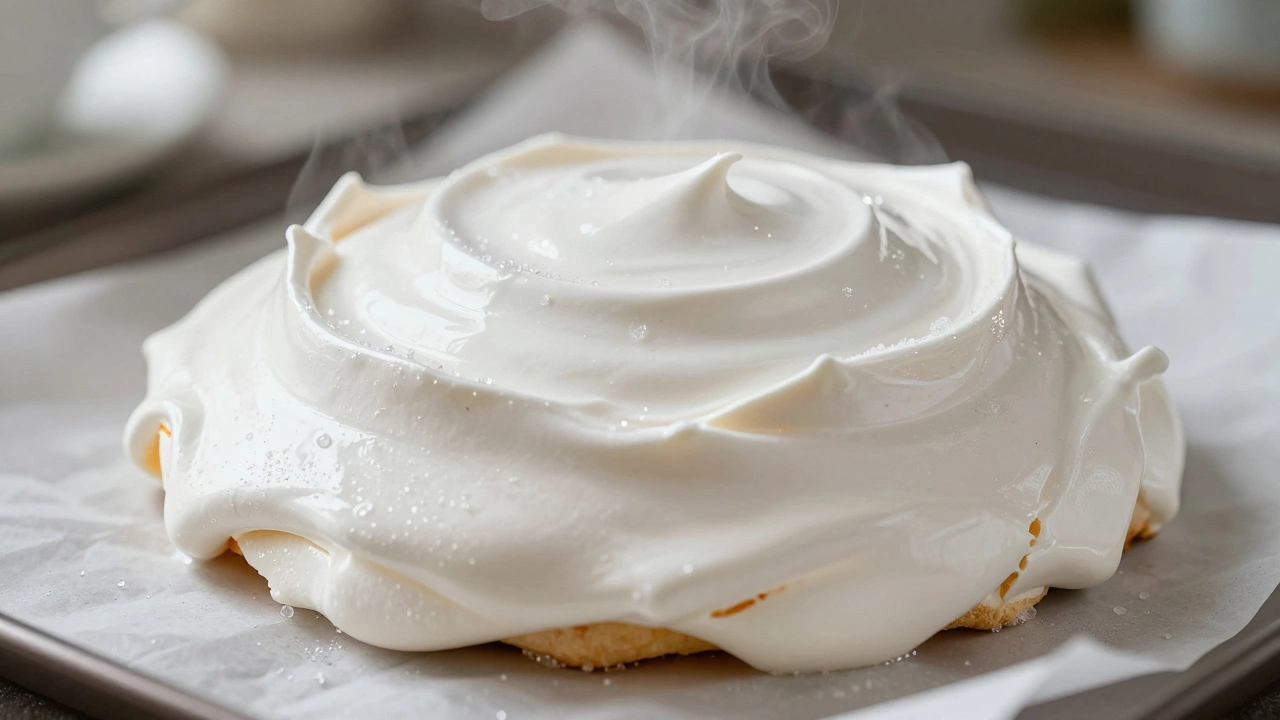
How to Stop Pavlova Cracking: Simple Fixes for Perfect Meringue
Learn why pavlova cracks and how to fix it with simple, proven techniques-temperature control, slow cooling, cornstarch, and fresh eggs. Say goodbye to cracked meringue and bake a perfect pavlova every time.
View MorePopular Posts
Best Gluten‑Free Flour for Cake Baking
Oct, 23 2025
How Much Does a Hundred Macarons Cost in 2025?
Nov, 6 2025