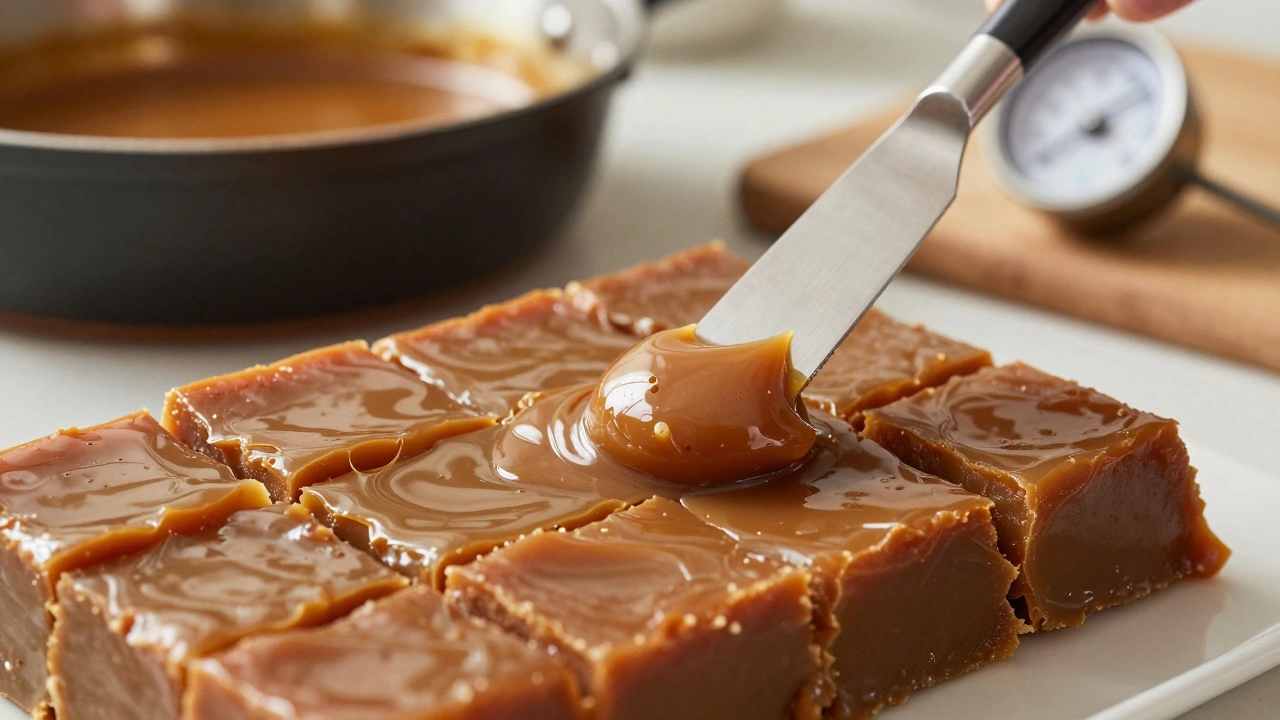
Fudge Troubleshooter & Fixer
Diagnose Your Fudge Issue
Select the issues you experienced during the process.
Target Temp Calculator
Adjust for your elevation to get the perfect set.
Diagnosis Results
Adjusted Temperature
There is nothing more frustrating than spending an hour melting sugar and butter, only to end up with a sticky, chewy mess that refuses to set. You cut into it, the knife drags through like wet clay, and your beautiful batch of fudge is a sweet confection made from sugar, butter, and milk or cream that should be firm and smooth looks nothing like the glossy squares in the recipe photo.
If your fudge didn't get hard, don't throw it away just yet. The issue is almost always about temperature control, not bad ingredients. Fudge is science disguised as dessert. It relies on precise crystallization of sugar molecules. When those crystals form correctly, you get a firm bite. When they don't, you get soft fudge. Let's look at why this happens and how to fix it right now.
The Critical Role of Temperature
The single biggest reason for soft fudge is undercooking. Sugar syrup must reach a specific temperature to achieve the right consistency. This process involves evaporating water from the mixture until the concentration of sugar is high enough to solidify upon cooling.
You need to hit the soft-ball stage is a cooking stage for sugar syrups reached between 234°F and 240°F (112°C-116°C). If you stop cooking even five degrees short of this target, the final product will remain gooey. Many home cooks rely on visual cues, looking for bubbles or thickening sauce. These cues are unreliable. A spoonful of syrup dropped into cold water should form a soft ball that holds its shape but flattens when pressed. Without this test, guessing is risky.
Using a candy thermometer is a kitchen tool designed to measure the temperature of sugar syrups accurately is non-negotiable for consistent results. Digital thermometers can be tricky if not calibrated properly. Analog dial thermometers often have a slight offset. Check yours by boiling water; it should read 212°F (100°C) at sea level. If you live at a higher altitude, like Denver or parts of Scotland, water boils at a lower temperature, so you must adjust your target temperature downward by about 1°F for every 500 feet above sea level.
Ingredient Ratios and Measurements
Fudge requires a strict balance of sugar, fat, and liquid. Too much liquid means too much water to evaporate. Even if you cook it long enough, adding extra milk or cream beyond the recipe's instruction throws off the ratio. The sugar percentage drops, preventing proper crystallization.
Sugar type matters too. Most traditional recipes use granulated white sugar. Some modern variations add brown sugar for flavor. Brown sugar contains molasses, which adds acidity and moisture. This interferes with crystal formation, leading to a softer texture. If you swap white sugar for brown without adjusting other factors, expect a chewier, less firm result. Stick to the specified sugar type unless you understand the chemistry behind invert sugars.
Butter provides richness and helps control crystal size, keeping the fudge smooth rather than grainy. However, using margarine instead of real butter introduces additional water content. Margarine is mostly water with some oil. That extra water dilutes the sugar solution, making it harder to reach the necessary concentration for hardness.
Mixing Techniques and Crystallization
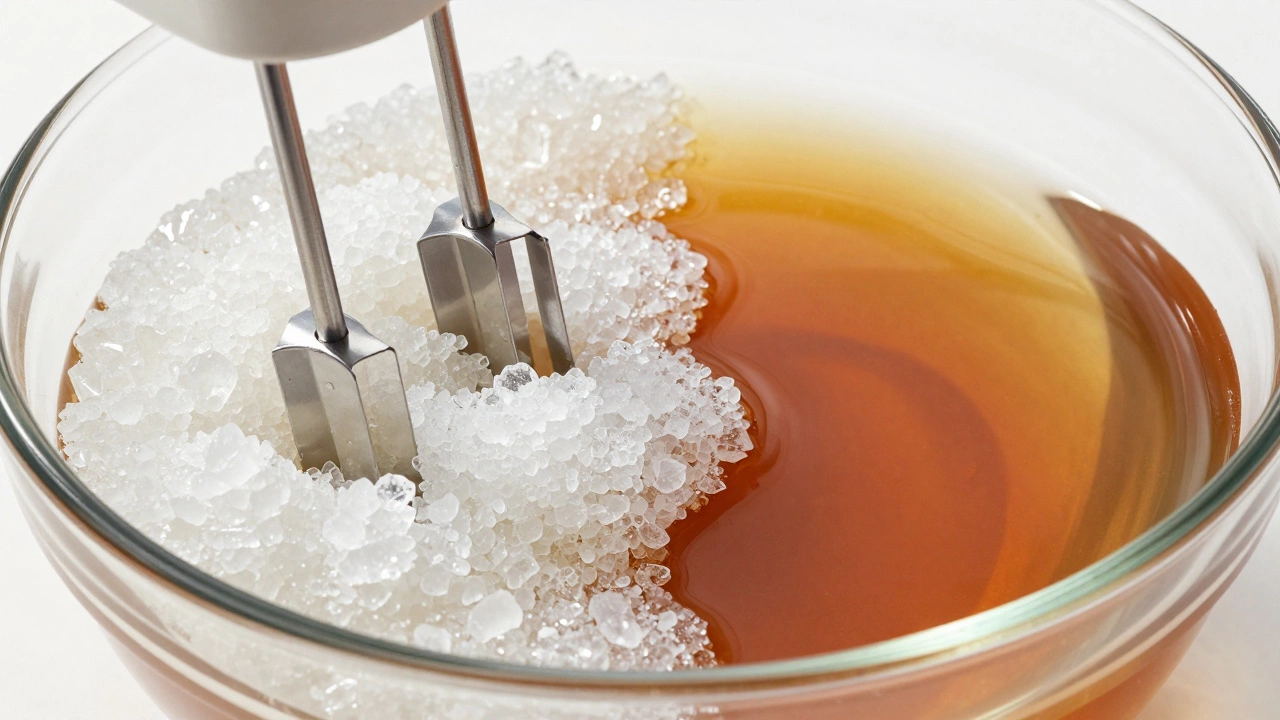
Once the syrup hits the soft-ball stage, what you do next determines the texture. You pour the hot mixture into a bowl and beat it. This beating phase is crucial. As the mixture cools, sugar begins to crystallize. Beating incorporates air and encourages tiny crystals to form throughout the mass.
If you stop beating too early, while the mixture is still warm and fluid, large crystals won't have time to develop properly. The structure remains weak. Conversely, if you over-beat after it has already started to thicken significantly, you might incorporate too much air, making it dry and crumbly rather than dense and firm. Aim for a matte finish. Glossy fudge means the crystals haven't formed yet. Matte fudge indicates crystallization is happening.
Avoid stirring the mixture during the initial heating phase. Stirring promotes premature crystallization, which can lead to graininess. Once you remove the pan from heat, however, vigorous beating is required. Use an electric hand mixer or stand mixer for efficiency. Manual whisking works but takes longer and requires more arm strength. Consistency is key-beat until the fudge loses its shine and becomes opaque.
Pan Preparation and Cooling Environment
Where you pour the fudge affects how it sets. Greasing the pan lightly with butter or coconut oil helps release the fudge later, but too much grease creates a slippery surface that prevents the fudge from gripping itself as it cools. Line the pan with parchment paper for best results. This allows you to lift the entire block out once set, ensuring clean cuts.
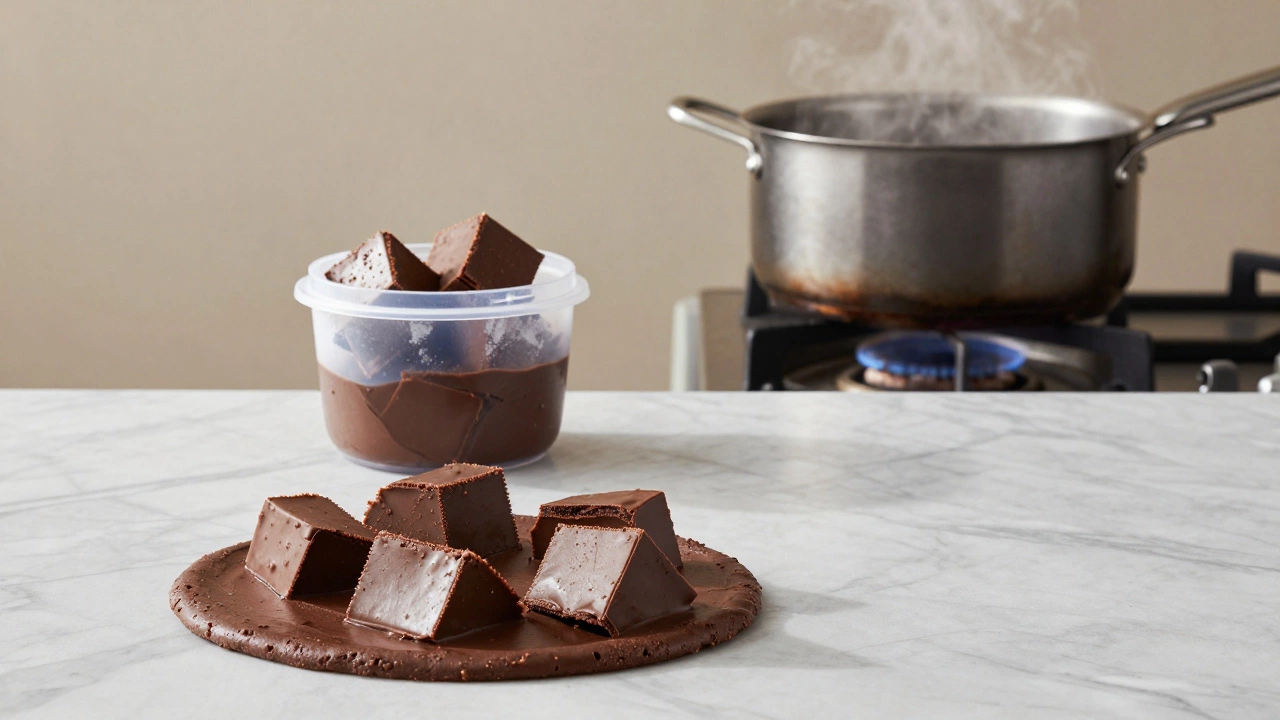
Cooling conditions matter more than most people realize. Fudge needs to cool slowly and evenly. Drafts from windows, fans, or air conditioning vents cause uneven cooling. One side might set faster than the other, creating internal stress fractures or soft spots. Place the pan on a wooden cutting board or silicone mat, not directly on a cold marble countertop or tile floor. Cold surfaces shock the outer edges, causing them to contract rapidly while the center stays warm. This differential contraction can trap moisture inside, resulting in a soft core.
Humidity is another silent killer. Sugar is hygroscopic, meaning it attracts moisture from the air. In humid climates, like coastal Brighton where I live, fudge struggles to harden because it absorbs ambient humidity. On particularly damp days, consider storing the fudge in an airtight container immediately after cutting. This protects it from absorbing excess moisture that keeps it soft.
How to Fix Soft Fudge
Did your fudge fail to harden? Don't despair. You can salvage it. Here are three proven methods:
- Re-cook it: Transfer the soft fudge back into a heavy-bottomed saucepan. Add a small amount of fresh sugar (about 1 tablespoon per cup of fudge). Heat gently over medium-low heat, stirring constantly until dissolved. Bring the mixture back to the soft-ball stage (238°F / 114°C), checking with your thermometer. Pour it out onto a clean surface and re-beat until matte. This resets the sugar concentration.
- Freeze it: If re-cooking seems daunting, place the soft fudge in the freezer for 1-2 hours. The cold temperatures temporarily firm up the fats and sugars. It won't solve the underlying structural issue, but it makes slicing possible. Serve it chilled. Just remember it will soften again at room temperature.
- Repurpose it: Chop the soft fudge into chunks and fold it into cookie dough, brownie batter, or ice cream mix-ins. Soft fudge acts as a delicious flavor bomb in other desserts. No one will know it failed its first attempt.
Prevention Tips for Next Time
Preventing soft fudge starts before you turn on the stove. Read the recipe thoroughly. Understand the role of each ingredient. Invest in a reliable candy thermometer. Calibrate it regularly. Practice the cold-water test until you recognize the soft-ball stage visually. Keep your workspace dry and draft-free. Beat the fudge consistently until it loses its gloss. Store finished bars in airtight containers with wax paper layers between them.
| Problem | Cause | Solution |
|---|---|---|
| Undercooked Syrup | Temperature below 234°F (112°C) | Use a candy thermometer; cook to 238°F (114°C) |
| Too Much Liquid | Extra milk or cream added | Follow recipe measurements exactly |
| Inadequate Beating | Stopped mixing too early | Beat until mixture turns matte and opaque |
| High Humidity | Absorbed moisture from air | Store in airtight container immediately |
| Altitude Issues | Water boils at lower temp | Reduce target temp by 1°F per 500 ft elevation |
Frequently Asked Questions
Can I save fudge that is too soft?
Yes, you can save soft fudge by re-cooking it. Return the fudge to a saucepan, add a little extra sugar, and heat it back to the soft-ball stage (238°F / 114°C). Then pour it out and beat it again until it becomes matte. Alternatively, freeze it briefly to make slicing easier, or chop it up and use it as a mix-in for cookies or brownies.
What temperature should fudge reach?
Traditional fudge should reach the soft-ball stage, which is between 234°F and 240°F (112°C-116°C). For most recipes, aiming for 238°F (114°C) provides the ideal balance of firmness and smoothness. Always verify with a calibrated candy thermometer.
Why is my fudge grainy instead of smooth?
Graininess occurs when large sugar crystals form. This usually happens if you stir the mixture while it's heating up, promoting premature crystallization. To prevent this, avoid stirring during the boil. Only beat vigorously after removing the pot from heat. Adding a teaspoon of corn syrup or cream of tartar can also help inhibit large crystal formation.
Does altitude affect fudge making?
Yes, altitude significantly impacts fudge. Water boils at a lower temperature at higher elevations, so sugar solutions reach their target stages at lower temperatures. For every 500 feet above sea level, reduce your target temperature by 1°F. If you live in a high-altitude city, adjust your thermometer readings accordingly.
How long does fudge take to harden completely?
Fudge typically takes 4 to 6 hours to set fully at room temperature. Avoid moving or cutting the pan during this time. Rushing the process by refrigerating it can cause condensation, making the surface sticky. Patience ensures a clean cut and proper texture.
Can I use a digital thermometer for fudge?
You can use a digital thermometer, but ensure it is designed for high temperatures and responds quickly. Some instant-read thermometers lag behind the actual temperature change, leading to inaccuracies. Clamp-on analog thermometers attached directly to the pot are often preferred by professionals for continuous monitoring.
Why did my fudge stay liquid even after cooling?
If your fudge remained liquid, it likely never reached the correct temperature. Sugar syrup must lose enough water to concentrate the solids. If cooked below 230°F (110°C), it will simply cool into a thick syrup rather than a solid. Re-cook it to the proper temperature to fix this issue.
Is it normal for fudge to be slightly soft in the center?
A very slight softness in the center can occur if the batch was thick and cooled slowly. However, significant softness indicates undercooking or excessive humidity absorption. If only the center is soft, try freezing the whole block for an hour before cutting to firm it up temporarily.
Popular Posts