
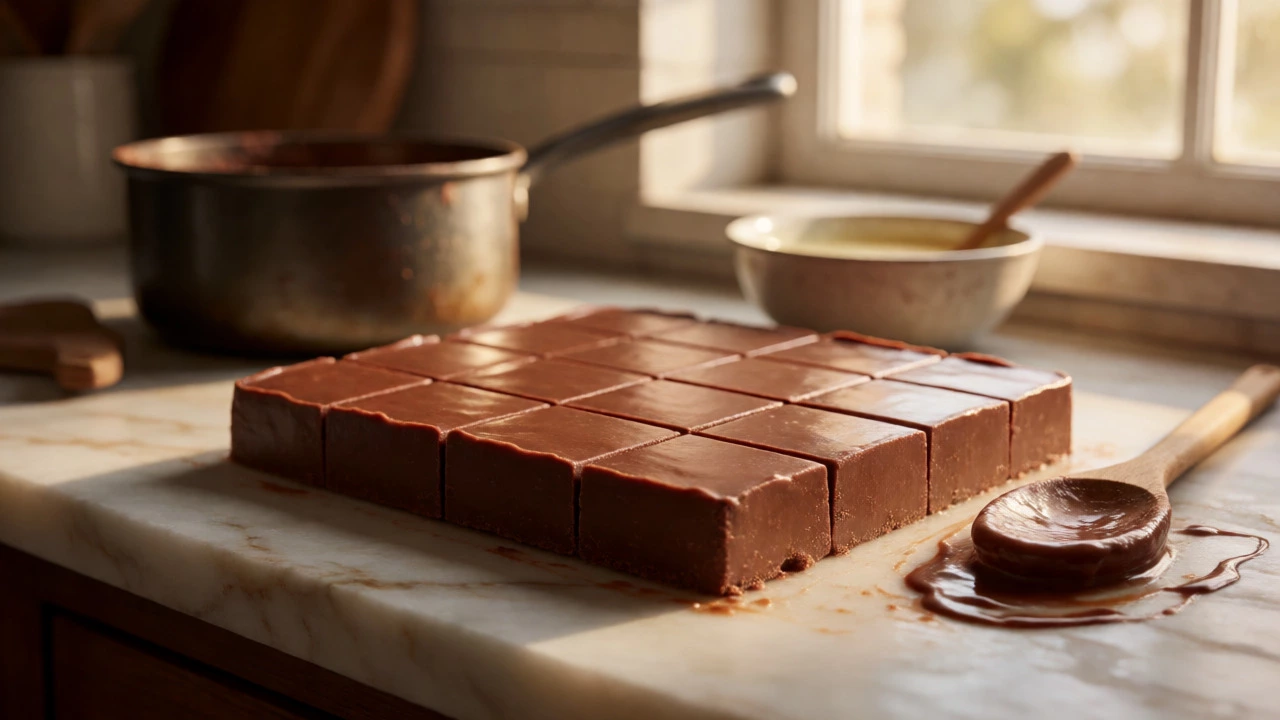
Homemade Fudge Freshness Calculator
Enter your fudge details below to determine how long it will stay fresh and creamy.
Fudge Details
Fill out the form and click Calculate to see your freshness estimate.
Estimated Best Quality Window:
Why this duration?
💡 Pro Tips for Maximum Freshness
You just spent two hours stirring a pot of sugar and condensed milk until your arm felt like lead. The kitchen smells like heaven, the pan is cooling on the counter, and you’re wondering: how long can I actually keep this homemade fudge before it turns into a sticky, grainy mess? It’s not just about taste; it’s about texture and safety. If you’ve ever found a forgotten piece in the back of the fridge that looked suspiciously moist or dried out, you know the stakes.
The short answer? At room temperature, it lasts about one to two weeks. In the fridge, you get three to four weeks. In the freezer? Up to six months. But those numbers are just the starting point. What really matters is what you did while making it and how you wrapped it up. Let’s break down exactly why fudge behaves the way it does and how to make sure every bite stays creamy.
The Science Behind Fudge Spoilage
To understand fudge shelf life, you have to look at its ingredients. Traditional fudge is essentially a supersaturated sugar solution. You boil sugar, butter, and milk (or condensed milk) to a specific temperature, then beat it as it cools. This process creates tiny sugar crystals suspended in a syrup matrix.
Sugar is hygroscopic, meaning it loves water. This is good news for preservation because high sugar content inhibits bacterial growth by pulling moisture away from microbes. However, fudge isn’t pure sugar-it contains dairy fat and protein. These components are where things get tricky. While the sugar protects against some spoilage, the fats can go rancid over time, especially if exposed to air and light. Plus, if the environment is too humid, the sugar absorbs moisture from the air, causing the surface to become sticky or "weeping." Conversely, if it’s too dry, the fudge loses internal moisture and becomes crumbly.
So, when we talk about food safety with fudge, we’re mostly fighting oxidation (rancidity) and texture degradation rather than immediate bacterial danger, unless you used fresh cream or eggs in a non-traditional recipe.
Room Temperature vs. Refrigerator Storage
Most people instinctively throw their candy in the fridge. Is that right? Not always. Here is the trade-off between keeping it cool and keeping it accessible.
| Storage Method | Duration | Texture Impact | Best For |
|---|---|---|---|
| Room Temperature | 1-2 Weeks | Stays soft and creamy; risk of drying out if uncovered. | Quick consumption; chocolate-based fudge. |
| Refrigerator | 3-4 Weeks | Can harden significantly; may absorb fridge odors. | Milk-based fudge; warm climates. |
| Freezer | Up to 6 Months | Preserves texture well if wrapped tightly; requires thawing. | Long-term storage; gifting ahead of time. |
If you live in a cool, dry climate, keeping fudge in an airtight container at room temperature is often the best option for flavor. Cold temperatures can cause the sugars to recrystallize more aggressively, leading to a gritty texture. If you must refrigerate it-perhaps because your kitchen hits 80°F (27°C) in September-make sure it is sealed tight. Fudge acts like a sponge for odors. That leftover garlic chicken from Tuesday will absolutely change the taste of your vanilla fudge.
The Freezer Is Your Best Friend
Did you make a double batch for a holiday party that hasn’t happened yet? Freeze it. Freezing homemade fudge is surprisingly effective because the low moisture activity prevents ice crystal formation within the candy itself, provided you wrap it correctly.
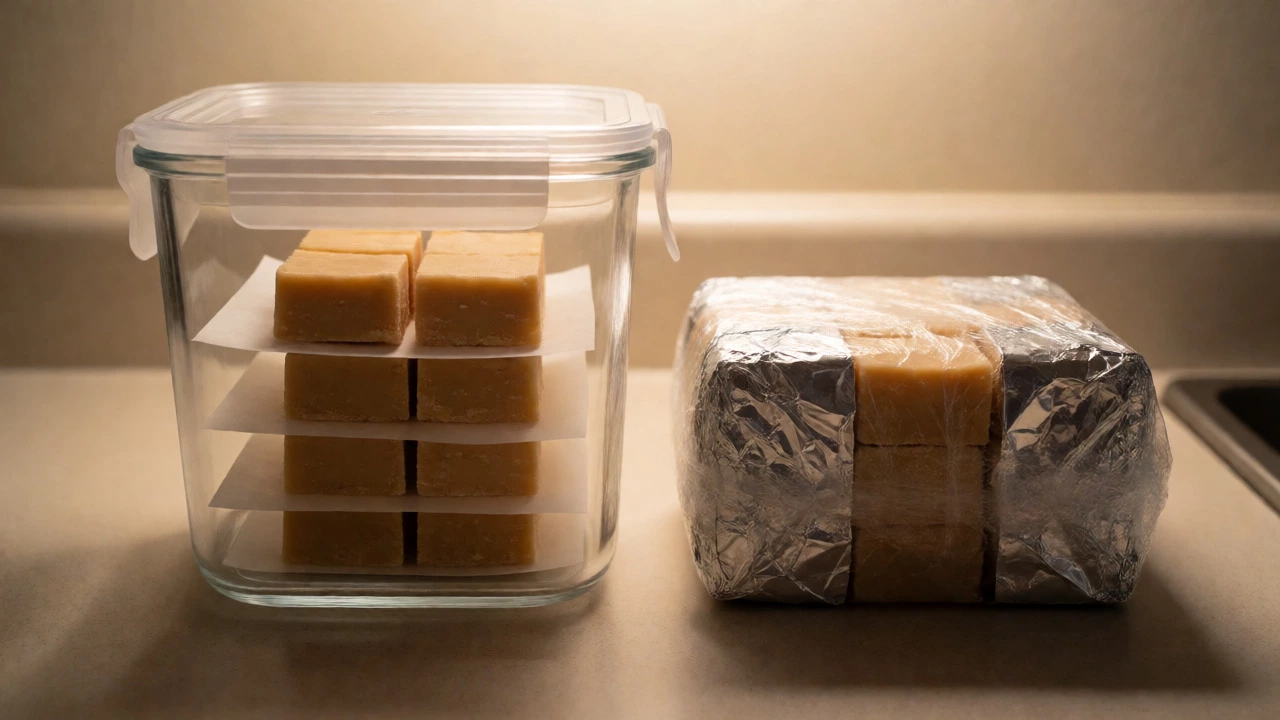
Here is the golden rule for freezing: barrier protection. One layer of plastic wrap pressed directly onto the surface of the fudge block eliminates air contact. Then, wrap it in aluminum foil or place it in a heavy-duty freezer bag. Squeeze out as much air as possible. Why? Air causes freezer burn, which dries out the surface and makes it taste stale. When you’re ready to eat, let it thaw in the refrigerator overnight or on the counter for a few hours. Do not microwave it to thaw; you’ll melt the structure and end up with a puddle.
Signs Your Fudge Has Gone Bad
How do you know if that bar in the pantry is still edible? Trust your senses. First, look for mold. It’s rare due to the sugar content, but if you see fuzzy spots, toss the whole batch. Mold spores penetrate deeper than they appear.
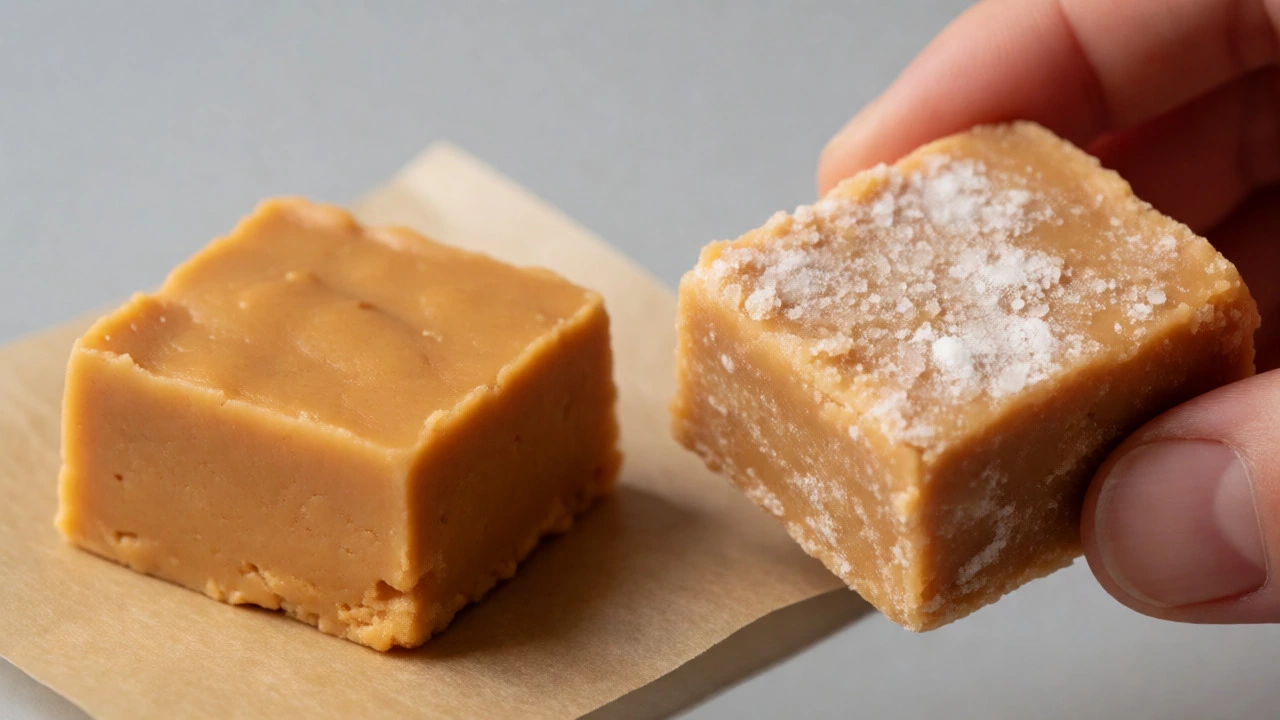
Next, check for "sugaring off." This happens when large sugar crystals form on the surface, making it look white and powdery. It’s not unsafe, but it’s unpleasant. You can sometimes save this by gently warming the fudge or using it in coffee, but it won’t be smooth anymore.
Finally, smell it. Rancid fat has a distinct, sharp, cardboard-like odor. If your peanut butter fudge smells like old paint or crayons, the oils in the nuts or dairy have oxidized. No amount of sweetening will fix that taste. When in doubt, throw it out. A $5 batch of ingredients isn’t worth a stomach ache.
Pro Tips for Maximum Freshness
You can extend the life of your dessert simply by changing how you handle it during the cutting and packing phase.
- Cut only what you need: Every time you cut a new square, you expose fresh interior surfaces to air. Cut larger blocks and slice them just before serving to keep the rest protected.
- Use parchment paper: Place sheets of wax paper or parchment between layers in your container. This prevents the pieces from sticking together into one giant brick, which forces you to pull them apart and tear the surface.
- Avoid humidity spikes: Don’t store fudge near the stove or dishwasher. Steam and heat accelerate spoilage and melting.
- Add stabilizers: If you plan to store fudge for longer periods, adding a teaspoon of corn syrup to the boiling mixture can help inhibit excessive crystallization, keeping the texture smoother for longer.
Remember, the type of fudge matters. Chocolate fudge tends to last longer at room temperature because cocoa butter is stable. Vanilla or fruit-flavored fudges, which rely more on dairy proteins, degrade faster. Peanut butter fudge falls somewhere in the middle, but watch out for the nut oils going rancid.
Can I leave homemade fudge out overnight?
Yes, absolutely. Since traditional fudge has such a high sugar concentration, it is shelf-stable for short periods. Leaving it out overnight in an airtight container is perfectly safe and often results in a better texture than refrigerating it immediately after cooking.
Why did my fudge turn grainy in the fridge?
Graininess usually indicates that the sugar crystals grew too large during cooling or storage. Cold temperatures can accelerate this recrystallization process if the fudge wasn't beaten sufficiently during preparation. To prevent this, ensure you beat the mixture thoroughly while it cools to encourage small, uniform crystals, and store it in a consistent, cool environment rather than fluctuating temperatures.
Does fudge expire?
Technically, yes, but it rarely spoils in the sense of becoming dangerous to eat quickly. It degrades in quality. Over time, the fats oxidize (go rancid), and the texture changes. For optimal quality, consume within the recommended windows: 2 weeks at room temp, 3-4 weeks refrigerated, or 6 months frozen.
Can I freeze fudge with toppings like nuts or fruit?
You can, but the toppings might suffer. Nuts can lose their crunch and become soggy upon thawing due to moisture migration. Dried fruits may harden. It is often better to add fresh toppings after thawing the base fudge.
How do I know if fudge is bad?
Look for visible mold, a sour or rancid smell, or a significant change in texture (such as extreme hardness or excessive stickiness). If the color has darkened unnaturally or if there are liquid droplets forming on the surface that don't reabsorb, it's likely past its prime.
Popular Posts



Vegan Junk Foods You Didn't Know You Could Enjoy
Feb, 28 2025