Avoid Cracked Pavlova: Fix Common Mistakes and Bake Perfect Meringues
When you bake a pavlova, a crisp-on-the-outside, marshmallow-soft-on-the-inside meringue dessert named after the Russian ballerina Anna Pavlova. Also known as meringue pie, it’s meant to be light, airy, and smooth—not cracked and dry. That crack down the middle? It’s not just ugly. It’s a sign something went wrong in the process. And it’s totally fixable.
You don’t need fancy equipment or a culinary degree. Most cracked pavlovas happen because of three things: sugar not fully dissolved, oven temperature too high, or cooling too fast. If your sugar grains are still gritty when you touch the mixture, the meringue won’t hold together properly. That’s why stirring until glossy and smooth isn’t optional—it’s the rule. Your oven? Keep it low. 120°C to 130°C (250°F to 270°F) is the sweet spot. Too hot, and the outside sets before the inside can expand evenly. That’s when the top splits open like a dry riverbed.
And then there’s cooling. People rush this part. They take the pavlova out of the oven and leave it on the counter. Big mistake. The sudden drop in temperature causes the structure to contract too fast, pulling the shell apart. The fix? Turn off the oven, crack the door open just a little, and leave the pavlova inside for at least an hour. Let it cool slowly with the heat fading out. That’s how professionals do it. No cracks. No panic.
It’s not just about technique—it’s about patience. A pavlova doesn’t want to be rushed. It wants time to dry out gently, to form that crisp shell without screaming for help. If you’ve ever bitten into one that crumbled too hard or tasted like cardboard, it’s not the recipe. It’s the process. The same mistakes show up over and over in recipes: too much vinegar or cornstarch masking bad technique, or people thinking they can skip the resting step because they’re hungry. You can’t. Not if you want that perfect cloud-like texture.
What makes a great pavlova isn’t the topping. It’s not the whipped cream, the berries, or the mint leaf on top. It’s the base. The meringue. And if that base is cracked, you’re already starting behind. But once you get the rhythm—slow sugar, low heat, slow cool—you’ll make one every time. No more throwing them out. No more apologizing to guests. Just a clean, beautiful, pillowy dessert that looks like it came from a Parisian patisserie.
Below, you’ll find real fixes from bakers who’ve been there. From how to tell if your egg whites are ready, to why room temperature matters more than you think, to the one tool that makes the biggest difference. No fluff. Just what works.
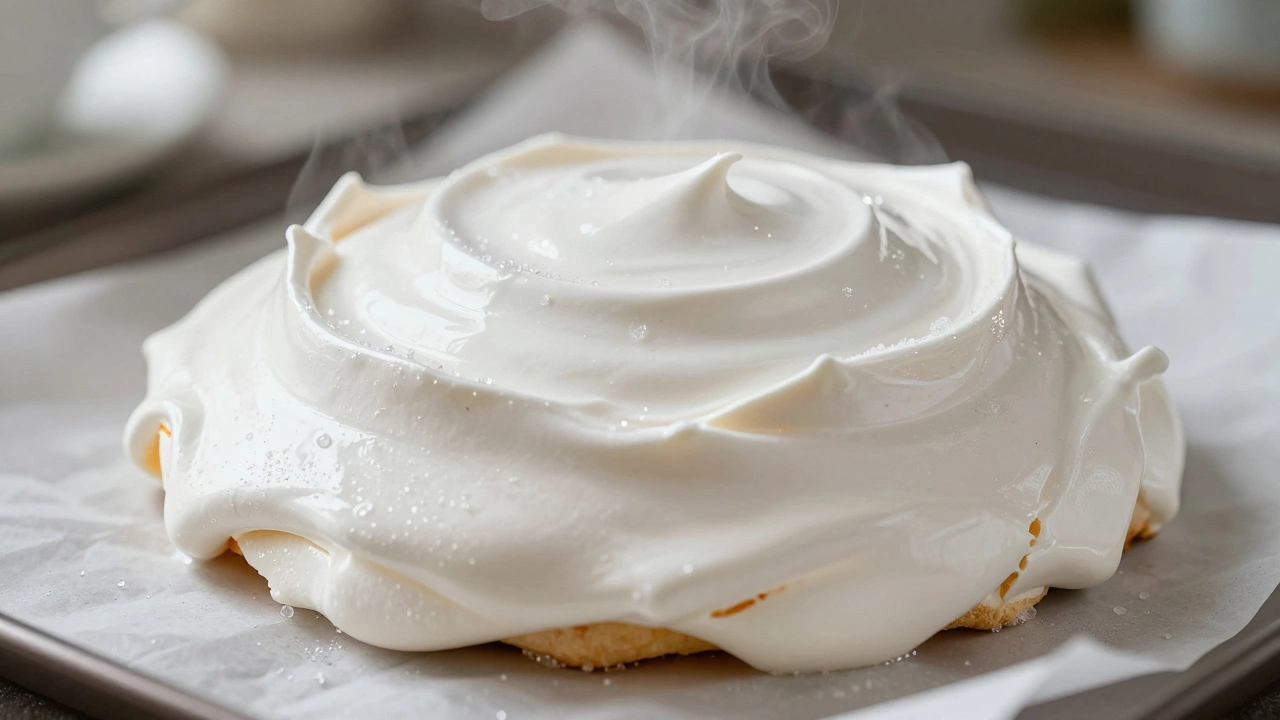
How to Stop Pavlova Cracking: Simple Fixes for Perfect Meringue
Learn why pavlova cracks and how to fix it with simple, proven techniques-temperature control, slow cooling, cornstarch, and fresh eggs. Say goodbye to cracked meringue and bake a perfect pavlova every time.
View MorePopular Posts
Essential Ingredients for Perfect Homemade Cookies
Nov, 22 2024