British Slang Intensity Checker
Select a phrase below to see its origin, intensity level, and where it is safe to use according to modern British usage guidelines.
Origin
Typical Context
Usage Advice
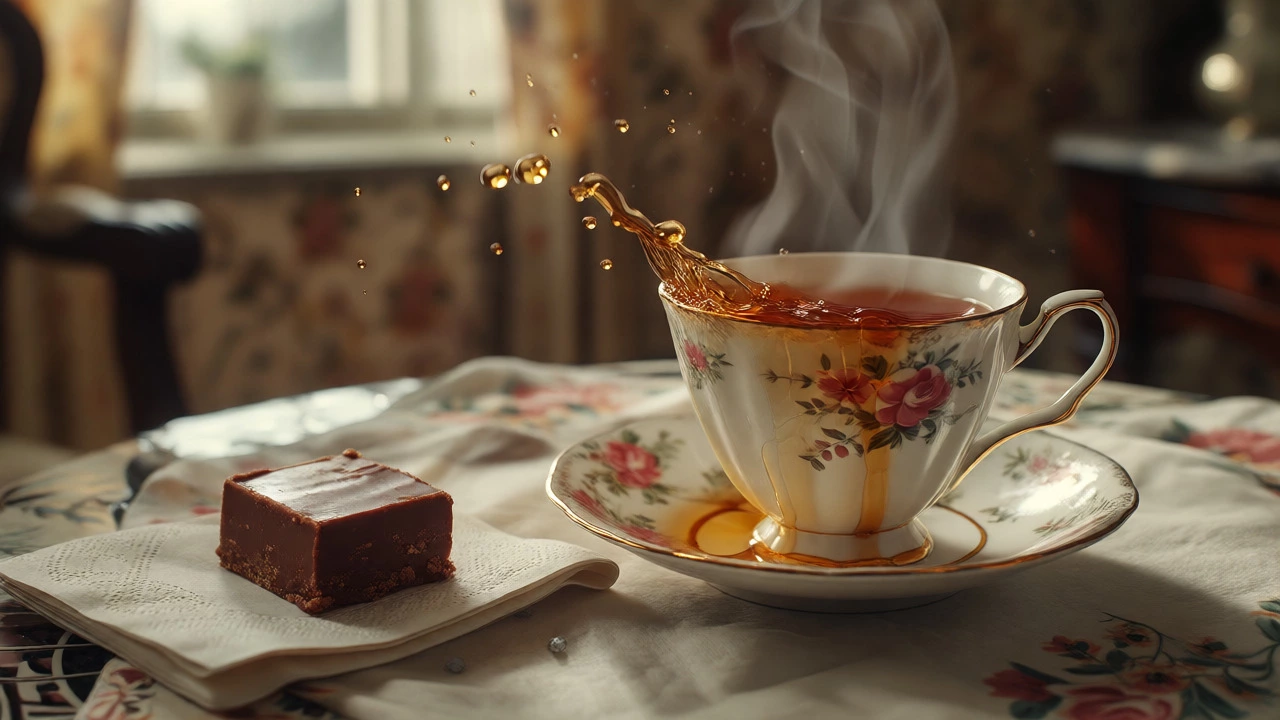
You’re watching a British comedy or reading a novel set in London, and someone drops the word "fudge." You look it up expecting a recipe for sweet, crumbly confectionery made of sugar and butter. But that’s not what they mean. In the UK, fudge is a polite stand-in for a much stronger four-letter word starting with F. It’s a classic example of a minced oath-a way to express frustration without actually swearing.
If you’ve ever wondered why someone would call their broken car "a load of fudge" or shout "oh fudge!" when they drop their tea, this guide breaks down exactly what it means, where it came from, and how to use it without sounding like a time traveler from the 1950s. We’ll also clear up the confusion between the candy and the curse word, because yes, both exist, and no, one doesn’t taste like the other.
The Core Meaning: A Polite Substitute for Profanity
At its heart, fudge is a euphemism used primarily in American English but widely understood in British contexts as a softened version of "fuck" or "shit." While it originated in the United States, its usage has permeated global pop culture, including the UK, through movies, TV shows, and literature. When a British person uses it, they are usually being deliberately humorous, ironic, or trying to avoid offending children or grandparents nearby.
Think of it as the linguistic equivalent of putting a pillow over your face before screaming. You still get the emotional release, but the volume-and the social consequences-are significantly reduced. It allows speakers to convey anger, surprise, or disappointment without crossing the line into vulgarity. For instance, saying "Oh, fudge! I forgot my keys" carries the same urgency as "Oh, shit!" but with zero risk of getting kicked out of a church service.
Where Did This Word Come From?
To understand why we say "fudge," we have to look at history. The term didn't just appear out of nowhere. It emerged in the early 19th century in America. Historical records suggest it was used by sailors and students who needed a way to vent frustration in mixed company. By replacing the harsh consonant sounds of the actual swear word with the softer "d" and "ge" sounds, speakers could maintain decorum while still expressing strong emotion.
In Britain, the adoption of "fudge" as a slang term for expletives gained traction later, particularly in the mid-20th century. It became associated with a certain type of genteel repression-think of a stiff-upper-lip character trying desperately not to lose their temper. Today, it’s often used ironically. If a modern Brit says "fudge," they might be mocking the very idea of being too polite to swear, or they might genuinely be avoiding profanity around sensitive ears.
Fudge vs. Other British Euphemisms
Britain has a rich tradition of turning innocent words into insults. You’ve likely heard "bloody," which was once considered so offensive it couldn’t be printed in newspapers. Then there’s "bugger," which sits somewhere between mild annoyance and serious insult depending on tone. Where does "fudge" fit in this hierarchy?
| Term | Origin | Intensity Level | Typical Context |
|---|---|---|---|
| Fudge | American import (1800s) | Very Low / Humorous | Comedy, family settings, irony |
| Bloody | UK (17th Century) | Moderate | Everyday emphasis, mild anger |
| Damn | Religious origin | Low-Moderate | Frustration, disapproval |
| Shit | Old English | High | Strong anger, shock, disrespect |
As you can see, "fudge" is the safest option on the list. It’s barely an insult at all. In fact, many people find it charming rather than offensive. This makes it perfect for situations where you want to show emotion but keep things light. Unlike "bloody," which can still raise eyebrows in formal settings, "fudge" is almost universally accepted, even in polite society.

When Do People Actually Use It?
You won’t hear "fudge" used seriously in high-stakes arguments. No one storms out of a courtroom shouting "Fudge!" after losing a case. Instead, it thrives in low-stakes frustrations. Here are common scenarios:
- Tech Failures: Your Wi-Fi drops during a Zoom call. "Oh, fudge, now everyone sees my messy room."
- Minor Accidents: You spill coffee on your white shirt. "Great. Just great. Fudge."
- Sports Commentary: Commentators sometimes use it to describe a missed shot or a bad play, keeping the broadcast family-friendly.
- Comedy Skits: Characters who are meant to be overly proper or repressed often use it to highlight their personality traits.
Notice the pattern? These are moments of inconvenience, not tragedy. If your house burns down, you don’t say "fudge." You scream. But if you burn your toast? That’s prime fudge territory.
Is It Still Relevant in Modern Britain?
This is the tricky part. "Fudge" isn’t a living, breathing part of everyday street slang in the UK the way "mate" or "innit" are. Most young Brits today wouldn’t naturally reach for "fudge" when frustrated. They’d use "damn," "crap," or actual swear words. So why do we still talk about it?
Because it’s become a cultural marker. Using "fudge" signals something specific about the speaker. It suggests self-awareness, humor, or a desire to distance oneself from crudeness. It’s a choice, not a habit. If you hear it in conversation, the speaker is likely performing politeness rather than enforcing it. They know the real word, but they’re choosing the soft version for effect.
For learners of British English, understanding "fudge" helps decode media. When a character in a period drama or a sitcom says it, you’re supposed to laugh at their restraint. It’s a joke about manners. Recognizing this nuance prevents you from misinterpreting the tone of a scene. They aren’t confused; they’re being funny.
Common Misconceptions About Fudge
Let’s clear up some myths. First, "fudge" is not exclusively British. As mentioned, it’s an American invention. However, due to the global dominance of US media, British audiences recognize it instantly. Second, it has nothing to do with the candy in most slang contexts. If someone offers you "some fudge," check the context. Are they holding a plate of sweets? Or did they just stub their toe? Context is king.
Another misconception is that it’s outdated. While less common in casual speech, it persists in written dialogue, subtitles, and dubbed content. Writers use it because it conveys frustration without requiring a content warning. It’s a tool for creators, not necessarily a staple of daily chat.

How to Use It Without Cringing
If you want to try using "fudge" in conversation, here’s the golden rule: Commit to the bit. Half-hearted attempts sound awkward. If you’re going to say it, say it with the exaggerated despair of a cartoon character. Pair it with a sigh, a hand gesture, or a roll of the eyes. The delivery matters more than the word itself.
Also, consider your audience. With close friends, it might land flat-they might prefer real language. With strangers or elders, it’s a safe bet. And remember, tone is everything. Said sarcastically, it’s funny. Said sincerely, it might make people think you’re quoting a movie.
Related Concepts: Minced Oaths Around the World
Britain isn’t alone in sanitizing swear words. Every culture has its own versions. In France, "zut" replaces "putain." In Germany, "Scheiße" becomes "Schweinehund" in milder contexts. In Australia, "frick" mirrors "fudge." Understanding these patterns helps you grasp how societies manage taboo language. It’s a universal human need to express intensity while maintaining social cohesion.
These substitutions serve a psychological function. They allow us to process negative emotions without triggering social penalties. Whether you call it "fudge," "heck," or "drat," the mechanism is the same: swap the sharp edge for a dull one. It’s emotional regulation through vocabulary.
Key Takeaways
- Meaning: "Fudge" is a mild euphemism for stronger swear words like "fuck" or "shit."
- Origin: It started in America in the 1800s but is widely recognized in the UK.
- Usage: Used for minor frustrations, often humorously or ironically.
- Status: Not common in daily street slang, but prevalent in media and polite performance.
- Context: Always distinguish between the candy and the slang based on situation.
Is fudge a bad word in the UK?
No, "fudge" is not considered a bad word. It is a mild euphemism designed to replace vulgarities. It is generally acceptable in polite company, workplaces, and around children, though it may sound slightly old-fashioned or humorous depending on the speaker's age and intent.
Why do British people say fudge instead of fuck?
They use it to soften the impact of the actual swear word. It allows them to express frustration or surprise without offending others or breaking social norms. It’s often used for comedic effect or to maintain a veneer of politeness in stressful situations.
Do young people in the UK actually use fudge?
Rarely in genuine frustration. Younger generations tend to use "damn," "crap," or standard profanities. When young people do use "fudge," it is almost always ironic, referencing memes, movies, or intentionally adopting a 'posh' or 'repressed' persona for humor.
What is the difference between fudge the candy and fudge the slang?
The candy is a sweet confection made from sugar, butter, and milk. The slang is a verbal expression of annoyance. The only connection is phonetic similarity. Context determines meaning: if someone hands you a piece of chocolatey square, it’s food. If they trip over a curb and shout it, it’s slang.
Are there other similar British slang terms?
Yes, common alternatives include "bloody," "damn," "crap," "bollocks" (mild), and "bugger." Each has a different level of intensity. "Crap" is closer to "fudge" in mildness, while "bloody" is more integrated into everyday speech but still carries some weight.
Popular Posts

The Best Ways to Store Tiramisu and Keep It Fresh
Jan, 13 2025